Tinubu Signs Record ₦68.32tn 2026 Budget to Drive Growth and Infrastructure
Nigeria’s Largest-Ever Budget Signals Aggressive Fiscal Expansion
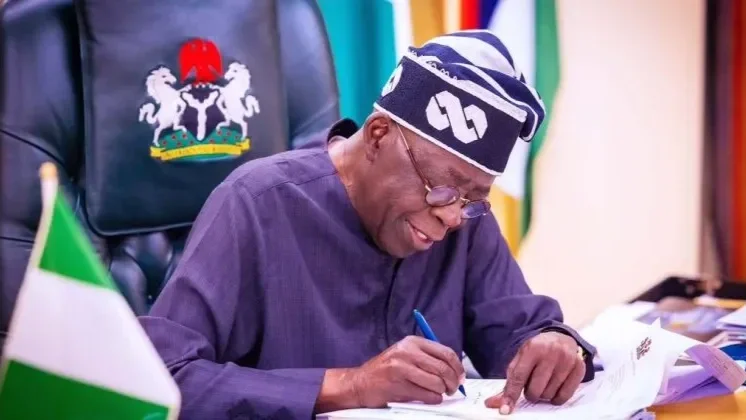
President Bola Ahmed Tinubu has signed Nigeria’s 2026 Appropriation Bill into law, approving a record ₦68.32 trillion budget aimed at accelerating economic growth, strengthening infrastructure, and consolidating ongoing fiscal reforms.
The signing, which took place in Abuja, formalises the country’s largest-ever spending plan and marks a significant escalation in government expenditure amid persistent inflation, currency volatility, and rising fiscal pressures.
/ You Might Also Like /




Budget Breakdown and Key Allocations
The ₦68.32 trillion budget reflects a balanced allocation across statutory obligations, recurrent expenditure, debt servicing, and capital investment. According to official disclosures, ₦4.799 trillion has been earmarked for statutory transfers, ₦15.8 trillion for debt servicing, and ₦15.4 trillion for recurrent expenditure.
Capital expenditure accounts for approximately ₦32.2 trillion about half of the total budget highlighting a strategic emphasis on infrastructure development and productivity-enhancing investments.
Priority sectors include transportation networks, power infrastructure, agriculture, and national security, all of which are central to improving economic competitiveness and enabling private sector growth.
Extension of 2025 Budget Implementation
Alongside the 2026 budget, the President approved an extension of the 2025 Appropriation Act implementation timeline from March 31 to June 30, 2026. This measure is designed to ensure the completion of ongoing capital projects and optimise the utilisation of previously allocated funds.
The extension reflects ongoing efforts to address delays in budget execution, a longstanding challenge in Nigeria’s public finance system that has historically constrained project delivery and economic impact.
Fiscal Strategy and Reform Agenda
The 2026 budget underscores the administration’s commitment to fiscal expansion as a tool for economic stabilisation and growth. The increased spending aligns with broader policy objectives, including tax reform, revenue mobilisation, and the reduction of reliance on oil earnings.
The government has emphasised the need to expand non-oil revenue streams and improve efficiency in public financial management. This approach is critical given Nigeria’s elevated debt servicing obligations, which continue to consume a substantial share of government revenue.
Analysts note that the scale of the budget signals an aggressive fiscal stance, but also raises questions about sustainability, particularly in the context of debt accumulation and revenue constraints.
Implications for Investors and Economic Outlook
For investors and market participants, the 2026 budget presents both opportunities and risks. Increased capital expenditure is expected to stimulate economic activity, particularly in infrastructure and construction, while also improving the operating environment for businesses.
However, the high level of debt servicing ₦15.8 trillion highlights ongoing fiscal vulnerabilities. Effective implementation, revenue generation, and macroeconomic stability will be critical to achieving the intended outcomes.
Nigeria’s fiscal trajectory remains closely tied to oil production and global commodity prices. Recent improvements in oil output have provided some fiscal space, but structural reforms remain essential to ensuring long-term resilience.
Execution Risks and Institutional Challenges
Historically, Nigeria has faced challenges in budget execution, including delayed fund releases, weak monitoring systems, and project inefficiencies. The success of the 2026 budget will depend on disciplined implementation, transparency, and coordination across Ministries, Departments, and Agencies (MDAs).
The President has directed MDAs to prioritise value for money and timely delivery of projects, reinforcing the importance of accountability in public spending.
Outlook
The ₦68.32 trillion 2026 budget represents a defining test of Nigeria’s fiscal strategy. While the scale of investment signals ambition and intent, outcomes will depend on execution efficiency, revenue performance, and macroeconomic stability.
For policymakers and investors, the budget highlights the critical balance between growth-oriented spending and fiscal sustainability. Delivering tangible infrastructure improvements and economic gains will be central to maintaining confidence in Nigeria’s reform agenda.
READ MORE