
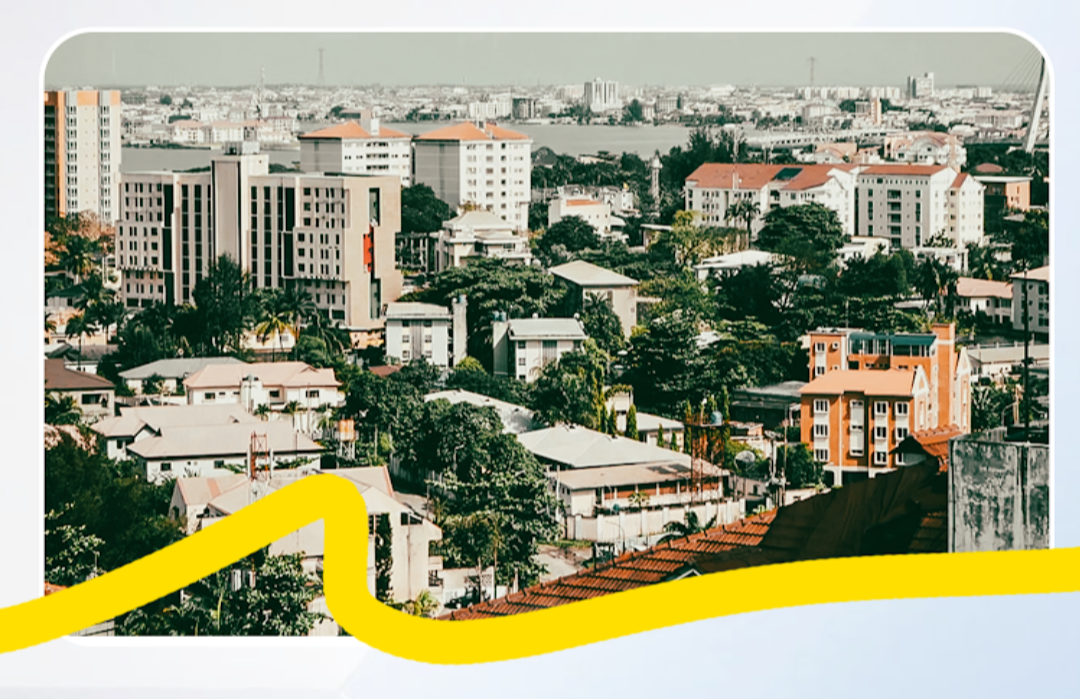
Lagos real estate has long been defined by infrastructure. For decades, property conversations have followed the path of major roads, bridges, industrial corridors, and government master plans. When a new expressway is announced, land prices move. When a rail line is commissioned, speculation intensifies. When industrial anchors emerge, residential demand follows. This pattern has shaped investment strategy, developer expansion, and buyer behavior across the city. According to a report from Nigeria Housing Market (NHM), projects located near major infrastructure developments can record appreciation of up to 165% after completion, underscoring how deeply infrastructure continues to influence property value across Lagos.
Importantly, there are multiple levers of engagement shaping today’s real estate market in Lagos. At the forefront are the regulators, for whom real estate remains a strategic instrument for revenue generation, urban expansion, and broader economic signaling. Through policy reforms, land administration systems, and planning frameworks, the government continues to influence both the pace and direction of growth. For developers, however, the terrain is increasingly complex. While profitability remains the ultimate objective, they must now navigate rising construction costs, foreign exchange volatility, infrastructure dependencies, and a rapidly shifting buyer demographic that demands sharper positioning and stronger transparency. Coupled with this is the evolution of large realtor networks that no longer function merely as intermediaries, but as market educators and trust brokers in an environment where credibility travels faster than brochures and digital reputation can determine absorption rates as much as location.
At the consumer level, the profile has shifted noticeably. Today’s Lagos property buyer is younger, digitally informed, investment-aware, and cautious. Real estate is no longer merely about shelter or prestige; it is about wealth preservation, inflation hedging, capital participation, and long-term positioning within a rapidly evolving city.
In all of these, infrastructure remains central to this story. Yet increasingly, it does not tell the whole story. Beneath the visible layer of roads and buildings lies a deeper current - one driven by behavior and capital. To understand Lagos' real estate today is to recognize that infrastructure sets the stage, but it is not the only actor shaping outcomes.
Beyond Infrastructure: The Signals Reshaping Lagos Real Estate
Infrastructure creates possibility; people and capital determine trajectory. What is unfolding in Lagos today is not simply physical expansion but a shift in how attention, migration, and money move through the city. Two powerful yet often underestimated forces are amplifying property cycles: behavioral signals and capital signals.
Behavioral Signals: Behavioral signals often precede price movements in real estate markets. Before transactions occur, shifts in migration patterns, professional clustering, and lifestyle preferences begin to reshape demand. Lagos continues to absorb migration from across Nigeria and the diaspora, but the character of that migration has evolved. It is younger, more entrepreneurial, and digitally connected. Entire professional communities now relocate in clusters, influenced as much by lifestyle ecosystems and peer networks as by proximity to highways.
Further, changing work patterns is also contributing to these signals. Specifically, hybrid models, digital entrepreneurship, and cross-border income streams are reshaping residential priorities. Demand is increasingly influenced by access to lifestyle amenities, secure community planning, and the presence of like-minded residents. The question buyers ask is no longer limited to “Is there a road?” It has expanded to “Who else is building here? What kind of community is forming? What narrative is unfolding around this location?”
Lagos’ cultural rhythm further reinforces these behavioral currents. Seasonal inflows, particularly during peak festive periods such as Detty December, bring significant diaspora participation into the city. While not all entrants are permanent homebuyers, their presence has catalyzed the rapid growth of short-let and flexible accommodation markets. Developers are increasingly designing with these seasonal consumption patterns in mind, anticipating demand cycles tied to tourism, entertainment, and global Nigerian mobility. What was once a niche hospitality play is now influencing residential development models in key corridors.
In Lagos, behavior moves quickly. Digital platforms amplify perception, and perception often accelerates demand. A development that earns trust and social proof can achieve rapid absorption even before surrounding infrastructure fully matures. Conversely, projects that lack transparency or fail to align with lifestyle expectations often struggle, regardless of location advantage. Trust and cultural alignment have become forms of invisible infrastructure.
Capital Signals: Parallel to behavioral momentum is the evolution of capital signals. Capital in Lagos real estate is becoming more coordinated, analytical, and inflation-conscious. In a high-inflation environment, land and structured developments increasingly function as defensive instruments. Retail investors are moving savings into land banking and off-plan projects not purely for speculation, but for currency preservation and long-term value storage. Diaspora capital illustrates this shift clearly. Where previous cycles were driven largely by emotional ties, today’s diaspora investors are more disciplined. They demand title clarity, governance transparency, structured payment models, and credible exit pathways. Capital now flows toward documentation integrity and away from opacity.
Perhaps most transformative is the organization of retail capital. Younger investors are pooling funds, participating through structured platforms, and coordinating entry into specific corridors. The rise of digital asset markets has introduced alternative avenues for speculative return, particularly among younger demographics. Yet the volatility of digital markets contrasts sharply with the tangible, appreciation-backed stability of well-structured real estate. While digital currencies offer speed, real estate offers durability. As a result, capital is increasingly diversifying rather than abandoning property. The strategic imperative now is not to compete with digital markets, but to structure real estate participation in ways that resonate with this new generation of capital allocators.
These behavioral and capital signals often precede formal market recognition. They are quieter than cranes and less visible than bridges, yet they frequently determine which locations outperform and which stagnate despite proximity to major projects. Reading Lagos real estate solely through infrastructure announcements risks overlooking the deeper currents shaping performance.
Repositioning for the Signals: A Smarter Way to Engage the Market
Recognizing these signals is only the first step. The more strategic question is how market participants can observe, interpret, and respond to them responsibly.
For developers and institutional players, this requires a broader lens. Location intelligence must extend beyond government announcements to include migration patterns, demographic clustering, and digital sentiment analysis. Structured documentation, transparent governance frameworks, and flexible payment models are no longer optional differentiators; they are prerequisites for attracting modern capital..
For investors and buyers, informed decision-making means evaluating more than entry price. It involves assessing the strength of title documentation, understanding the credibility of development partners, observing where coordinated capital is concentrating, and considering long-term liquidity prospects. Behavioral heatmaps such as who is moving where, and why offer insight into emerging nodes of demand before they become mainstream.
A pragmatic example of this positioning is Uvest - a real estate company deliberately operating at the intersection of infrastructure intelligence, behavioral insight, and capital structuring. By integrating macro-level development analysis with close observation of generational participation patterns, diaspora engagement, and the clustering of coordinated retail capital, Uvest is able to anticipate not just where growth is planned, but where conviction is forming. Its approach extends beyond facilitating transactions; it recognizes Millennials and Gen Z as emerging stewards of capital formation rather than passive consumers of space.
Conclusion
Lagos is expanding physically, economically, and demographically. Roads will continue to stretch outward. Rail lines will extend. Industrial anchors will multiply. Yet beneath these visible transformations, a quieter evolution is unfolding - one shaped by how people move, how trust accumulates, and how capital organizes itself. The next generation of prime locations may not be identified solely by infrastructure proximity, but by behavioral conviction and coordinated capital participation. The unseen signals are already influencing pricing cycles and absorption patterns across the city. By observing these signals early and responding with structure and discipline, market participants can move beyond speculation toward intentional capital formation.