The 2026 Dangote Refinery Blueprint: Location, IPO, and Global Energy Impact
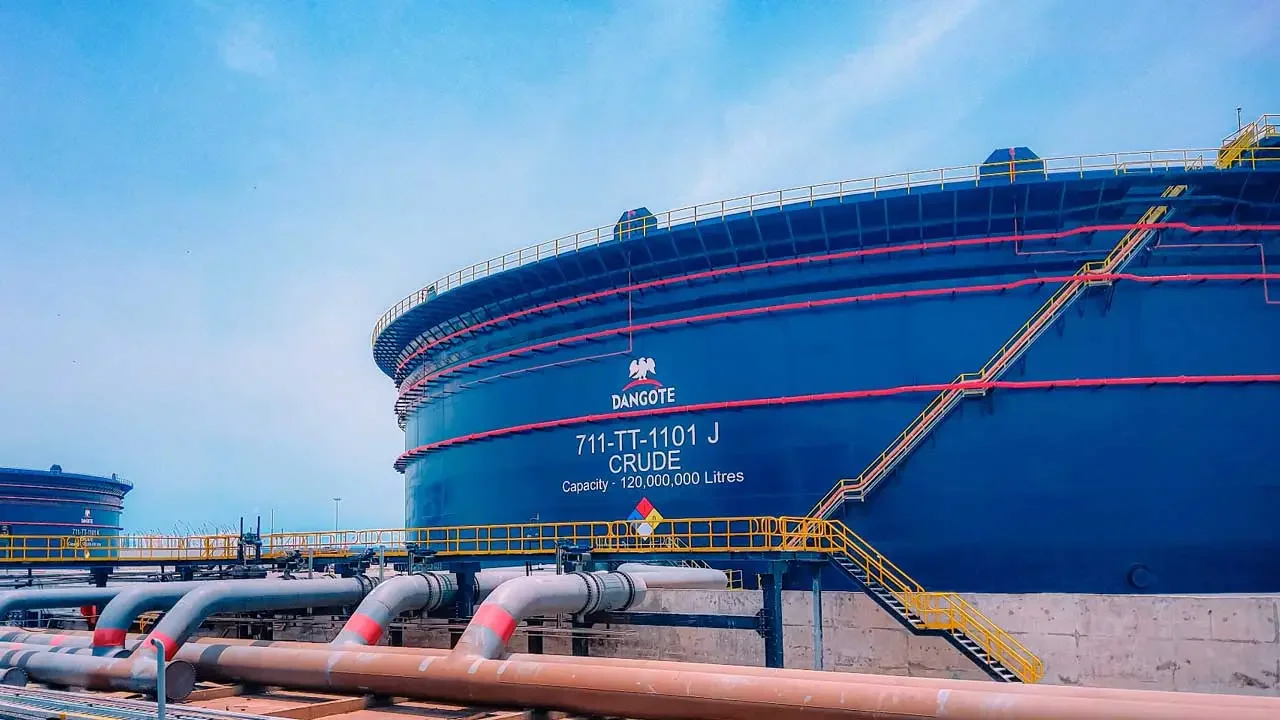
Dangote Petroleum Refinery
As of May 2026, the Dangote Petroleum Refinery and Petrochemicals complex has evolved from a construction marvel into the primary engine of the West African economy. Located in the heart of the Lekki Free Trade Zone, the facility is currently operating at 99.4% capacity utilization, processing roughly 648,500 barrels of crude oil per day.
For decades, Nigeria—Africa's largest crude producer was paradoxically its largest importer of refined fuels. In 2026, that era is over. Nigeria has officially achieved net petrol exporter status, with the Dangote Refinery supplying 80% of domestic demand while simultaneously fueling the flight paths of Europe and the economies of West Africa.
I. Location & Infrastructure: The Industrial Heart of Lagos
The refinery is situated on a massive 2,635-hectare (6,180-acre) site in the Lekki Free Trade Zone (LFTZ), Ibeju-Lekki, Lagos. To put the size in perspective, the facility is approximately six times the size of Victoria Island.
The Lekki Synergy
The location was chosen for its strategic proximity to the Atlantic Ocean. In 2026, the refinery functions in a perfect ecosystem with:
Lekki Deep Sea Port: Capable of handling Very Large Crude Carriers (VLCCs) that bring in feedstock from offshore fields.
Subsea Pipeline Network: A 1,100km pipeline system that delivers natural gas and crude directly to the plant, bypassing vulnerable onshore infrastructure.
Captive Power Plant: A 435MW dedicated power station ensures 100% uptime for the high-precision refining units.
II. About the Project: Engineering Excellence
The Dangote Refinery is the world’s largest single-train refinery. In engineering terms, "single-train" means the entire 650,000 bpd capacity is handled by one massive integrated processing line, allowing for unprecedented operational efficiency.
Technical Breakdown (May 2026)
The refinery utilizes the latest UOP (Honeywell) petrochemical technologies and catalysts to produce Euro 5 standard fuels.
Sulfur Content: Less than 10 parts per million (ppm), significantly lower than the 500-3,000 ppm "dirty fuels" previously imported into Africa.
The RFCC Unit: The Residual Fluid Catalytic Cracker (RFCC) allows the refinery to convert low-value heavy oils into high-value products like gasoline (PMS) and aviation fuel.
III. 2026 Performance Data & Global Exports
In April and May 2026, the refinery achieved its highest monthly export volumes to date. Due to geopolitical disruptions in the Middle East—specifically the closure of the Strait of Hormuz—Dangote has become a critical "swing supplier" for the Atlantic Basin.
IV. The $50 Billion IPO: Investing in Africa’s Future
The most anticipated financial event of 2026 is the Initial Public Offering (IPO) of the refinery. Aliko Dangote has confirmed a valuation target of $50 Billion for the listing on the Nigerian Exchange (NGX), with a secondary listing on the London Stock Exchange (LSE) under review.
IPO Timeline & Investor Details
Subscription Window: Expected to open in August 2026.
Offer Size: Approximately 10% of the equity (roughly $5 billion in shares) will be available to institutional and retail investors.
Dollar Dividends: To attract global capital, the company has proposed a structure to pay dividends in US Dollars, backed by its massive export earnings.
The Debt Profile: While the refinery carries $3.65 billion in debt, its current EBITDA margins are comfortably servicing these obligations, making it a "Blue Chip" candidate for any portfolio.
V. Economic Impact: The Naira and the Trade Balance
The "Dangote Effect" on the Nigerian Naira has been structural rather than just monetary.
Trade Balance Pivot: By replacing fuel imports (which once accounted for 20% of Nigeria's import bill) with local production, the refinery has saved Nigeria over $10 billion in foreign exchange annually.
Stabilization: The Crude-for-Naira agreement between the NNPC and Dangote has significantly reduced the monthly "dollar-scarcity" shocks that previously drove Naira devaluation.
Industrialization: The fertilizer unit (producing 3 million tonnes of Urea) has turned Nigeria into a net exporter of agricultural inputs, fueling a "Green Revolution" across the continent.
VI. Future Outlook: Expansion to 1.4 Million BPD
Aliko Dangote is not stopping at 650,000 bpd. In a recent interview, he confirmed plans to double capacity to 1.4 million bpd by 2028.
Phase 2 Expansion: A $350 million engineering contract with Engineers India Limited (EIL) is already underway.
Regional Dominance: Dangote is eyeing a new $17 billion refinery in Kenya (Mombasa) to replicate the Lagos success in East Africa, aiming to provide energy security for the entire AU region.
VIII. The 2026 Strategic Outlook: Beyond Refining
The success of the Dangote Refinery in 2026 marks the definitive end of Nigeria's "commodity trap." By transitioning from a raw material exporter to a refined product powerhouse, the nation has provided a blueprint for the rest of the continent.
Industry analysts predict that by 2030, the refinery will not only be a fuel provider but the primary feedstock supplier for a multi-billion dollar West African Petrochemical Hub. From manufacturing medical-grade plastics to producing high-yield urea fertilizers, the ripples of this project will be felt in every sector of the "Real Economy," from healthcare to large-scale mechanized farming.