REDAN Restates Commitment to Close Nigeria’s 14.98m Housing Gap

Private Developers Step Up Housing Supply as REDAN Targets 14.98m-Unit Gap
The Real Estate Developers Association of Nigeria (REDAN) has reaffirmed its commitment to reducing Nigeria’s housing deficit, with a new 2,400-unit residential development in Abuja positioned as part of the private sector’s contribution to expanding housing supply.
/ You Might Also Like /


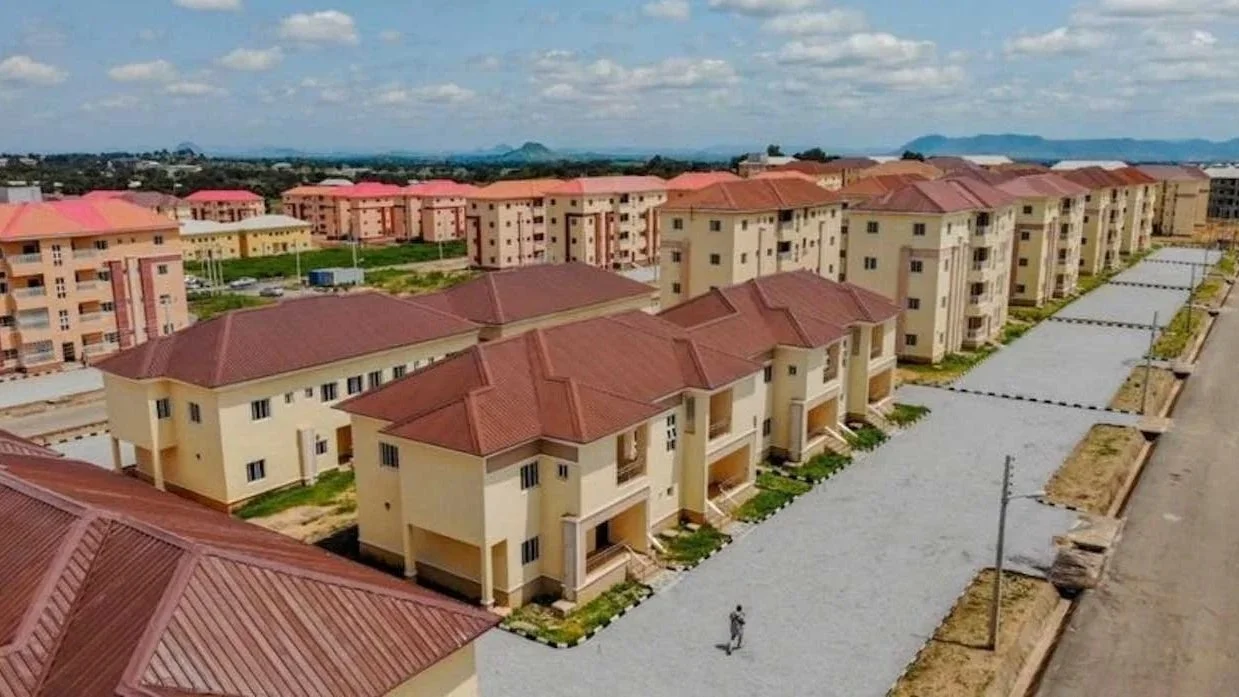

Dr Gbadewole Kayode, Vice President of REDAN’s Abuja chapter and Managing Director of Crown Allied Global Realty Ltd., made the commitment during the groundbreaking ceremony for The Embassy, a proposed estate in Wasa District of Abuja. He said the development would provide 2,400 housing units and contribute to efforts to address the country’s housing shortage.
Kayode cited an official national housing deficit of 14.98 million units, underscoring the scale of the supply challenge facing Nigeria.
Private Developers Take on a Larger Role
The proposed Abuja development reflects the growing importance of private developers in addressing Nigeria’s housing supply constraints.
Government alone cannot deliver the volume of housing required to close a deficit of this scale. Developers, financial institutions and other private-sector participants must expand construction while improving access to financing for households.
The Embassy project is one example of how large-scale private developments can contribute additional housing stock to the market.
According to Kayode, the development will include 2,400 housing units, while the company expects the construction process to generate more than 3,000 jobs.
The employment impact would extend beyond direct construction workers to suppliers, artisans, professionals, transport operators and other businesses connected to the construction value chain.
Affordability Remains Central to Closing the Gap
Increasing the number of houses alone will not resolve Nigeria’s housing shortage if a significant proportion of the new supply remains beyond the purchasing power of ordinary households.
The developer said the project would offer payment arrangements for low-income earners, allowing eligible buyers to make a part payment and spread the balance over six months. The development is also expected to make use of mortgage financing through the Federal Mortgage Bank of Nigeria and primary mortgage institutions.
This approach addresses one of the most important constraints in Nigeria’s housing market: the gap between the cost of newly developed homes and the income available to potential buyers.
For developers, the challenge is therefore twofold delivering enough units while structuring prices and payment options that can generate sufficient demand.
Mortgage Finance Could Expand Access to the Development
The reference to mortgage financing is particularly significant because Nigeria's housing market continues to face limitations in long-term housing finance.
Mortgage institutions can help spread the cost of homeownership over longer periods, making properties more accessible than outright purchases.
However, the effectiveness of mortgage financing depends on factors including interest rates, household incomes, loan tenors, property documentation and the ability of lenders to assess borrowers.
For large housing projects, access to mortgage finance can also help developers reach a broader pool of buyers and improve the speed at which completed units enter the market.
Smart Infrastructure Forms Part of the Development
The Embassy is being promoted as a smart estate with infrastructure designed around energy efficiency and alternative power supply.
Kayode said the project would be 100 per cent solar-powered and include electric-vehicle charging facilities. He also said the development would contain a commercial district covering 20 hectares, including hotels and other commercial facilities.
The emphasis on alternative energy is relevant to Nigeria’s housing market because electricity costs and reliability have become important considerations for both developers and residents.
Energy-efficient housing can potentially reduce reliance on conventional electricity sources and lower operating costs for households, although the overall affordability of such developments will depend on construction costs, service charges and purchase prices.
Commercial Development Adds Another Investment Dimension
The proposed commercial component could give the development an economic function beyond residential housing.
According to the developer, investors will be able to acquire land within the commercial hub for the development of malls and other commercial properties.
Mixed-use developments can create additional economic activity by combining residential accommodation with retail, hospitality and other services.
For residents, the availability of commercial facilities within or close to a housing development can reduce travel requirements and improve convenience. For investors, commercial property can provide an additional source of rental income.
However, the success of such facilities ultimately depends on population density, purchasing power, accessibility and sustained demand within the surrounding area.
Location and Infrastructure Remain Important
The developer said prospective residents increasingly want housing within a reasonable driving distance of Abuja’s city centre, alongside reliable infrastructure and modern amenities. The Embassy is being positioned around these requirements.
Location remains one of the strongest determinants of property value in Abuja.
As the city expands, developers increasingly face the challenge of delivering housing in peripheral districts while providing the infrastructure needed to make those locations viable residential communities.
Transport connections, electricity, water, security and commercial facilities can significantly influence whether new housing developments attract residents and retain property values.
Housing Delivery Must Keep Pace With Population Growth
The scale of Nigeria’s housing challenge means that individual developments, even large ones, will not be sufficient on their own.
A 2,400-unit project represents a meaningful addition to supply but remains only a fraction of the 14.98 million-unit deficit cited by REDAN.
The wider challenge therefore requires sustained construction activity across different income segments, alongside land reform, infrastructure investment, housing finance and policies that reduce development costs.
The private sector can increase supply, but developers also need an operating environment that allows projects to remain financially viable.
Construction Costs Remain a Key Risk
The ability to deliver affordable housing will also depend on the cost of construction.
Land, cement, steel, labour, infrastructure and financing all contribute significantly to the final price of a housing unit. Increases in any of these inputs can push newly built homes beyond the reach of middle- and lower-income households.
Large-scale projects can potentially achieve some economies of scale, but developers still need sufficient access to capital and predictable costs to maintain project viability.
For investors, this makes the financial structure of major housing projects as important as the headline number of units being proposed.
Job Creation Could Extend Beyond Construction
The projected 3,000-plus jobs associated with The Embassy also highlights the wider economic role of housing construction.
Residential development creates demand for building materials, engineering services, surveying, architecture, transport, furniture, security, facility management and other services.
Once occupied, large estates can generate additional economic activity through retail, maintenance and property-management services.
This makes housing investment relevant not only to the property sector but also to broader employment and economic activity.
Outlook
REDAN’s renewed commitment and the planned 2,400-unit Abuja development demonstrate the scale of private-sector investment required to make meaningful progress against Nigeria’s housing shortage.
The immediate challenge will be converting the proposed units into completed, affordable and occupied homes. Achieving that will require effective project execution, accessible financing and infrastructure capable of supporting the new community.
For Nigeria’s housing market, the significance of projects such as The Embassy extends beyond the number of units delivered. The longer-term test will be whether developers can consistently increase supply across different income segments while keeping homes financially accessible to the households that need them most.
The 14.98 million-unit figure cited by REDAN illustrates the scale of the challenge; sustained private-sector construction, supported by effective housing finance and enabling government policies, will determine how quickly the gap can narrow.
READ MORE