Lagos Turns to Private Sector to Tackle 3.4m Housing Deficit

Lagos seeks private investment to expand housing delivery
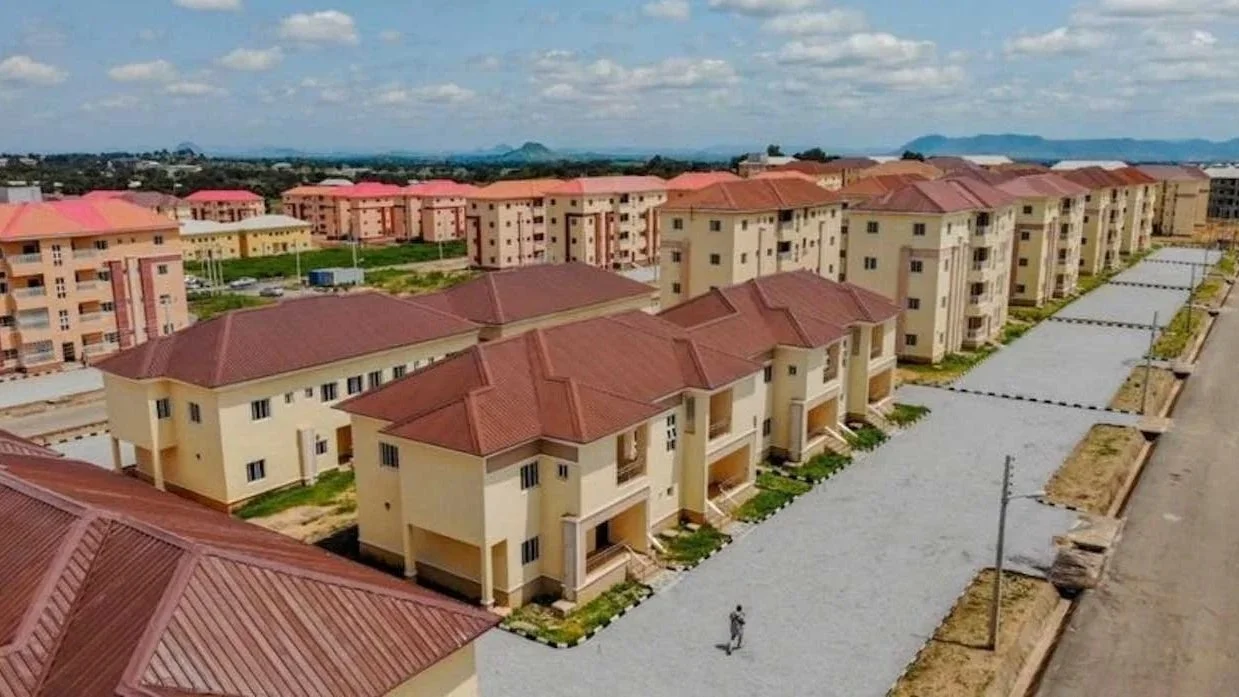
Lagos State is increasing its reliance on private-sector investment and structured public-private partnerships to expand housing delivery, as government spending alone cannot meet the scale of the state’s housing and infrastructure needs.
The Commissioner for Commerce, Cooperatives, Trade and Investment, Folashade Ambrose-Medebem, disclosed this at the Julius Berger Luminary Soirée 2026 in Lagos, describing the housing challenge as both a major social issue and a significant investment opportunity.
/ You Might Also Like /



Private Capital Becomes Central to Housing Delivery
The Lagos State Government’s growing emphasis on private-sector participation reflects the amount of capital required to increase housing supply across the state.
According to Ambrose-Medebem, Lagos would need approximately 227,576 additional housing units annually, requiring about ₦6 trillion in capital investment each year.
The figures reinforce the limitations of relying primarily on public expenditure to finance housing construction and supporting infrastructure. The state’s approach is therefore shifting towards structured partnerships capable of bringing private capital, development expertise and additional delivery capacity into the housing market.
For developers and investors, the strategy could create opportunities across residential development, infrastructure, construction materials, housing finance and related services, particularly in areas where government is able to provide the land, infrastructure or regulatory framework needed to make projects commercially viable.
Government-Developer Partnerships Could Accelerate Supply
A greater role for public-private partnerships could also change how housing projects are delivered in Lagos.
Rather than government bearing the full cost of land preparation, infrastructure and construction, structured partnerships can allow the public sector to provide strategic support while private developers contribute capital, technical expertise and project-management capacity.
This model becomes particularly important in a market where land, infrastructure and construction costs can make housing projects difficult to deliver at prices accessible to a large proportion of residents.
The effectiveness of the approach, however, will depend on how partnerships are structured. Clear land arrangements, predictable approvals, infrastructure commitments and transparent allocation mechanisms will be important if private investors are to commit substantial long-term capital to housing.
Financing Remains Critical to Housing Delivery
Investment in housing cannot be separated from access to finance.
Developers require long-term and reasonably priced capital to acquire land, construct homes and provide supporting infrastructure, while buyers need mortgage and other forms of housing finance to purchase completed units.
Lagos’ broader efforts to improve access to finance could therefore support the housing strategy. The commissioner said the Lagos State Employment Trust Fund had disbursed more than ₦15 billion to 20,000 enterprises since 2016, while the LASMECO scheme, implemented with the Bank of Industry and Sterling Bank, is expected to provide loans of up to ₦10 million at nine per cent interest without collateral.
Although these financing initiatives are not specifically designed to solve the housing supply problem, improving access to affordable business finance can strengthen the wider private-sector ecosystem supporting construction and property development.
Affordability Remains the Major Test
Increasing private investment will not automatically make housing more affordable.
The commissioner disclosed that Lagos’ property price-to-income ratio stood at 19.2 times, substantially above the five-times level generally associated with severe housing unaffordability.
This means that the success of the private-sector strategy should ultimately be measured not only by the number of homes delivered, but also by whether those homes are financially accessible to households.
A housing market dominated by high-end developments could increase supply without substantially improving access for lower- and middle-income households. For private investment to address the broader housing challenge, financing structures and development incentives will need to support projects targeted at different income groups.
This could include greater use of mixed-income developments, more efficient land utilisation, infrastructure support and financing arrangements that reduce the cost of development and home acquisition.
Emerging Growth Corridors Could Open New Opportunities
The expansion of housing investment is also likely to follow Lagos’ changing economic geography.
Ambrose-Medebem identified Epe, Badagry and Ikorodu as emerging economic corridors, while Julius Berger Nigeria Managing Director Peer Lubasch pointed to continued expansion along the Lekki-Epe axis, the Lagos-Ibadan corridor and areas to the west as connectivity improves.
The development of these corridors could create opportunities for housing projects outside the traditional high-demand locations.
For developers, the availability of land in emerging areas may offer a more viable route to larger-scale housing projects, particularly where new infrastructure improves connectivity to employment centres.
However, housing development in these locations will need to move alongside transport, power, water, drainage and other essential infrastructure. Without those investments, cheaper land alone may not translate into viable communities or affordable housing.
Lagos’ Investment Strategy Extends Beyond Housing
The state is positioning housing within a broader economic development strategy.
Ambrose-Medebem said Lagos attracted more than ₦50 billion in investments within a year, including a ₦38 billion commitment by Twinings Ovaltine Nigeria Limited for a production facility. She also highlighted the Lagos State Development Plan 2052, which contains 447 initiatives across 21 strategic sectors.
The implication for the property market is significant. New industrial and commercial investment can generate employment, stimulate demand for housing and encourage development around emerging economic corridors.
For the housing market, the key issue will be ensuring that residential development keeps pace with employment and infrastructure expansion rather than following after housing shortages have already pushed prices and rents higher.
Private Investment Will Need Policy Support
Lagos’ decision to deepen private-sector participation reflects the reality that closing the housing supply gap requires significantly more capital than government budgets can provide alone.
But attracting private capital will require more than identifying housing as an investment opportunity. Investors need certainty around land, approvals, infrastructure, taxation, financing and the ability to recover their capital through viable projects.
For government, the priority will therefore be to create an environment in which developers can build at scale while maintaining a strong focus on affordability.
For investors, the emerging opportunity is likely to extend beyond luxury property into mass-market housing, infrastructure-linked developments, rental housing and projects serving new economic corridors.
Outlook
Lagos is increasingly positioning private capital as a key driver of future housing delivery. The strategy could significantly expand construction activity if government and developers establish partnerships that combine land, infrastructure, financing and development expertise effectively.
The bigger challenge will be ensuring that increased investment translates into homes that households can actually afford.
With property prices already far outpacing incomes, the next phase of Lagos’ housing strategy will need to focus not simply on building more homes, but on building the right homes, in the right locations and at prices that match household purchasing power.
That distinction will determine whether private-sector participation becomes a genuine solution to Lagos’ housing challenge or simply produces more property supply at prices beyond the reach of most residents.
READ MORE