Okoro Calls for Government Funding to Expand Affordable Social Housing

Okoro calls for affordable social housing
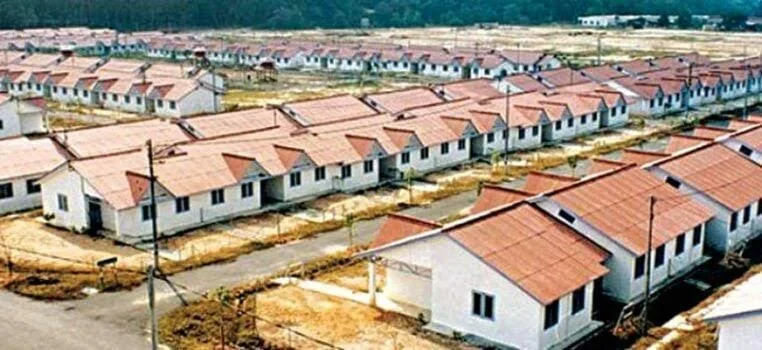
The Federal and state governments have been urged to establish a deliberate and adequately funded social housing programme to increase the supply of affordable homes and ease mounting pressure on Nigeria’s rental market.
Chief M.I. Okoro, a Fellow of the Nigerian Institution of Estate Surveyors and Valuers, said Nigeria’s housing challenge cannot be addressed solely through commercially priced developments, arguing that government intervention is necessary to provide accommodation for households priced out of the formal property market.
/ You Might Also Like /



Limited Housing Supply Continues to Push Up Rents
Okoro attributed rising rents and property prices to a combination of population growth, rural-to-urban migration and inadequate housing supply.
He said limited availability of accommodation was creating displacement across major cities, particularly Lagos, where rising costs in areas such as Ikoyi and Victoria Island are pushing households towards mainland and emerging locations.
The resulting pressure is extending beyond established residential districts as more households compete for relatively affordable accommodation in peripheral communities.
According to Okoro, increasing the supply of affordable homes remains central to moderating rental and property-price pressures.
Call for Greater Local Government Participation
A major part of Okoro’s proposal is greater involvement by Nigeria’s 774 local government councils in housing delivery.
He argued that properly funded local councils could develop affordable rental housing within their communities, particularly where state governments provide land and supporting infrastructure.
The approach would distribute housing investment more widely instead of concentrating projects in major urban centres.
For the property market, greater local-government participation could also create opportunities for the development of smaller residential schemes in underserved communities, provided that land, roads, electricity, water and other infrastructure are delivered alongside the housing.
Social Housing Requires Dedicated Funding
Okoro said social housing should not be treated primarily as a commercial real estate investment because its objective is to provide accommodation for households that cannot afford prevailing market prices.
He proposed that public revenue, alongside dedicated contributions from large corporations, could be channelled into social housing funds.
He also called for housing professionals to be involved in designing mechanisms for mobilising, managing and investing such funds transparently.
Such a funding structure would need clear eligibility criteria, transparent allocation processes and mechanisms to ensure that subsidised housing reaches households that genuinely need it.
Affordability Remains a Challenge
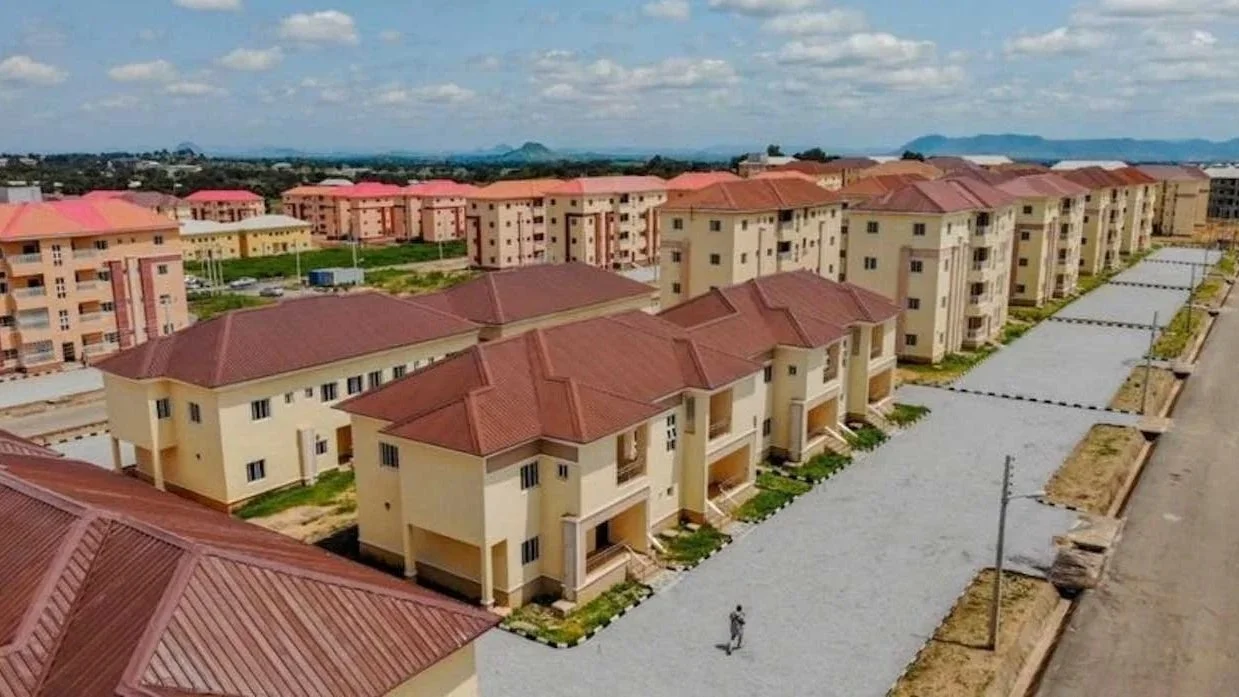
Okoro acknowledged the Federal Government’s Renewed Hope Housing Programme but questioned whether some of the homes being delivered would be accessible to low-income households.
He noted that houses costing tens of millions of naira could remain unaffordable to workers without sufficiently high incomes, affordable mortgage financing or substantial savings.
The issue highlights a distinction between increasing housing supply and increasing genuinely affordable housing supply.
New homes can contribute to overall supply while remaining inaccessible to households at the lower end of the income distribution if construction costs, land costs, financing charges and mortgage repayments push final prices beyond their purchasing capacity.
Mortgage Finance Must Support Housing Delivery
Okoro also pointed to the limitations of existing housing-finance arrangements.
Although government-backed initiatives provide long-term loans to qualifying applicants, he said many Nigerians still lack sufficient income to meet repayment requirements.
This creates a financing gap between the cost of producing a formal home and the amount that low- and middle-income households can realistically afford to borrow.
For developers, improving this link between housing production and household purchasing power is important. Without accessible financing, developers may continue to focus on segments of the market with stronger purchasing capacity, leaving lower-income households dependent on increasingly expensive rental accommodation.
Land Costs Also Affect Housing Affordability
Beyond financing, Okoro identified land registration as another factor contributing to the cost of housing.
He said complicated land-registration procedures and the costs associated with obtaining Certificates of Occupancy and registering property transactions can ultimately be passed on to buyers and tenants.
Simplifying land allocation, titling and registration could therefore reduce transaction and development costs while making it easier for both public and private developers to bring land into formal housing development.
More efficient land administration could also improve the attractiveness of housing investment by reducing delays and uncertainty around property ownership and development.
Infrastructure Could Help Reduce Pressure on Major Cities
Okoro also called for more balanced development across rural areas and smaller cities.
He argued that providing electricity, water, roads, telecommunications and employment opportunities outside major urban centres could reduce the pressure created by migration towards Lagos and other major cities.
This has implications beyond housing supply. Where infrastructure and employment are available, smaller cities and emerging communities can develop into viable residential and economic centres rather than serving primarily as dormitory settlements for larger cities.
For Nigeria’s property sector, this could create a more distributed pattern of residential and commercial development over time.
Coordinated Approach Needed
Okoro proposed that government test a coordinated social housing programme across every state for at least one year, with local governments participating in the construction and delivery of mass housing.
He argued that simultaneous development across multiple communities could increase housing supply and reduce demand pressure in areas experiencing rapid population growth.
The proposal places social housing within a broader framework involving government funding, land administration, infrastructure provision, mortgage finance and private-sector participation.
The scale of any impact would ultimately depend on funding availability, project execution, affordability criteria and the ability of governments to maintain the housing stock over the long term.
For Nigeria’s housing market, the central challenge remains not simply building more homes, but developing homes that households can afford to rent or buy while creating the infrastructure and financing systems required to sustain new communities.
READ MORE