NASS Expands 2026 Budget to ₦68.3tn, Boosts Capital and RMAFC Funding
NASS Expands 2026 Budget to ₦68.3tn
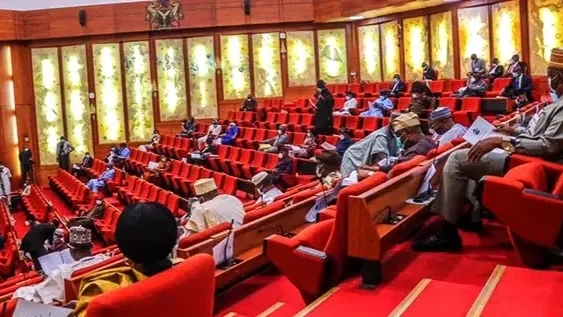
Nigeria’s National Assembly of Nigeria has approved a ₦68.323 trillion 2026 Appropriation Bill, marking a significant increase from the ₦58.47 trillion initially proposed by the Federal Government of Nigeria. The revised budget prioritises infrastructure, debt servicing, and institutional funding, including an increased allocation to the Revenue Mobilisation Allocation and Fiscal Commission (RMAFC)
/ You Might Also Like /




Budget Expansion and Key Drivers
Lawmakers approved an upward revision of approximately ₦9 trillion following adjustments by the executive to accommodate unfunded obligations and priority national projects.
The expansion reflects a policy decision to accelerate capital investment and address legacy commitments carried over from the 2025 fiscal cycle. Key provisions include:
₦5.71 trillion for unfunded capital obligations
₦2 trillion for priority projects nationwide
₦478.6 billion for legacy rail infrastructure projects
₦482.76 billion for health sector interventions
These allocations signal a continued emphasis on infrastructure delivery and social sector investment as drivers of economic growth.
Budget Structure and Fiscal Composition
The approved ₦68.323 trillion budget is structured across key expenditure categories:
Capital expenditure: ₦32.3 trillion
Debt servicing: ₦15.8 trillion
Recurrent (non-debt): ₦15.4 trillion
Statutory transfers: ₦4.8 trillion
Capital expenditure accounts for the largest share, underscoring the government’s focus on development spending. However, the significant allocation to debt servicing highlights ongoing fiscal pressures and Nigeria’s constrained revenue position.
Funding Assumptions and Revenue Strategy
The budget is underpinned by revised macroeconomic assumptions, including an increase in the oil benchmark from $65 to $75 per barrel.
Additional funding sources include:
Projected ₦874 billion in revenue from telecommunications companies
External borrowings estimated at ₦6.16 trillion
These assumptions reflect a continued reliance on both oil revenues and debt financing to support fiscal operations.
Increased Allocation to RMAFC
As part of the approved framework, lawmakers allocated ₦183.71 billion to the Revenue Mobilisation Allocation and Fiscal Commission.
RMAFC plays a critical role in revenue distribution and fiscal oversight across federal, state, and local governments. Increased funding may strengthen institutional capacity in revenue monitoring and allocation efficiency—key components of Nigeria’s broader fiscal reform agenda.
Legislative Process and Oversight
The budget passage followed consideration of reports from both chambers’ appropriations committees, led by Solomon Adeola in the Senate and Abubakar Kabir Bichi in the House of Representatives.
The coordinated legislative process enabled timely approval after the third reading, reinforcing the National Assembly’s role in fiscal oversight and budget alignment with national priorities.
Economic and Policy Implications
Infrastructure and Growth
The elevated capital expenditure suggests a continued push to stimulate economic activity through infrastructure development, including transport and healthcare investments.
Fiscal Sustainability Risks
Despite increased spending, Nigeria’s fiscal position remains constrained by high debt servicing obligations. The balance between growth-oriented spending and fiscal sustainability will be a key policy challenge.
Institutional Strengthening
Enhanced funding for agencies such as RMAFC indicates a parallel effort to improve governance, revenue allocation, and fiscal transparency.
The passage of the ₦68.3 trillion 2026 budget marks a significant fiscal expansion aimed at accelerating infrastructure delivery and supporting economic growth. While the increased capital allocation provides a foundation for development, the heavy debt burden and reliance on optimistic revenue projections underscore the importance of disciplined implementation.
The effectiveness of the budget will ultimately depend on execution efficiency, revenue realisation, and the government’s ability to translate expenditure into measurable economic outcomes.
READ MORE