Nigerian Military Destroys 101 Illegal Refineries, Arrests 219 Suspects in Q1 2026
Nigeria’s Military Degrades Oil Theft Networks With Major Q1 Operations
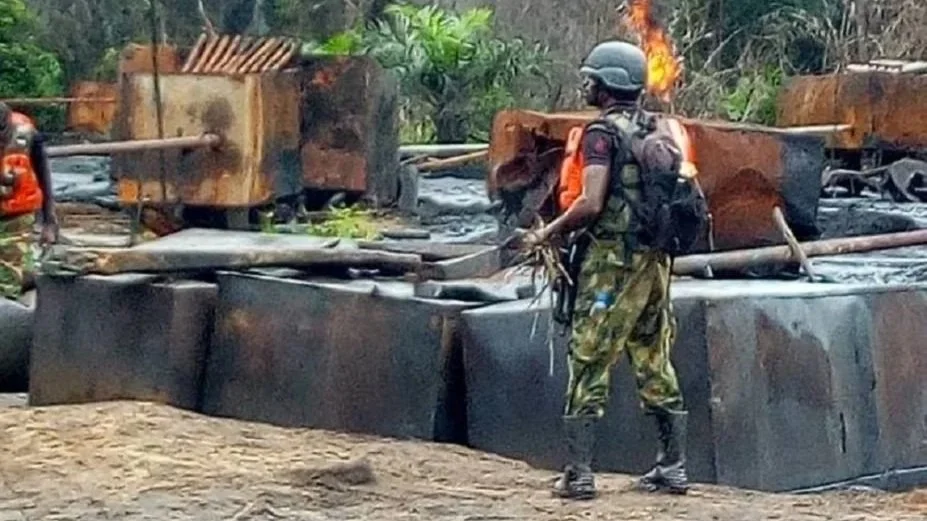
Nigeria’s Defence Headquarters (DHQ) has disclosed that troops under Operation DELTA SAFE destroyed 101 illegal refining sites and arrested 219 suspects linked to crude oil theft and associated crimes in the first quarter of 2026. The offensive, concentrated in the Niger Delta and adjoining states, also recovered significant volumes of stolen petroleum products.
Strategic Offensive Against Oil Theft
The Director of Defence Media Operations, Maj.-Gen. Michael Onoja, said the intensified military campaign sought to dismantle criminal networks engaged in crude oil theft, pipeline vandalism, and related sabotage. Over the quarter, troops enhanced patrols under Operation DELTA SAFE across the South-South region, targeting illegal refining hubs that undermine Nigeria’s energy infrastructure.
/ You Might Also Like /




Troops recovered a total of 547,920 litres of stolen petroleum products including crude oil, automotive gas oil, kerosene, and premium motor spirit during the operations.
In March alone, forces recorded substantial seizures, including 193,570 litres of petroleum products and about 45,000 litres of stolen crude oil intercepted in Rivers State.
Integrated Security Actions
Beyond striking illegal refining sites, the military’s operations extended to disrupting other criminal activities. Troops are reported to have:
Neutralised suspected kidnappers and rescued multiple victims
Dismantled illegal refining sites in Rivers and Imo states
Apprehended suspected kidnappers in Edo State
Conducted joint operations with the National Drug Law Enforcement Agency (NDLEA) to arrest drug suspects
Additionally, forces uncovered and defused a sabotage attempt at a wellhead, where explosives were safely neutralised, highlighting the multidimensional nature of threats to energy infrastructure.
Energy Sector and Economic Implications
Illegal refining and crude oil theft have long eroded Nigeria’s energy revenues and damaged critical infrastructure. According to data from the Nigerian Upstream Petroleum Regulatory Commission (NUPRC), Nigeria lost tens of millions of barrels of crude oil to theft between 2021 and 2024, with annual losses in the millions of barrels.
By systematically targeting illegal refining sites, the military’s operations aim to reduce systemic losses and bolster the integrity of the country’s upstream and midstream sectors.
Operational Challenges and Forward Path
Despite sustained offensive actions, illegal oil refining remains a persistent challenge due to the complex terrain of the Niger Delta and entrenched criminal networks. The military’s success in dismantling sites and arresting suspects over the first quarter of 2026 signals progress, but authorities acknowledge that long-term solutions will require interagency cooperation, enhanced surveillance capabilities, and community engagement in affected regions.
The destruction of 101 illegal refineries and the arrest of 219 suspects in Q1 2026 reflect a significant escalation in Nigeria’s efforts to confront crude oil theft and economic sabotage. Recovering over 547,000 litres of stolen products underscores the scale of illicit activities that have historically impaired the nation’s energy sector.
Sustaining these operational gains will depend on coordinated enforcement, infrastructure protection strategies, and ongoing support for stabilising Nigeria’s critical oil-producing regions.
READ MORE