Lagos Orders Removal of Illegal Structures Along Lagos-Badagry Expressway Corridor
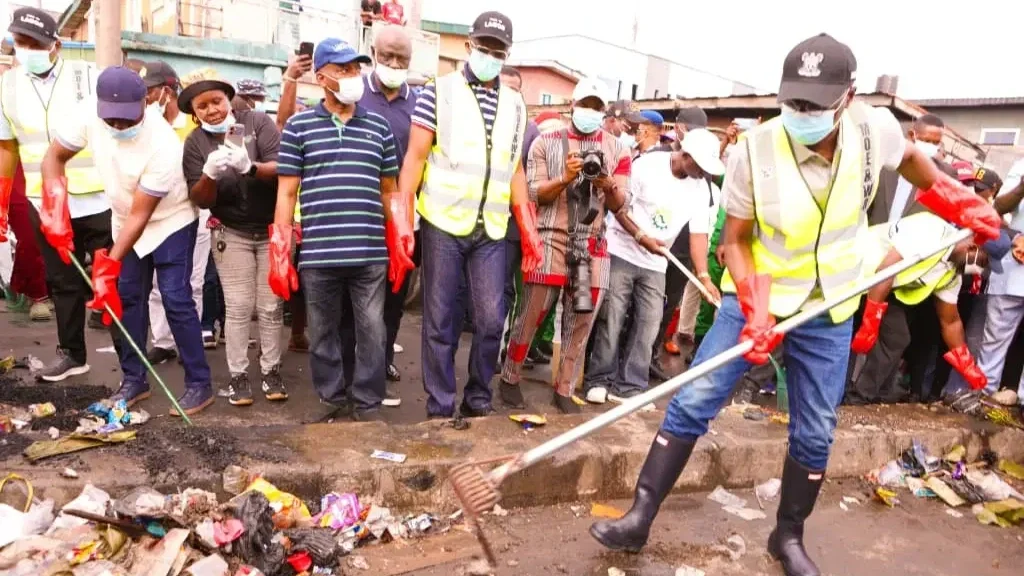
Sanwo Olu Directs Removal of Shanties Along Lagos-Badagry Expressway
The Lagos State Government has issued a 72-hour quit notice to traders and occupants of illegal structures located along the median of the Lagos–Badagry Expressway, signalling a renewed effort to protect public infrastructure, improve environmental conditions, and restore order along one of the state's most strategic transport corridors. Governor Babajide Sanwo-Olu announced that enforcement operations will commence after the expiration of the notice, with all unauthorised structures along the affected stretch scheduled for removal.
/ You Might Also Like /




The directive was issued during the state's monthly environmental sanitation exercise, where the governor said the clearance operation would cover the corridor from Orile-Iganmu to Okokomaiko. According to Sanwo-Olu, the Lagos–Badagry Expressway is a major public investment and an international gateway that must be protected from illegal occupation, environmental degradation, and activities that undermine its intended purpose.
Government Targets Illegal Occupation of Public Infrastructure
The governor said the affected structures, including makeshift markets and shanties erected on the highway median, violate planning and environmental regulations. He stressed that the expressway median was not designed for commercial activities or residential occupation and warned that all illegal developments would be removed as part of the enforcement exercise.
Sanwo-Olu noted that the Lagos–Badagry Expressway represents a significant public investment funded by taxpayers and forms part of the state's broader transport infrastructure network. Preserving the corridor, he said, is essential to maintaining safety, mobility, and the overall functionality of the highway.
Urban Renewal and Environmental Management
The enforcement action aligns with Lagos State's ongoing urban renewal and environmental management initiatives aimed at eliminating illegal developments, improving sanitation, and enhancing the appearance and functionality of public spaces. State officials have maintained that uncontrolled occupation of highways, road medians, and setbacks contributes to traffic congestion, environmental pollution, and safety risks.
Alongside the clearance exercise, the governor announced plans to strengthen waste management by expanding the state's fleet of waste compactors and deploying additional waste collection equipment to underserved communities. He also highlighted ongoing investments in recycling and waste-processing infrastructure as part of efforts to modernise Lagos' waste management system.
Implications for Housing and Urban Development
For the housing and real estate sector, the exercise underscores the importance of development control and effective land-use management in rapidly growing urban centres. Urban planning experts have consistently emphasised that protecting transport corridors, enforcing zoning regulations, and preventing illegal developments are essential to achieving sustainable city growth.
The operation also reflects the broader role of regulatory enforcement in preserving public infrastructure, improving the urban environment, and supporting long-term investment in housing and transport networks.
Conclusion
The Lagos State Government's decision to issue a 72-hour quit notice to occupants of illegal structures along the Lagos–Badagry Expressway highlights its commitment to protecting critical infrastructure and strengthening urban planning enforcement. As the clearance exercise begins, stakeholders across the housing, construction, and real estate sectors will be watching how the initiative contributes to improved environmental management, transport efficiency, and orderly urban development.
READ MORE