Lagos developers increasingly build upwards as land becomes scarce
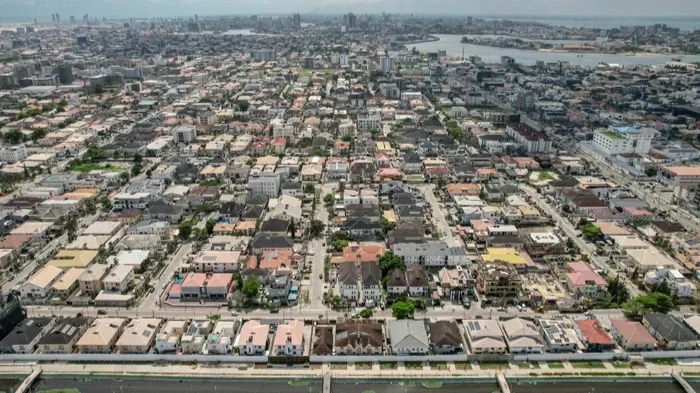
Rising land prices and limited space are pushing property developers in Lagos towards vertical housing as they seek to accommodate more homes on increasingly expensive parcels of land.
Ayodeji Johnson, Managing Director and Chief Executive Officer of Elara Development, said the city’s limited land area and growing population make high-rise development increasingly necessary to address housing demand.
/ You Might Also Like /




Johnson made the comments in an interview with Nairametrics while discussing the changing dynamics of Lagos’ residential property market, the pressures facing developers and the future of housing delivery in the state.
The shift towards vertical development is already evident in prime areas such as Victoria Island, Ikoyi, Oniru and Lekki Phase 1, where developers are increasingly using multi-storey buildings to maximise the number of homes that can be delivered on limited land.
Land Scarcity Is Reshaping Lagos Housing
Lagos faces a fundamental land constraint.
The state is Nigeria’s smallest by land area, while its population, commercial activity and demand for residential property continue to expand.
As developable land becomes scarcer, particularly in established locations, competition for available sites has pushed land values higher.
Johnson said the combination of population growth, limited land supply and rising land costs is making efficient land use increasingly important for the city’s future housing supply.
Rather than continuing to expand horizontally, developers are increasingly looking at vertical projects that allow substantially more residential units to be delivered on the same site.
High-Rise Development Offers Greater Land Efficiency
Vertical development allows developers to maximise the economic value of expensive land.
A single multi-storey building can accommodate dozens of households on a site that would support far fewer units under conventional low-density development.
Elara Development is currently developing a 12-storey residential building in Victoria Island comprising 47 premium residences on approximately 1,600 square metres of land.
The project illustrates how developers are responding to the economics of land in established Lagos locations.
Johnson expects the trend to become more pronounced over the next five to 10 years, with taller residential and commercial buildings becoming increasingly common across the city's core districts.
Ikoyi, Victoria Island and Lekki Could Become More Vertical
According to Johnson, established areas such as Ikoyi, Victoria Island, Oniru and Lekki Phase 1 are likely to transition increasingly towards high-rise development.
These locations already attract strong demand from high-income residents, investors and Nigerians in the diaspora.
Their appeal is partly linked to proximity to employment centres, commercial districts, leisure facilities and established infrastructure.
However, high land prices make conventional low-density housing increasingly difficult to justify from a development perspective.
The result is likely to be continued redevelopment, with older or lower-density properties gradually making way for larger residential and mixed-use schemes.
Rising Costs Remain a Major Challenge
Building upwards does not eliminate the financial pressures facing developers.
Johnson identified financing costs and construction-cost inflation as the most difficult challenges currently affecting residential development in Lagos.
While land and infrastructure costs are largely established once a developer commits to a site, financing costs and imported construction materials can change significantly during the construction period.
High interest rates can therefore increase the total cost of a project before construction is completed.
For developers, this creates a difficult balancing act between delivering higher-quality properties and keeping final prices within reach of prospective buyers.
Financing Is Critical to Affordable Housing
The economics of high-rise development remain particularly challenging for lower- and middle-income housing.
Johnson argued that developers are not necessarily concentrating on premium housing simply because they prefer the segment.
Instead, high land, construction and financing costs can make lower-priced housing commercially difficult to deliver without some form of support.
He called for single-digit interest rates for developers delivering affordable housing, tax incentives linked to controlled unit prices and more predictable approval processes.
These measures, he said, could make it easier for credible private developers to participate in addressing Nigeria’s housing deficit.
Can Vertical Housing Solve Lagos’ Housing Deficit?
High-rise development can help Lagos use its limited land more efficiently, but vertical construction alone will not solve the housing deficit.
The affordability of the resulting homes remains critical.
If most vertical projects target high-income buyers, the model can increase housing density without substantially improving access to housing for lower- and middle-income households.
For vertical development to make a broader contribution, developers need access to cheaper long-term financing and incentives that allow them to build homes at lower price points.
Government planning policies will also need to determine where greater density is appropriate and ensure that infrastructure can support larger residential populations.
Infrastructure Must Keep Pace With Higher Density
Higher-density housing places greater demands on existing infrastructure.
More residents within a smaller area increase demand for electricity, water, drainage, waste management, roads, telecommunications and public transport.
If infrastructure does not expand alongside residential density, high-rise development could place additional pressure on already stretched urban systems.
This makes integrated planning increasingly important for Lagos.
Vertical housing should therefore be accompanied by investments in public infrastructure and services rather than treated simply as a private real estate development strategy.
Approvals Can Affect Development Costs
The speed and predictability of planning approvals also influence housing costs.
Johnson acknowledged that Lagos has made progress in its approvals and permitting processes but argued that there is still room for greater automation, transparency and predictability.
Delays can increase financing and holding costs for developers, particularly when projects are funded through expensive debt.
These additional costs can eventually be reflected in property prices.
A faster and more predictable approval system could therefore help reduce some development costs and encourage more investment in residential supply.
Buyer Expectations Are Also Changing
The move towards vertical housing is not being driven by land economics alone.
Property buyers are becoming more selective about the quality and reliability of developments they purchase.
Johnson said buyers increasingly scrutinise developers, consultant teams, project completion timelines, floor plans, amenities, finishes and appliances before committing to a property.
This places greater pressure on developers to demonstrate that premium prices correspond with quality, infrastructure and long-term value.
For high-rise development, the expectations are particularly significant because buyers are purchasing not only a dwelling but also access to shared facilities and building-management systems.
Vertical Living Could Become More Mainstream
High-rise living has historically been concentrated among wealthier residents in Lagos, but the model could gradually become more common across other income segments if development economics improve.
The growing scarcity of land means that cities such as Lagos will increasingly need to consider higher-density housing as part of their long-term urban planning strategy.
The challenge is to ensure that vertical development does not become synonymous only with luxury housing.
Affordable and middle-income high-rise developments could potentially increase the number of households accommodated within established urban areas while reducing pressure for uncontrolled outward expansion.
Marina and Other Urban Districts Could See Greater Investment
Johnson also identified the Marina district as an area with significant potential for future high-rise development.
Greater investment in Marina could reinforce Lagos’ position as a major commercial and financial centre while creating opportunities for residential, commercial and mixed-use projects.
The development of such districts could also encourage a more integrated urban model in which people live closer to employment and commercial centres.
That could potentially reduce commuting distances and improve the efficiency of urban land use.
However, such transformation will require coordinated investment in transport, public spaces, utilities and other supporting infrastructure.
Implications for Property Investors
For property investors, the increasing shift towards vertical development suggests that land efficiency will become an increasingly important consideration in Lagos.
Properties in established locations with strong infrastructure and employment access may continue to attract demand, particularly where developers can successfully increase density without compromising quality.
However, investors will also need to assess development costs, financing structures, infrastructure capacity and the affordability of the target market.
High land values can support property appreciation, but they can also make projects vulnerable to changes in interest rates, construction costs and purchasing power.
Outlook for Lagos Housing
Lagos is likely to become increasingly vertical as land scarcity and population growth reshape the economics of residential development.
The shift could allow developers to accommodate more households within established urban areas while making more efficient use of scarce and expensive land.
However, the long-term housing benefits will depend on whether vertical development expands beyond the luxury segment.
Lower financing costs, predictable approvals, targeted incentives and stronger infrastructure will be necessary if high-rise housing is to contribute meaningfully to the supply of homes for middle- and lower-income households.
For Lagos, the challenge is therefore not simply to build higher. It is to build at greater density while keeping homes affordable, ensuring infrastructure can support additional residents and creating a development environment that allows private capital to participate sustainably in solving the housing shortage.
READ MORE