Africa Needs $200bn Annual Energy Investment by 2030, IPPG Warns
Africa faces a $200bn annual energy investment gap
Africa needs more than $200 billion in energy investment annually by 2030 to develop oil and gas resources, expand electricity generation and distribution and increase clean-energy capacity, the Independent Petroleum Producers Group (IPPG) has said.
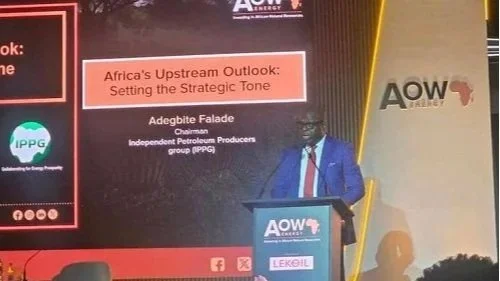
IPPG Chairman Adegbite Falade disclosed this at the opening of Africa Oil Week in Accra, Ghana, where he said the continent currently attracts only about three per cent of global energy investment despite accounting for roughly one-fifth of the world’s population.
/ You Might Also Like /




According to Falade, Africa currently receives only slightly more than half of the investment required to meet its energy-development needs, leaving a substantial financing gap.
The shortfall has implications beyond the energy industry, with inadequate investment capable of limiting industrial growth, infrastructure delivery, job creation and the development of new urban and housing markets.
Africa’s Energy Investment Gap Remains Significant
Falade said Africa’s annual energy investment requirement must rise substantially if the continent is to meet growing electricity demand and develop its natural resources.
He noted that Africa attracts only around three per cent of global energy investment despite representing about 20 per cent of the global population.
The imbalance highlights one of the continent’s major development challenges: Africa has significant natural resources but continues to struggle to attract sufficient long-term capital to convert those resources into productive infrastructure.
Falade said African countries must strengthen their own institutional and financial capacity as international investors increasingly reassess their exposure to the continent’s energy sector.
Africa Energy Bank Positioned to Mobilise Capital
The IPPG chairman identified the Africa Energy Bank (AEB) as an important instrument for addressing the continent’s financing gap.
The bank was established by the African Petroleum Producers Organisation (APPO) and Afreximbank to support energy-sector investments across Africa.
The institution has an initial capital base of $5 billion, with plans to mobilise $10 billion during its first phase and grow towards $15 billion by 2030, according to an earlier Vanguard report.
Former APPO Secretary-General Dr Omar Farouk said the bank is expected to commence operations in October 2026 after overcoming issues relating to shareholder agreements, its headquarters and financial commitments.
The establishment of the bank could provide an additional source of long-term financing for projects that may struggle to secure funding from traditional international investors.
Gas Infrastructure Needs Greater Investment
Falade also called for increased investment in Africa’s gas infrastructure, warning that the continent’s substantial gas reserves cannot deliver economic benefits without adequate pipelines and processing facilities.
He said natural gas currently accounts for around 40 per cent of Africa’s electricity generation.
However, Africa has less than 50,000 kilometres of oil and gas trunk pipelines, compared with more than 200,000 kilometres in Europe.
The infrastructure gap is particularly significant given Africa’s estimated 620 trillion cubic feet of proven natural gas reserves.
The IPPG chairman argued that investment must therefore extend beyond upstream production to include pipelines, processing facilities, power infrastructure and export systems.
Reliable Energy Is Critical to Housing Development
The energy investment gap has a direct connection to Africa’s housing and property markets.
Residential developments require reliable electricity for lighting, water pumping, security systems, lifts, cooling, communications and other essential services.
Where public electricity infrastructure remains inadequate, developers and residents often have to provide alternative power systems.
This increases development and operating costs and can make housing more expensive for consumers.
Greater investment in power generation and distribution could therefore improve the operating environment for housing developers while reducing the reliance of residential estates on expensive private energy systems.
Energy Infrastructure Can Influence Property Values
Infrastructure availability is one of the factors that influences where developers build and where buyers and tenants are willing to live.
Areas with reliable electricity, roads, water and transport connections tend to attract stronger development interest than locations where essential services remain inadequate.
Improved energy infrastructure can also support the growth of new economic centres.
When industrial and commercial investment follows improved power availability, demand for housing can increase as workers and businesses establish themselves around new economic corridors.
This means the proposed expansion of Africa’s energy infrastructure could have a wider effect on property markets if investment is successfully translated into reliable services.
Energy Investment Could Reduce Construction Pressures
The benefits could also extend to the construction sector.
Building-material manufacturers depend on energy to produce cement, steel, glass, tiles and other materials used in residential development.
Unreliable or expensive energy can increase production costs, which may ultimately be passed through to developers and homebuyers.
Greater investment in electricity and gas infrastructure could improve industrial productivity and potentially reduce some of the energy-related costs embedded in construction supply chains.
However, energy investment alone will not resolve Africa’s housing affordability challenges. Land costs, construction materials, financing, infrastructure deficits and household incomes will continue to determine the cost of delivering and purchasing homes.
Africa Must Develop Bankable Projects
While Falade called for more financing, he also stressed that African producers must develop projects capable of attracting investment.
He urged energy companies and governments to originate high-impact, bankable projects that can provide investors with clearer commercial prospects.
This is important because increasing available capital does not automatically guarantee higher investment.
Projects also require credible regulations, predictable fiscal policies, appropriate risk allocation, reliable infrastructure and clear revenue models.
For Nigeria, improvements in regulatory certainty and project bankability could help attract capital into gas processing, pipelines, power generation and other infrastructure that supports wider economic development.
Nigeria Could Benefit from Greater Regional Energy Investment
Nigeria has a significant role to play in Africa’s energy development because of its large oil and gas reserves and its position as one of the continent’s major energy markets.
Greater investment in gas infrastructure could strengthen domestic electricity generation while supporting industrial users and other sectors.
The development of pipelines and processing facilities could also create employment and stimulate economic activity around infrastructure corridors.
For the housing market, such investments could increase demand for residential properties in areas benefiting from new energy and industrial projects.
However, this would require coordinated planning to ensure that housing, transport, water, electricity and other urban infrastructure develop alongside new economic activity.
Energy Security and Urban Growth Are Connected
Africa’s rapidly growing population is increasing demand for housing, electricity, transport and other infrastructure.
If energy supply fails to keep pace with urbanisation, cities could face higher operating costs and greater pressure on existing infrastructure.
For property developers, unreliable electricity can make large-scale residential projects more expensive to operate and less attractive to prospective buyers and tenants.
A stronger energy investment pipeline could therefore support more sustainable urban expansion by providing the infrastructure required for new communities.
The relationship is particularly important in major African cities where land prices and housing costs are already pushing households towards peripheral locations.
Financing Must Extend Beyond Oil and Gas
Although the IPPG’s call centres heavily on oil and gas investment, the $200 billion annual requirement also includes electricity generation and distribution and clean-energy development.
This broader investment approach is important as African countries seek to increase energy access while managing the transition towards lower-carbon energy systems.
For housing markets, a diversified energy system could provide more reliable power and reduce dependence on a single source of electricity.
Renewable energy, gas-fired generation, grid expansion and distributed energy systems could all play complementary roles depending on the needs of individual cities and communities.
Outlook for Nigeria’s Housing Market
Africa’s requirement for more than $200 billion in annual energy investment by 2030 highlights the scale of infrastructure financing needed to support the continent’s next phase of economic and urban growth.
For Nigeria’s housing sector, greater energy investment could support development through improved electricity supply, stronger industrial activity, lower energy-related construction costs and the emergence of new economic corridors.
The Africa Energy Bank could become an important financing channel if it successfully mobilises capital for commercially viable energy projects.
However, the impact on housing will depend on whether energy investments translate into reliable infrastructure on the ground.
For Nigeria and the wider continent, the priority is not simply to attract more capital but to direct that capital towards power grids, gas pipelines, processing facilities, clean energy and other infrastructure capable of supporting industries, businesses and growing urban populations.
If that investment gap can be narrowed, the benefits could extend well beyond the energy sector to housing, construction, manufacturing, employment and long-term urban development.
READ MORE