Lagos Expands Rail Master Plan to 11 Rail Lines, One Monorail to Drive Urban Growth
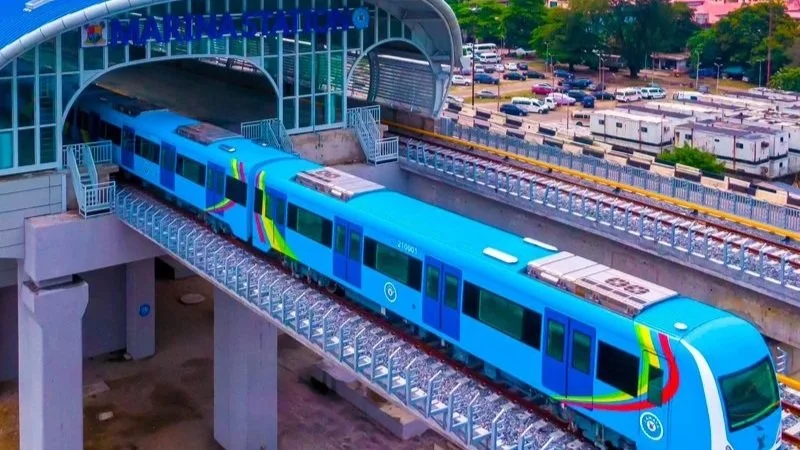
Expanded Rail Network to Transform Lagos Housing and Urban Development
Lagos State has expanded its Strategic Transport Master Plan (STMP) from six rail lines to 11 rail lines and one monorail, marking a significant step in the state's long-term strategy to build an integrated mass transit system that supports urban growth and economic development. The announcement came as the Lagos Metropolitan Area Transport Authority (LAMATA) signed an agreement with China Civil Engineering Construction Corporation (CCECC) to establish a Railway Training Centre that will develop the skilled workforce needed for the expanded rail network
/ You Might Also Like /




Rail Expansion to Support a Growing Megacity
According to LAMATA, the revised master plan reflects Lagos' increasing transportation needs as the state prepares for continued population growth and rising demand for efficient public transport. The expansion adds five new rail corridors to the original network, reinforcing the government's commitment to reducing traffic congestion through a modern, multimodal transport system.
Currently, only the first phases of the Lagos Rail Mass Transit (LRMT) Blue and Red Lines are operational, while construction continues on the second phases of both corridors. The expanded rail network is expected to improve connectivity across the state and support future urban development.
Railway Training Centre to Build Local Capacity
As part of the expansion strategy, LAMATA has partnered with CCECC to establish a Railway Training Centre that will provide internationally certified training for railway professionals.
LAMATA Managing Director, Engr. Abimbola Akinajo, said the enlarged rail network requires a structured training system covering railway operations, signalling, maintenance and customer service. She explained that the centre is intended to ensure Nigerians acquire the technical expertise needed to operate and maintain the state's growing rail infrastructure.
The agency noted that developing indigenous technical capacity remains a priority, reducing dependence on foreign expertise while creating employment opportunities for young Nigerians.
More Than 400 Personnel Already Trained
LAMATA disclosed that it has already trained more than 400 personnel, including train drivers, customer service officers and operations staff since commercial services began on the Blue and Red Lines.
The agency added that over 90% of personnel working on the Blue Line are Nigerians, with only a limited number of specialised technical roles still handled by foreign partners. The proposed Railway Training Centre is expected to build on this progress by producing a larger pool of skilled railway professionals as additional lines become operational.
Future Rail Corridors to Expand Connectivity
The updated Strategic Transport Master Plan includes several major corridors designed to improve mobility across Lagos. Among them are the proposed Green Line, Purple Line, Orange Line and Yellow Line, alongside the newly expanded network.
One of the flagship projects is the approximately 68-kilometre Green Line, which will connect Marina to the Lekki Free Zone. The project is being developed in partnership with the Ministry of Finance Incorporated (MOFI) and China Harbour Engineering Company (CHEC), with the Federal Government providing counterpart funding.
LAMATA also confirmed that the Lagos Red Line could eventually extend into Ogun State, strengthening regional connectivity and supporting economic integration between the neighbouring states.
Integrated Transport Strategy
The expanded rail master plan aligns with Lagos State's broader transportation strategy, which increasingly prioritises rail, Bus Rapid Transit (BRT) and ferry services over continuous road expansion.
State officials have argued that relying solely on road construction is no longer sufficient to meet the mobility needs of a rapidly growing population. Instead, the government aims to develop an integrated transport network that improves accessibility, reduces travel time and supports sustainable urban development.
Implications for Housing and Urban Development
Beyond improving public transportation, the expanded rail network is expected to influence housing and real estate development across Lagos. Improved connectivity can unlock new residential growth corridors, increase the attractiveness of emerging communities and encourage transit-oriented developments around future rail stations.
For developers and investors, expanded rail infrastructure often enhances land values, improves access to employment centres and stimulates commercial activity in previously underserved locations. As Lagos continues to expand its housing stock, the integration of transport and urban planning is expected to play an increasingly important role in shaping sustainable city growth.
Conclusion
The expansion of Lagos' Strategic Transport Master Plan to 11 rail lines and one monorail represents one of the state's most ambitious investments in urban mobility. Alongside the establishment of a Railway Training Centre, the initiative demonstrates a commitment to strengthening local technical capacity while building the infrastructure required to support a rapidly growing population. For the housing and real estate sector, the expanded rail network has the potential to reshape development patterns, improve accessibility and create new opportunities for long-term urban growth.
READ MORE