Housing Affordability and Urban Growth Dominate WUF13 Discussions
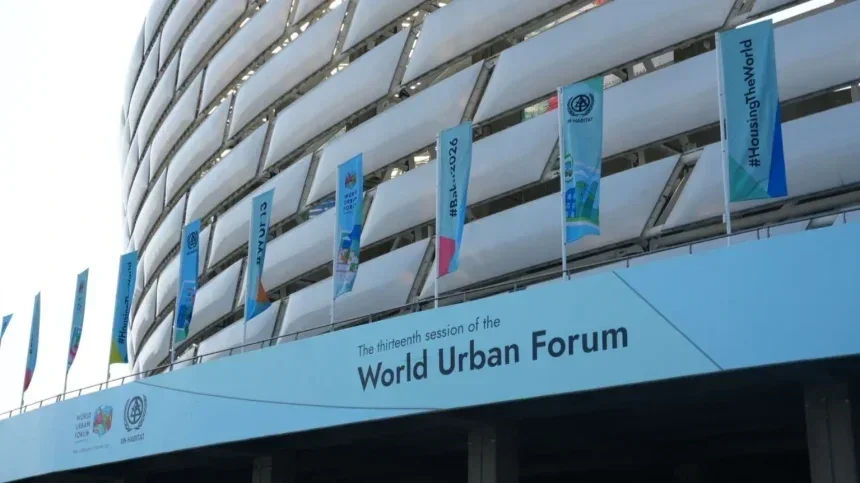
WUF13 Opens Amid Rising Pressure on Affordable Housing Worldwide
The global housing crisis has emerged as a central issue at the opening of the World Urban Forum 13 (WUF13) in Baku, Azerbaijan, where policymakers, urban planners, investors and development institutions are gathering to address mounting pressures linked to housing affordability, rapid urbanisation and sustainable city development.
/ You Might Also Like /




Organised by the United Nations Human Settlements Programme (UN-Habitat), the forum brings together governments, financial institutions, academics and private-sector stakeholders to discuss strategies for improving urban resilience and expanding access to affordable housing worldwide. Delegates at the event are expected to focus heavily on housing finance, infrastructure deficits, climate adaptation and inclusive urban growth.
Housing Affordability Emerges as Global Concern
Participants at WUF13 highlighted worsening affordability pressures affecting both developed and emerging economies. Rising construction costs, inflation, population growth and limited access to mortgage finance continue to increase housing shortages across major urban centres globally.
According to UN-Habitat estimates, more than 1.6 billion people worldwide currently lack access to adequate housing, with urban populations projected to grow significantly over the coming decades.
Experts at the forum warned that without accelerated investment in affordable housing and urban infrastructure, cities may face worsening inequality, overcrowding and social instability.
Urbanisation Driving Infrastructure Pressure
Rapid urbanisation remains one of the dominant themes shaping discussions at the forum. Analysts note that expanding city populations continue to place pressure on transportation systems, water supply networks, sanitation facilities and energy infrastructure across both advanced and developing economies.
African and Asian cities are expected to account for a significant share of future urban population growth, increasing the urgency for long-term planning and sustainable infrastructure investment.
Delegates stressed that urban development strategies must integrate affordable housing, public transport, climate resilience and digital infrastructure to support inclusive economic growth.
Climate Resilience and Sustainable Cities Gain Attention
Climate change and environmental sustainability also feature prominently at WUF13, with participants examining how extreme weather events, rising temperatures and environmental degradation increasingly affect urban populations and housing systems.
Urban planners and environmental experts called for stronger adoption of green building practices, resilient infrastructure and low-carbon development models capable of supporting long-term urban sustainability.
According to UN-Habitat, cities account for approximately 70% of global carbon emissions, making sustainable urban development central to broader climate transition efforts.
The forum is expected to explore financing mechanisms capable of supporting climate-resilient housing and infrastructure projects, particularly within vulnerable developing economies.
Housing Finance Remains Key Development Challenge
Access to long-term housing finance continues to represent a major obstacle for many countries facing large housing deficits. Delegates at WUF13 noted that weak mortgage systems, high interest rates and inadequate capital markets continue to limit homeownership opportunities for low- and middle-income households.
Development finance institutions and private investors are therefore exploring new funding structures including blended finance, public-private partnerships and green housing investment models.
Industry experts argue that stronger housing finance systems could stimulate economic growth, expand construction activity and improve urban living standards while supporting job creation across multiple sectors.
Nigeria and African Housing Markets Under Spotlight
African housing markets are expected to receive substantial attention during the forum due to rapid urban growth and persistent infrastructure deficits across the continent. Nigeria, which faces one of the world’s largest housing deficits, remains a key example of the affordability and financing challenges confronting rapidly urbanising economies.
Stakeholders from across Africa continue to advocate for increased investment in affordable housing, improved land administration systems and stronger policy coordination between governments and private developers.
Analysts note that demographic expansion and urban migration will continue driving housing demand across African cities for decades, creating both investment opportunities and policy challenges.
Outlook for Global Housing Policy
As WUF13 continues in Baku, discussions are expected to shape future policy frameworks surrounding urban planning, housing finance and sustainable development. Delegates are likely to emphasise the importance of coordinated global action involving governments, financial institutions and the private sector
For policymakers and investors, the forum highlights the growing recognition that housing affordability and urban infrastructure are increasingly linked to economic stability, social inclusion and long-term sustainability
The outcomes of WUF13 may influence future urban development strategies and investment priorities as countries seek solutions to rapidly intensifying housing pressures worldwide.
READ MORE