Federal Housing Authority Holds Nearly ₦5tn in Property Assets, MD Reveals
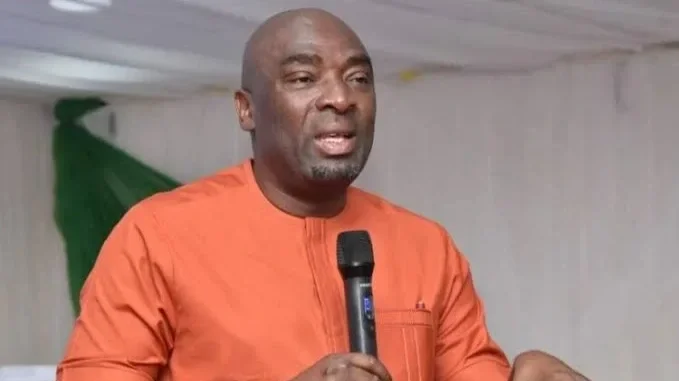
Federal Housing Authority MD Oyetunde Ojo has disclosed the value of the agency’s property holdings
The Federal Housing Authority (FHA) holds property assets worth nearly ₦5 trillion, according to its Managing Director and Chief Executive Officer, Oyetunde Ojo, highlighting the scale of the agency’s property portfolio as the government seeks to expand housing delivery across Nigeria.
Ojo disclosed the valuation during an FHA media chat broadcast by Arise News TV on Monday, where he also provided updates on housing projects and financing arrangements being pursued by the authority.
/ You Might Also Like /




FHA Links Property Value to Ground Rent
Ojo said the authority’s property holdings are valued at close to ₦5 trillion, linking the figure to the collection of ground rent from allottees and occupants of FHA estates.
The disclosure provides an indication of the scale of the land and property assets under the authority’s management.
The value also raises questions about how effectively public property assets can support housing delivery, particularly as the government seeks to increase the supply of homes and improve access to housing.
FHA Says 10,000 to 15,000 Housing Units Are Ready
Ojo said between 10,000 and 15,000 housing units are ready for delivery under the current administration.
He also said the government is working with private investors in the real estate sector and highlighted the MOFI Real Estate Investment Fund (MREIF), which he said has about ₦200 billion released to the Ministry of Finance Incorporated and available for private investors to access.
The use of private capital remains important to housing delivery because government funding alone may not provide the scale of investment required to address Nigeria’s housing needs.
FHA Provides Updates on Housing Projects
The FHA managing director also provided updates on several housing developments across the country.
In Ajoda, Ibadan, about 120 housing units have been built, with additional units under construction. Another 100 units have been delivered in Lugbe, Abuja.
In Gwari, Abuja, close to 400 units are expected to be commissioned. Ojo said the development was delivered without funding from the Federation Account.
The authority is also preparing to commission 1,550 housing units in Jibi, Abuja, which were procured for the Nigerian Army and constructed in less than a year.
At Karsana, Abuja, the development comprises 3,112 housing units, with the first phase of about 2,000 units expected to be commissioned soon.
More Housing Projects Planned Across States
The FHA is also working on developments outside Abuja.
Between 500 and 600 housing units in Kano are expected to be commissioned by the Ministry of Housing and Urban Development, while about 500 units in Lagos are also nearing commissioning.
The authority has additionally commenced housing projects in several states, including Odukpani in Cross River State.
The geographical spread of the projects reflects efforts to move housing delivery beyond Abuja and address demand across different regions.
Karsana Development Highlights Infrastructure Challenge
The Karsana project illustrates the relationship between housing delivery and infrastructure.
Ojo said the FCT Minister, Nyesom Wike, is undertaking road construction in Karsana to improve access to the development.
This highlights a recurring issue in Nigeria’s housing market: constructing residential units without adequate supporting infrastructure can limit the functionality and attractiveness of new communities.
Roads, drainage, electricity, water and public transportation remain important components of successful housing delivery.
Private Capital Remains Central to Housing Delivery
The FHA's reference to private investment highlights the increasing importance of public-private collaboration in the housing sector.
Government agencies control significant land and property assets, while private developers and financial institutions can provide capital and development expertise.
A more effective partnership between both sides could help accelerate housing delivery, particularly if public land is combined with private financing and construction capacity.
However, such partnerships require transparent land arrangements, clear development agreements and appropriate safeguards for homebuyers.
Housing Delivery Faces Wider Structural Challenges
The expansion of housing projects does not eliminate the broader challenges affecting Nigeria's housing market.
Limited access to affordable mortgages, high construction costs, land administration problems, fraudulent property transactions and weak consumer protection continue to affect the sector.
The government has proposed a National Housing Finance Authority as part of wider reforms intended to strengthen mortgage financing, expand access to the National Housing Fund for informal-sector workers and improve opportunities for Nigerians in the diaspora.
Proposed housing and built-environment reforms also include developer licensing, escrow arrangements for buyers' funds, stronger construction standards, improved land administration and a National Housing Data Observatory.
Asset Value Must Translate Into Housing Delivery
The nearly ₦5 trillion valuation of FHA property holdings underscores the importance of effective asset management within the public housing sector.
The key issue for the housing market is not simply the value of assets held by the authority, but how those assets contribute to additional housing supply, infrastructure and access to homes.
If public land and property assets can be effectively integrated with private capital and appropriate housing finance, they could provide a larger platform for residential development.
However, the effectiveness of this approach will depend on project execution, affordability, transparency and the ability to convert available assets into completed and occupied homes.
Outlook
The FHA's disclosure of nearly ₦5 trillion in property holdings comes as the government continues to expand housing projects and seek greater private-sector participation in housing delivery.
The authority's ongoing projects across Abuja, Lagos, Kano, Ibadan and other locations indicate continued investment in new housing supply.
For the wider housing market, the more significant measure will be how efficiently public assets, private capital and housing finance can be combined to deliver homes that are accessible to the households facing the greatest affordability pressures.
READ MORE