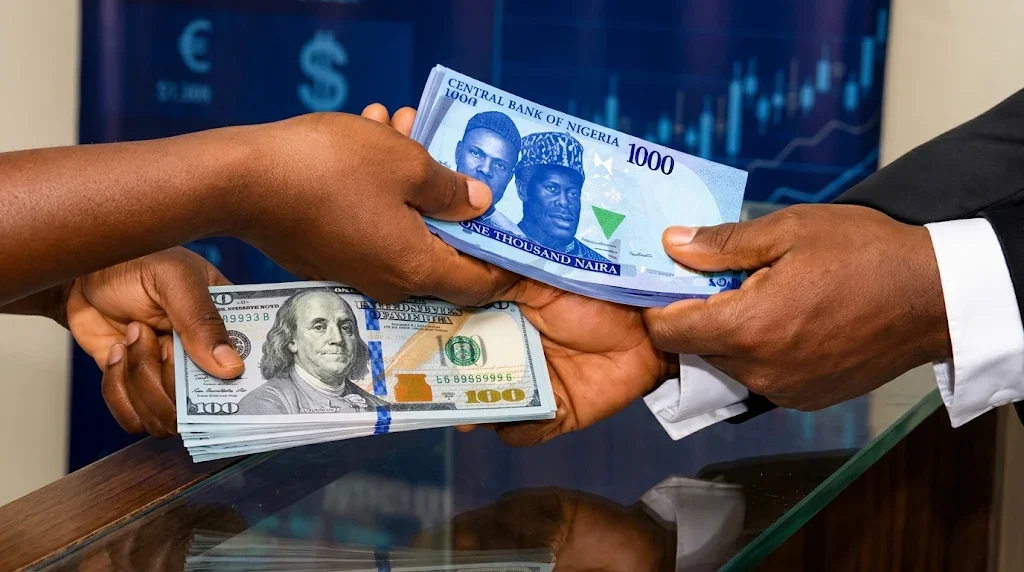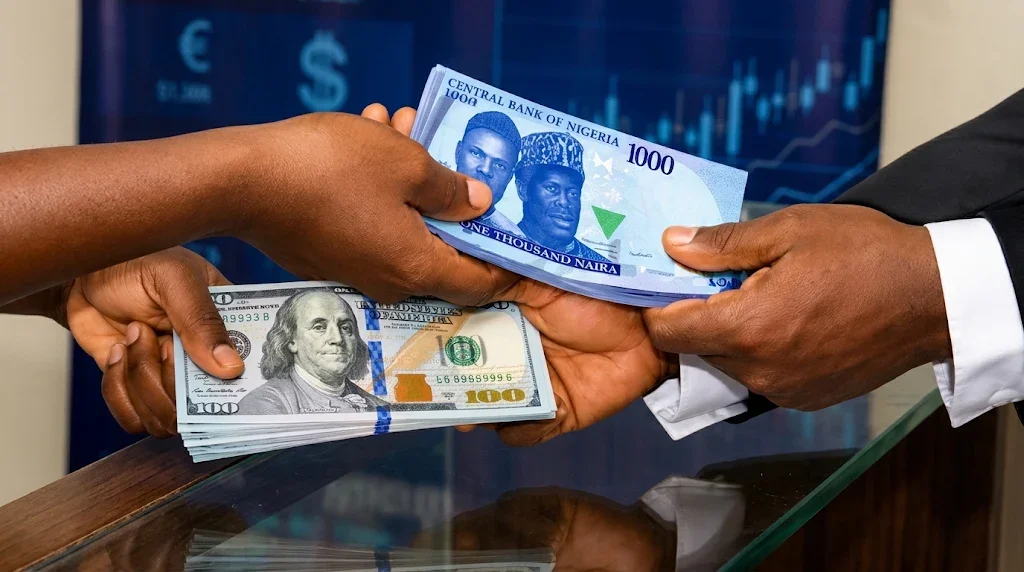
Naira Weakens to ₦1,394/$ Despite $4.67bn Weekly FX Turnover
Nigeria’s foreign exchange market recorded $4.67 billion in transactions in the week ended November 20, 2026, representing a 36.59% increase from the $3.42 billion traded in the preceding week.
The latest turnover was the second-highest weekly value recorded in 2026, trailing the $5.06 billion reported for the week ended August 21.
/ You Might Also Like /




However, the increase in trading activity coincided with further weakness in the naira, which depreciated by 2.50% during the week to close at ₦1,394 per dollar, its weakest closing level in eight months.
Data from FMDQ, reviewed by Nairametrics, showed that the increase came almost entirely from spot foreign exchange transactions, while forward trading declined sharply.
Spot Transactions Account for 99.4% of FX Turnover
Spot transactions rose by 43.08% to $4.64 billion during the review week, accounting for 99.40% of total foreign exchange turnover.
This compared with a 94.89% share in the preceding week, indicating a greater concentration of trading in immediate currency transactions.
Average daily foreign exchange turnover increased to $934.50 million from $684.18 million, reflecting stronger activity across the market.
In contrast, forward foreign exchange transactions fell by 83.88% to $28.19 million, reducing their contribution to total turnover to 0.60%.
The decline represented a $146.74 million reduction in forward transactions, even as spot trading increased by approximately $1.40 billion.
The figures point to a significant shift towards spot transactions during the week, although they do not establish whether the higher volume resulted primarily from increased dollar supply or stronger demand.
Foreign Investor Demand Outweighs CBN Intervention
The naira weakened despite the Central Bank of Nigeria's reported intervention in the foreign exchange market.
According to Cordros Securities, foreign portfolio investor demand exceeded the $1.30 billion in dollar sales attributed to the CBN during the review period.
At the official Nigerian Foreign Exchange Market (NFEM) window, the naira weakened from ₦1,360 per dollar on Monday, November 16, to ₦1,394 on Friday, November 20.
The parallel-market rate also depreciated by 2.33% to ₦1,458 per dollar, while the one-month forward rate weakened by 2.7% to ₦1,414.99 per dollar.
Nairametrics' calculation of daily CBN interbank figures showed approximately $2.55 billion in turnover across the five trading sessions.
This figure differs from the $4.67 billion reported by FMDQ because the two datasets have different reporting scopes. They should not be added together or treated as directly comparable measures of market liquidity.
Dollar Turnover Approaches 2026 Peak
The $4.67 billion recorded during the latest week was below the $5.06 billion peak reported for the week ended August 21, but exceeded the $4.375 billion recorded in the week ended July 24.
The latest increase followed a recovery in foreign exchange trading from $1.81 billion in the week ended November 6 to $3.42 billion in the week ended November 13.
The sequence indicates considerable fluctuations in weekly market activity, even as the latest figures show a strong recovery in spot transactions.
Meanwhile, Nigeria's gross external reserves declined by $211.92 million to $54.65 billion as of November 19, 2026.
The naira also weakened across longer-dated forward contracts. The three-month forward rate depreciated by 2.7% to ₦1,451.81 per dollar, while the six-month rate weakened by 2.1% to ₦1,495.98. The one-year forward rate depreciated by 2.0% to ₦1,597.57 per dollar.
CBN Monetary Policy Meeting Draws Attention
The foreign exchange market developments come as the CBN's Monetary Policy Committee begins its two-day meeting on November 23 and 24, 2026.
The meeting takes place amid continued pressure on the naira, fluctuating dollar turnover and concerns about the sustainability of foreign exchange inflows.
Cordros Securities expects demand pressures to persist through the remainder of 2026, citing weaker net foreign inflows and investor caution ahead of the 2027 general elections.
Market analysts have also identified political uncertainty, possible investor exits and increased festive-season import demand as factors that could influence dollar supply and demand.
The latest figures therefore present a mixed picture of Nigeria's foreign exchange market: trading activity has increased substantially, but the naira has continued to depreciate.
For businesses, investors and import-dependent sectors, the key indicators to watch will remain the availability of foreign currency, the consistency of capital inflows, external reserves and the CBN's policy response.
READ MORE