Tinubu Targets 10 Million National Housing Fund Contributors by 2028
President Bola Tinubu has proposed increasing the number of National Housing Fund (NHF) contributors from six million to 10 million by 2028 as part of a broader housing agenda outlined in the All Progressives Congress (APC) manifesto for the 2027 presidential election.
The proposal would add four million contributors to the fund, expanding the pool of long-term financing available to support mortgage lending and housing development across Nigeria.
/ You Might Also Like /




The target forms part of the manifesto’s wider housing plan for 2027–2031, which includes mortgage market reforms, increased funding for housing finance institutions, land administration improvements and new regulations for the built environment.
NHF Expansion Linked to Wider Mortgage Reforms
The manifesto proposes growing NHF membership from six million to 10 million by 2028 while increasing the capitalisation of the Ministry of Finance Incorporated Real Estate Investment Fund (MREIF) towards ₦1 trillion.
It also proposes bringing pension funds into the MREIF structure to support the provision of fixed-rate mortgages with repayment periods of up to 20 years.
Other planned measures include completing the recapitalisation of the Federal Mortgage Bank of Nigeria (FMBN), establishing a Mortgage Registry and raising the maximum mortgage loan from ₦50 million to ₦85 million.
The proposals are intended to strengthen the institutions and funding channels that support mortgage lending, while expanding access to long-term housing finance.
The manifesto also identifies the proposed National Housing and Built Environment Regulation Policy and six accompanying bills as part of the reform programme. The measures would include developer licensing and mandatory escrow accounts for off-plan property transactions.
Manifesto Sets Target of 200,000 Homes by 2031
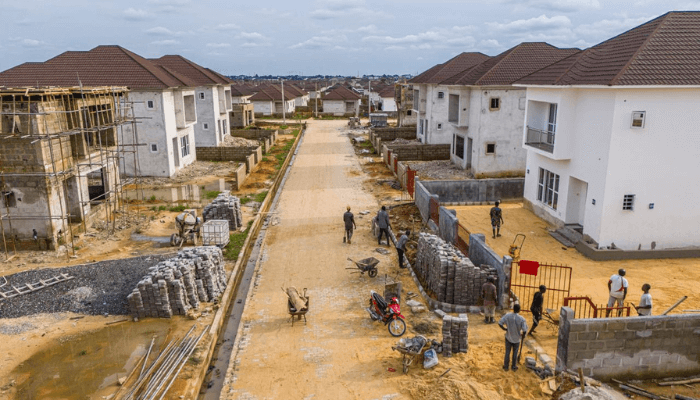
Beyond expanding housing finance, the manifesto proposes delivering 200,000 homes by 2031 through existing federal housing projects, social housing initiatives and partnerships with private-sector developers.
It also targets the completion and handover of more than 15,000 Renewed Hope housing units across 14 sites.
Under the proposed Tinubu Mass Social Housing Scheme, the administration plans to provide 200 homes in each of Nigeria’s 774 local government areas. This would amount to 154,800 housing units if implemented across all local governments.
The manifesto proposes a public dashboard to track housing delivery, including completed and handed-over homes as well as properties financed through mortgages.
Land Administration and Housing Data Reforms
The housing agenda also includes measures to improve land administration and make property transactions more transparent.
Through the proposed Land4Growth initiative, the first phase would target one million digital land titles across 18 to 20 states. The programme is expected to support more efficient land documentation and improve the availability of formal property titles.
The manifesto also proposes establishing a National Housing Data Centre to publish monthly information on housing approvals, construction starts, completed units, property prices and mortgage activities.
These measures would provide policymakers, investors and housing professionals with more consistent information for assessing housing supply, market activity and investment opportunities.
The proposed reforms would also cover affordable rental housing, incremental housing, developer financing and housing finance for low-income households. The manifesto further proposes extending humanitarian housing support for families displaced by conflict beyond the 252 homes already piloted.
Within the first 100 days, the proposed administration plans to seek Presidential and Federal Executive Council approval for the housing regulation policy, National Mortgage Industry Policy and six accompanying reform bills.
Housing Finance Expansion Faces Delivery Challenge
The proposed increase in NHF contributors comes amid a substantial housing shortage and limited access to mortgage financing. Nigeria’s housing deficit stood at 14.925 million units in 2025, according to data from the National Housing Data Technical Committee.
The Federal Government has previously estimated that the country needs approximately 550,000 housing units annually, requiring about ₦5.5 trillion in investment each year over the next decade.
Existing interventions offer an indication of the financing effort required. MREIF, launched in December 2024 to provide long-term funding to mortgage lenders, had disbursed ₦140 billion through 21 financial institutions by August 2026. The funding supported 2,018 mortgages across 27 states, according to the Presidency.
However, expanding the number of NHF contributors will not automatically translate into more completed homes or accessible mortgages. The impact will depend on how effectively the fund converts contributions into loans, the capacity of FMBN and other mortgage institutions to process applications, and the availability of housing that contributors can afford.
High construction costs, expensive financing and limited access to mortgage credit remain significant constraints on homeownership.
The proposed 10 million contributor target therefore raises a broader implementation question: whether a larger contribution base, alongside the planned institutional and regulatory reforms, can deliver more affordable mortgages and increase housing supply at a scale that meaningfully addresses Nigeria’s deficit.
READ MORE