Lagos Building Collapse Claims Eight Lives, 26 Survivors Rescued
Search and Rescue Operations Continue Following Lagos Building Collapse
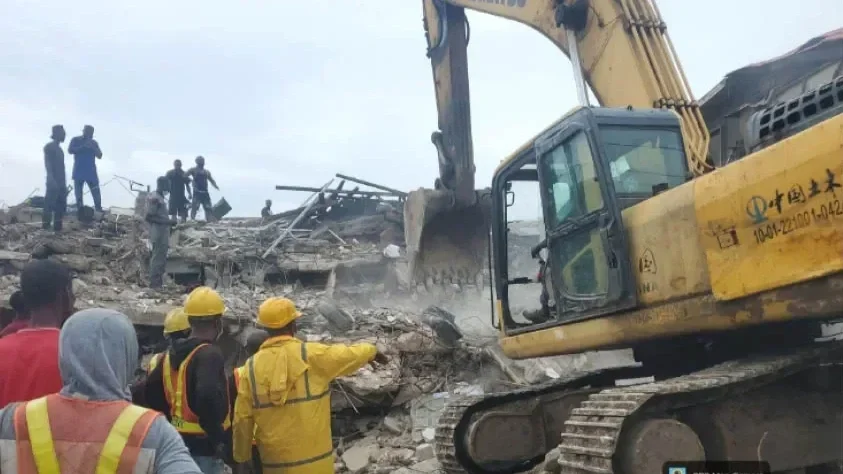
At least eight people have died and 26 others have been rescued following the collapse of a three-storey building in the Alakija area of Lagos State. The incident, which occurred along Old Ojo Road near Alakija Bus Stop in the Ori-Ade Local Council Development Area, triggered a large-scale emergency response involving multiple government agencies and rescue teams.
/ You Might Also Like /




The Lagos State Emergency Management Agency (LASEMA) confirmed that, as of the latest official update, 26 victims had been rescued alive while eight fatalities, including a baby girl, had been recorded. Rescue operations remained ongoing as emergency personnel continued efforts to locate additional victims who may still be trapped beneath the rubble.
Rescue Operations Mobilise Multiple Agencies
Emergency responders arrived at the scene shortly after receiving distress alerts regarding the collapse. Agencies participating in the operation include LASEMA, the Lagos State Fire and Rescue Service, the Federal Fire Service, the Nigeria Police Force, the Nigerian Navy, the Lagos Neighbourhood Safety Corps, the Nigerian Red Cross Society, and other emergency response organisations.
Heavy-duty equipment, including excavators, was deployed to assist with the search-and-rescue operation. Rescue teams continued systematic excavation of the debris in an effort to reach potential survivors and recover victims trapped beneath the collapsed structure.
Authorities urged residents and onlookers to stay away from the site to allow emergency workers unrestricted access to carry out rescue operations safely and efficiently.
Eyewitnesses Raise Concerns About Building Condition
Witness accounts from the scene suggested that concerns had previously been raised regarding the condition of the building. Some residents claimed the structure had shown signs of distress and visible cracks before the collapse. Others alleged that warnings had been issued regarding the building's structural integrity.
Survivors and eyewitnesses described scenes of panic as occupants attempted to escape when the structure suddenly gave way. Rescue teams worked throughout the day as families gathered at the site seeking information about loved ones believed to be inside the building at the time of the collapse.
Authorities Yet to Confirm Cause
As of the time of reporting, authorities had not officially determined the cause of the collapse. Investigations are expected to commence following the completion of rescue and recovery operations.
Officials are expected to examine factors including structural integrity, compliance with approved building standards, maintenance history, and regulatory oversight. Findings from the investigation could influence future enforcement measures aimed at improving building safety across Lagos State.
Implications for Housing and Urban Development
The latest collapse adds to ongoing concerns about building safety and regulatory compliance within Nigeria's construction and real estate sectors. Structural failures continue to pose risks to lives, property, and investor confidence, particularly in densely populated urban centres where demand for residential and commercial developments remains high.
Urban development experts have consistently emphasised the importance of strict adherence to building codes, professional supervision, regular structural assessments, and effective development control mechanisms. The incident is likely to intensify calls for stronger enforcement of building regulations and more rigorous monitoring of distressed structures.
For housing stakeholders, the tragedy underscores the need for sustainable urban development strategies that prioritise safety, structural integrity, and accountability alongside efforts to expand housing supply.
Conclusion
The collapse of the three-storey building in Lagos has resulted in the loss of at least eight lives while 26 people have been rescued from the rubble. As emergency responders continue search-and-rescue efforts, attention is expected to shift towards determining the cause of the collapse and identifying measures needed to strengthen building safety standards. The outcome of the investigation could have important implications for construction regulation, urban planning, and real estate development across Lagos and other Nigerian cities.
READ MORE