Cross River Calls for Scalable Housing Systems to Close Nigeria's Housing Gap
Developers Must Build Housing Systems, Not Estates, Says Cross River
The Cross River State Government has called on housing developers across Nigeria to move beyond constructing isolated residential estates and instead focus on building scalable housing systems capable of addressing the country's growing housing deficit. The appeal reflects the state's broader strategy to promote affordable homeownership through integrated planning, innovative financing and stronger collaboration between government, private investors and local communities.
/ You Might Also Like /




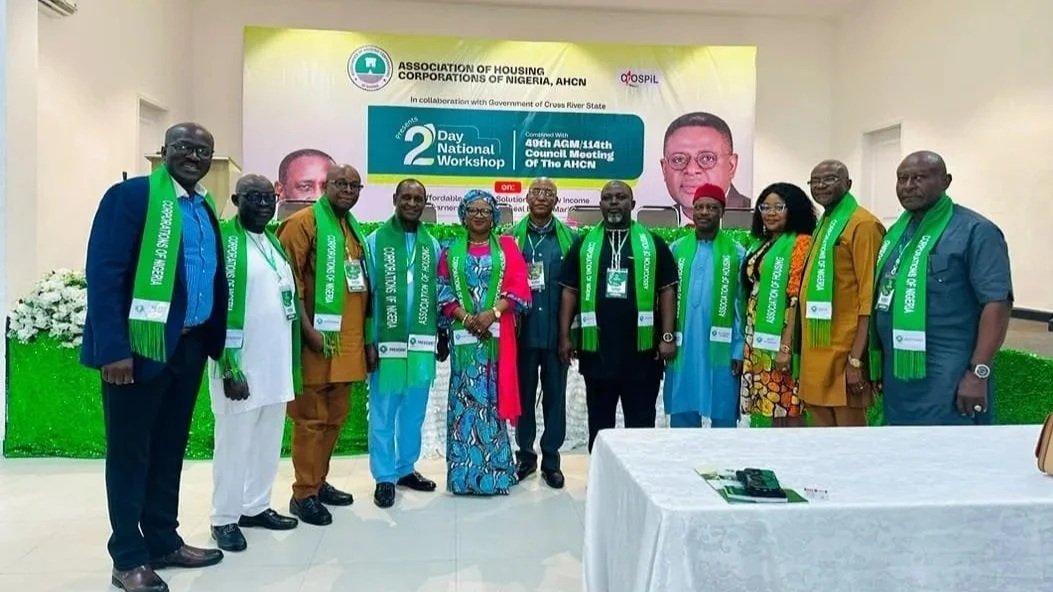
Speaking on behalf of Governor Bassey Otu at a national housing workshop organised by the Association of Housing Corporations of Nigeria (AHCN) in Calabar, Commissioner for Housing Dr Beatrice Igwe said Nigeria's housing challenges require a structural shift from fragmented estate developments to sustainable systems that can be replicated at scale. She noted that conventional housing delivery models have failed to keep pace with rising demand, particularly among low-income households that remain excluded from formal housing finance.
Government Calls for a System-Based Housing Approach
According to Dr Igwe, addressing Nigeria's housing deficit requires more than increasing the number of housing estates.
She argued that developers should establish integrated housing systems that combine efficient construction methods, sustainable financing, institutional partnerships and long-term urban planning. Such an approach, she said, would enable housing delivery on a scale capable of meeting the country's rapidly growing demand.
The Commissioner stressed that housing should be viewed as a complete ecosystem involving land administration, infrastructure, financing, construction technology and community participation rather than as isolated real estate projects.
Public-Private-Community Partnership Model Gains Momentum
Cross River is advancing this vision through its Public-Private-Community Partnership (PPCP) model, which seeks to combine government leadership, private sector investment and community engagement to accelerate affordable housing delivery.
As part of the initiative, the state announced that the groundbreaking ceremony for the 500-unit Okuni Housing Estate in the Central Senatorial District will take place on 4 July 2026. The model will subsequently be replicated in the Northern and Southern Senatorial Districts, with a target of delivering 1,500 housing units statewide.
The Commissioner also disclosed that a separate 50-unit free housing project for indigent women has reached approximately 80% completion, reflecting the state's efforts to improve housing access for vulnerable groups.
Developers Encouraged to Standardise and Collaborate
Dr Igwe urged housing corporations and private developers to adopt standardised building designs and strengthen collaboration across the industry.
She called for greater engagement with institutions such as the Federal Mortgage Bank of Nigeria (FMBN) and Family Homes Funds Limited (FHFL) to unlock long-term financing for affordable housing projects.
According to the Commissioner, improving transparency, sharing operational best practices and expanding access to institutional capital will be essential to scaling housing delivery across Nigeria.
Federal Government Reaffirms Housing Reform Agenda
Representing the Federal Ministry of Housing and Urban Development, Arc. Dennis Pau Ishaya reiterated the Federal Government's commitment to reforms aimed at making the housing sector a stronger contributor to economic growth, employment and social inclusion.
He highlighted ongoing implementation of the Renewed Hope Housing Programme, which is delivering housing projects across Nigeria's six geopolitical zones and the Federal Capital Territory.
The Federal Government is also prioritising the use of locally produced building materials, land administration reforms, expanded mortgage accessibility and increased private sector participation to improve housing delivery nationwide.
Industry Calls for Innovation in Housing Delivery
At the workshop, industry leaders argued that modern construction technologies and alternative financing mechanisms are essential to delivering affordable housing at the scale required by Nigeria's growing population.
The President of the Association of Housing Corporations of Nigeria, ESV Eno Obongha, noted that the country's housing deficit continues to widen, leaving homeownership beyond the reach of many low-income earners.
He urged stakeholders to focus on innovative housing delivery systems capable of producing quality homes faster, more efficiently and at lower costs.
Implications for Nigeria's Housing Market
The Cross River government's position reflects a broader shift within Nigeria's housing sector towards integrated housing delivery models.
Rather than relying solely on conventional estate developments, policymakers are increasingly promoting approaches that combine affordable financing, efficient land administration, modern construction technologies and institutional collaboration.
For developers and investors, system-based housing models could improve project scalability, reduce development costs and strengthen access to long-term funding while supporting more sustainable urban growth.
The approach also aligns with ongoing national housing reforms designed to increase private sector participation and accelerate affordable housing delivery.
Looking Ahead
Cross River State's call to "build systems, not estates" represents a strategic shift in how affordable housing is conceived and delivered in Nigeria. By encouraging scalable development models supported by innovative financing, institutional partnerships and community participation, the state aims to address structural barriers that have limited housing supply for decades.
As both federal and state governments continue implementing housing reforms, the emphasis on integrated housing systems could shape future policy and investment decisions across the real estate sector. For developers, financiers and policymakers, the message is clear: sustainable housing delivery will depend not only on constructing more homes but also on building systems capable of supporting inclusive, long-term urban development.
READ MORE