Nigeria’s Commercial Office Market Shifts Towards Dedicated Corporate Workspaces
Nigeria’s commercial office market is undergoing a shift as large companies increasingly move beyond traditional co-working arrangements and seek dedicated workplaces designed around their operational, security and technology requirements.
The trend marks a change from the post-pandemic period, when remote work, hybrid arrangements and flexible office spaces gained popularity among businesses. According to workplace strategists cited by BusinessDay, larger multinational and indigenous companies are now placing greater emphasis on dedicated, business-ready offices that offer greater control and long-term flexibility.
/ You Might Also Like /




Large businesses reassess co-working model
Co-working spaces remain relevant for start-ups, entrepreneurs, project teams and businesses requiring short-term accommodation. However, larger corporate occupiers face requirements that shared workplaces may not always meet.
Security, regulatory compliance, corporate branding, specialised infrastructure and operational control are increasingly influencing office-location decisions.
BusinessDay reports that some large occupiers are consequently seeking dedicated or demised office spaces that can be configured to meet their specific operational requirements.
Office demand shifts beyond rental space
The changing preference is also altering what businesses expect from commercial property providers.
Rather than treating an office primarily as a leased floor or physical workspace, companies are increasingly considering factors such as business continuity, technology infrastructure, employee experience, sustainability and the speed at which a workplace can become operational.
Research from global real estate advisers including JLL and CBRE, cited by BusinessDay, points to these factors becoming increasingly important in corporate workplace decisions.
This shift could influence how developers design and market Grade A office developments, particularly in major commercial centres such as Lagos and Abuja.
Businesses seek faster office deployment
Establishing a conventional corporate office can involve several stages, including architectural design, construction or fit-out, information and communications technology installation, furniture procurement, engineering works and facilities management.
For companies establishing regional offices or expanding operations, coordinating these activities can increase the time and resources required before employees can occupy the premises.
The emerging demand for operationally ready workplaces is therefore partly driven by businesses seeking to reduce this complexity and begin operations more quickly.
Abuja reflects changing corporate demand
Abuja is emerging as one market where the shift is becoming visible.
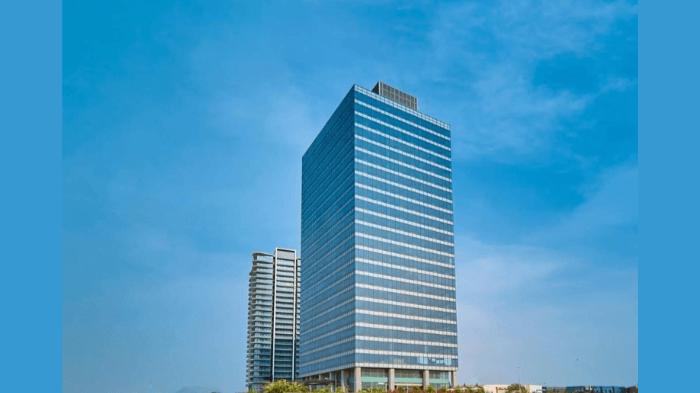
BusinessDay identified the World Trade Centre Abuja as an example of a development serving corporate occupiers seeking professionally managed office environments. The report lists companies including Microsoft, Citibank, General Electric, S&P Global Commodity Insights, Agip and Seplat Energy among publicly announced occupiers.
The development offers Grade A office accommodation alongside engineering systems, backup power, fibre-ready infrastructure, access control and facilities management.
However, these features should be viewed as examples of the broader workplace trend rather than evidence that the development represents the entire Abuja office market.
Flexibility is being redefined
The shift away from co-working does not mean that businesses are abandoning flexible working arrangements.
Instead, flexibility is increasingly being incorporated into dedicated corporate workplaces.
Larger companies may still require adaptable floor plans, expansion capacity and technology infrastructure while retaining greater control over security, branding and workplace operations.
This creates a more differentiated commercial office market in which co-working, serviced offices and conventional leased premises can continue to serve different categories of occupiers.
Implications for commercial real estate
The changing nature of office demand could influence investment and development decisions across Nigeria's commercial property sector.
Developers may need to place greater emphasis on reliable power, telecommunications infrastructure, security, building management and efficient fit-out capabilities when designing offices for large corporate tenants.
For investors, the shift could also increase the importance of tenant quality, occupancy stability and the ability of buildings to meet specialised corporate requirements.
At the same time, developers need to consider the cost implications of providing higher-specification infrastructure, particularly in an environment where construction, energy and operating costs remain elevated.
Office market faces changing tenant expectations
The transition also highlights how the Nigerian commercial property market is evolving beyond the traditional focus on location and rental rates.
Businesses are increasingly assessing the total cost and operational implications of occupying a property. This includes mobilisation time, business disruption, technology requirements, maintenance and the reliability of essential building systems.
For landlords and developers, meeting these expectations could become increasingly important as competition for high-quality corporate tenants intensifies.
Outlook
Nigeria’s commercial office market is not moving away from flexible work altogether. Instead, large corporate occupiers are increasingly seeking flexibility within dedicated workplaces that provide greater control and operational resilience.
The development points to a more segmented office market, with co-working spaces continuing to serve smaller and short-term users while dedicated, operationally ready offices attract larger organisations.
For commercial property investors and developers, understanding these changing tenant requirements will be important as Nigeria’s office market adjusts to the next phase of workplace demand.
READ MORE