Court Orders Final Forfeiture of UK Property Linked to Jeremiah Useni
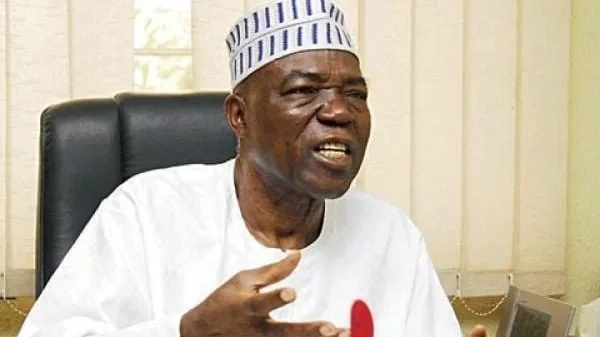
Court Forfeits Useni-Linked UK Property to FG
A Federal High Court in Abuja has ordered the final forfeiture of a United Kingdom property linked to Jeremiah Useni to the Federal Government of Nigeria. The ruling follows an application by the Code of Conduct Bureau (CCB), which argued that the asset was acquired with proceeds of unlawful activities.
Court Ruling and Legal Basis
The decision was delivered by Justice Binta Nyako, who granted the motion for final forfeiture after determining that the application was meritorious
/ You Might Also Like /




The property, located at No. 79 Randall Avenue, Neasden, London, had earlier been placed under an interim preservation order in November 2025.
The court relied on provisions of the Proceeds of Crime (Recovery and Management) Act 2022 and the 1999 Constitution, which empower authorities to seize assets reasonably suspected to be linked to illicit financial activities.
Failure to Contest Ownership
As part of due process, the court directed that a public notice be issued inviting any interested party to contest the forfeiture. The notice was published in a national newspaper in March 2026.
However, no individual or entity came forward to establish a legitimate claim to the property. This absence of opposition strengthened the CCB’s case and paved the way for the final forfeiture order.
Evidence of Illicit Acquisition
According to filings presented by the CCB, the London property was suspected to have been acquired through unlawful means during Useni’s time in public office.
Investigations further revealed that the property was purchased under a fictitious identity, with financial analysis indicating a mismatch between Useni’s declared income and the value of the asset.
A prior ruling by a UK tribunal had also confirmed Useni as the beneficial owner of the property, reinforcing the Nigerian court’s findings.
Broader Anti-Corruption Context
The ruling reflects Nigeria’s ongoing efforts to strengthen asset recovery mechanisms and enforce accountability among public officials. The use of civil forfeiture laws allows authorities to reclaim assets linked to illicit wealth even in the absence of criminal conviction.
The case also highlights increasing cross-border cooperation in tracking and recovering assets held outside Nigeria, particularly in major financial centres such as London.
Policy and Governance Implications
Strengthening Asset Recovery Frameworks
The successful forfeiture demonstrates the growing effectiveness of legal frameworks such as the Proceeds of Crime Act in enabling asset tracing and recovery.
Transparency and Public Accountability
High-profile forfeiture cases reinforce the government’s anti-corruption stance and signal a commitment to transparency in public office.
Investor and Institutional Confidence
Consistent enforcement of financial regulations and asset recovery measures can improve Nigeria’s governance profile, which is critical for attracting long-term investment.
The final forfeiture of the UK property linked to Jeremiah Useni marks a significant development in Nigeria’s anti-corruption efforts. By securing ownership of assets suspected to have been acquired unlawfully, authorities are reinforcing institutional accountability and strengthening public financial governance.
Sustained progress in asset recovery will depend on continued legal enforcement, international cooperation, and transparency in the management of recovered assets.
READ MORE