Army Commissions 30 Family Housing Units in Kaduna to Ease Accommodation Pressure
New Army family housing units in Kaduna
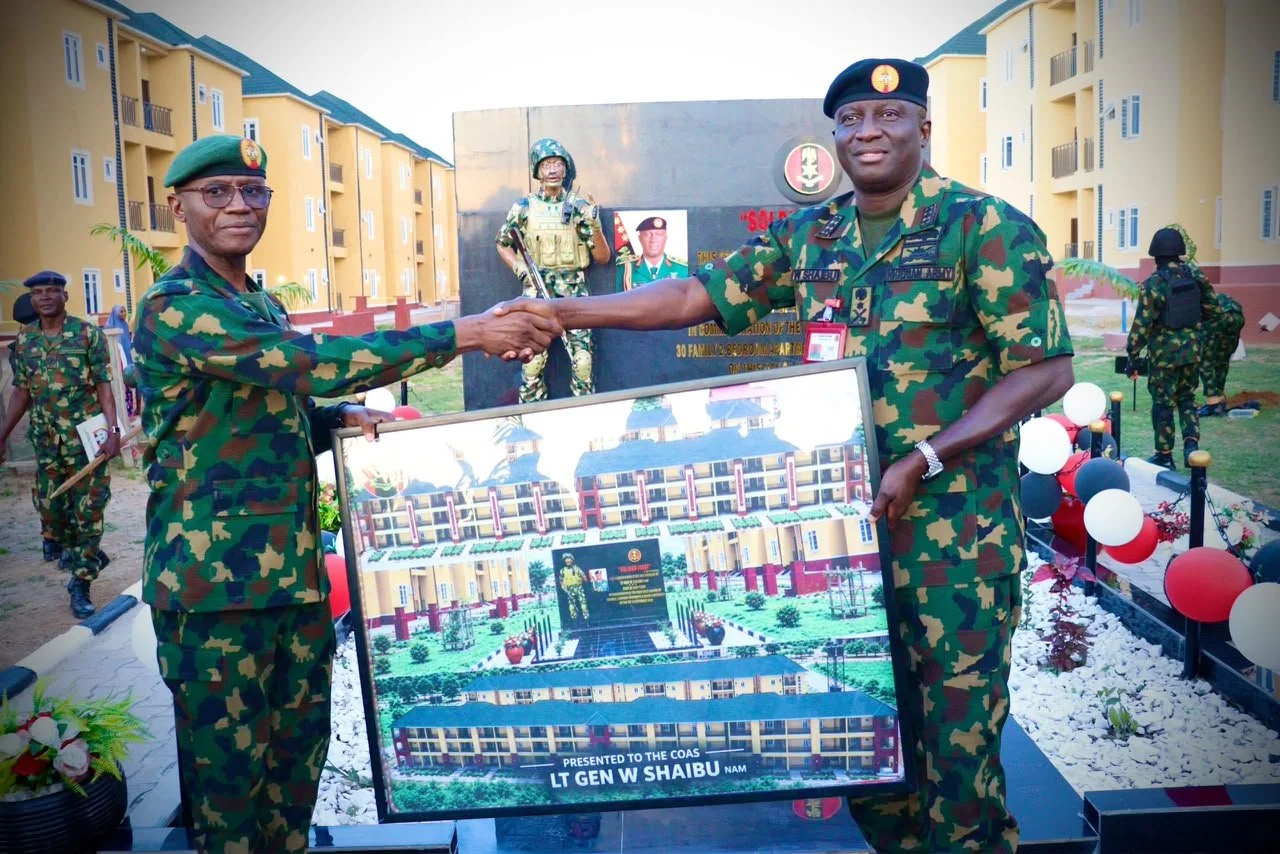
The Nigerian Army has commissioned 30 new family accommodation units at Ribadu Cantonment in Kaduna as part of efforts to ease pressure on existing housing facilities and improve residential infrastructure for military personnel.
The Chief of Army Staff, Lieutenant General Waidi Shaibu, unveiled the two completed blocks on Thursday, September 24, describing decent accommodation as an important component of personnel welfare and effective administration.
/ You Might Also Like /




The project forms part of a broader Nigerian Army infrastructure development and renewal programme that includes the rehabilitation of ageing barracks and the provision of additional facilities across its formations and units nationwide.
30 New Units Expand Housing Capacity
The newly completed units are expected to provide additional accommodation for military families at Ribadu Cantonment, which houses several Nigerian Army establishments.
Shaibu said the expansion of the Army’s force structure and operational responsibilities requires corresponding investment in infrastructure and welfare facilities.
He also urged beneficiaries to take ownership of the facilities and ensure their proper use and maintenance.
The General Officer Commanding 1 Division, Nigerian Army, Major General Abubakar Muhammed Wase, described the project as timely and assured that the facilities would be properly utilised and maintained.
Housing Forms Part of Wider Barracks Renewal
The Kaduna project goes beyond the delivery of individual housing units, reflecting the role of residential infrastructure in the wider renewal of military cantonments.
The Army said similar accommodation projects are ongoing in barracks and cantonments across the country, alongside efforts to rehabilitate ageing infrastructure and provide facilities that meet the needs of its expanding personnel base.
For the housing sector, such programmes demonstrate how institutional demand can support residential construction and infrastructure investment outside conventional private-sector housing developments.
Institutional Housing Creates Construction Demand
Projects of this nature generate demand across several segments of the built environment, including construction, building materials, engineering services, infrastructure works and estate maintenance.
Military and other public-sector housing programmes can also provide relatively predictable institutional demand for developers and contractors when projects have secured funding and clear delivery structures.
The impact extends beyond the completed homes, as supporting infrastructure such as roads, drainage, electricity, water supply and other communal facilities is typically required to make residential developments functional.
Implications for Kaduna's Built Environment
The additional housing capacity at Ribadu Cantonment is primarily intended for military families rather than the wider Kaduna housing market. However, continued investment in institutional housing contributes to construction activity and infrastructure development within the state.
Kaduna's established role as a major military and administrative centre means that institutional housing demand remains an important component of its built environment.
The development also illustrates the distinction between housing need and market demand. While the 30 units address a specific accommodation requirement within the Army, the wider housing market depends on household purchasing power, access to finance, land availability and the supply of affordable homes.
Welfare Investment Linked to Infrastructure Expansion
The Army's position is that accommodation is directly connected to personnel welfare and the effective administration of its formations.
Shaibu linked the project to the need to match the Army's expansion with corresponding investment in facilities for personnel and their families.
This makes housing part of a wider institutional infrastructure requirement rather than an isolated welfare intervention.
As public institutions expand their workforce or operational footprint, demand for accommodation, office space and supporting infrastructure can create additional construction and property-market activity around institutional centres.
Outlook
The commissioning of the 30 units adds a modest but targeted increase to Nigeria's residential housing stock while addressing a defined accommodation requirement within the Nigerian Army.
The wider significance lies in the Army's indication that similar housing and infrastructure projects are ongoing across its formations.
For Nigeria's construction and property sectors, continued institutional investment can support demand for housing delivery, rehabilitation and infrastructure works. The extent of that impact, however, will depend on the scale, funding and pace of projects delivered across the country.
READ MORE