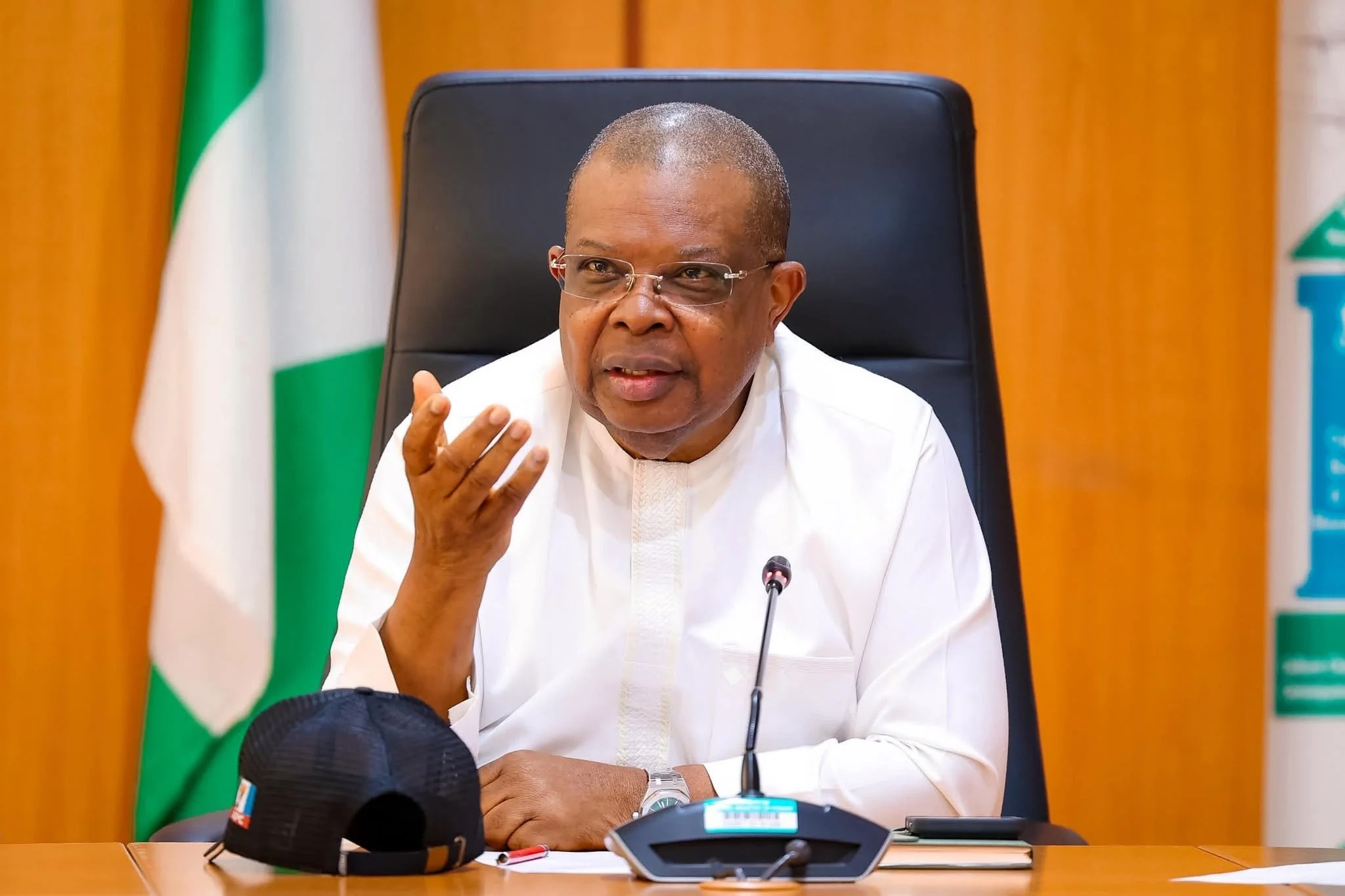
Lagos APC governorship candidate Obafemi Hamzat
Lagos State governorship candidate of the All Progressives Congress (APC), Obafemi Hamzat, has promised to expand the state's public transport fleet to 4,000 compressed natural gas (CNG) buses and introduce 77 electric ferries as part of plans to ease congestion and improve mobility across Lagos.
The proposals form part of his transportation agenda ahead of the February 2027 governorship election. Hamzat, the incumbent Deputy Governor, presented the commitments during a governorship debate organised by the Nigeria Debate Consortium on Sunday.
/ You Might Also Like /




He said the expanded bus fleet would have the capacity to transport one million passengers daily, compared with the approximately 1,000 buses currently operating under the Bus Rapid Transit (BRT) system.
The proposed expansion would increase the existing fleet fourfold and make CNG buses a central component of the state's public transport strategy.
Hamzat Targets New BRT Corridors and Water Transport Expansion
Beyond increasing the number of buses, Hamzat proposed additional BRT lanes connecting Marina with Epe and Badagry.
The proposed corridors would extend high-capacity public transport services towards the eastern and western parts of Lagos, potentially improving connections between residential communities, commercial centres and employment locations.
He also pledged to expand water transportation through the deployment of 77 electric ferries, adding capacity to a transport network that already includes road and rail services.
Hamzat said Lagos needed an integrated transport system that would allow commuters to move between buses, ferries and rail services using a single payment method.
He cited the Cowry card, which he said had more than four million users, as an existing platform that could support integration across the different transport modes.
The candidate said the broader objective was to reduce commuting time and give residents more time for work, family and other activities.
Transport Infrastructure Could Shape Lagos Property Markets
The proposed expansion has implications beyond passenger transportation, particularly for property development and investment across Lagos.
Improved public transport connectivity can make locations outside established commercial centres more accessible to workers and businesses. Reliable connections between residential districts and employment hubs can also influence where households choose to live and where developers consider new projects.
The proposed Marina-Epe and Marina-Badagry BRT corridors are particularly relevant because they would connect parts of Lagos experiencing significant residential and commercial development.
For property investors, improved transport infrastructure could strengthen the attractiveness of locations along these corridors. However, the extent to which this translates into higher property demand and values will depend on implementation, service reliability, road access and supporting infrastructure.
Water transport expansion could also improve access for communities around Lagos' waterways, although its impact will depend on route coverage, terminal infrastructure, safety and the frequency of services.
Implementation and Funding Remain Key Questions
While Hamzat's proposals outline an ambitious expansion of Lagos' public transport system, delivering them would require substantial investment in vehicles, terminals, maintenance facilities, fuelling infrastructure and operational capacity.
The proposed 4,000-bus fleet would also require sufficient CNG supply and refuelling infrastructure to sustain daily operations. Similarly, deploying electric ferries would depend on adequate charging facilities, functional jetties, waterway maintenance and reliable safety systems.
The integration of road, rail and water transport would require coordination between operators and a payment system that works consistently across the different services.
For Lagos residents, the success of the proposals will ultimately depend on whether the expansion reduces journey times, improves service availability and makes public transport more affordable and dependable.
For the property market, the delivery of these transport commitments could influence the development prospects of communities along the proposed corridors. But their value will be determined by actual infrastructure delivery rather than campaign promises.
READ MORE