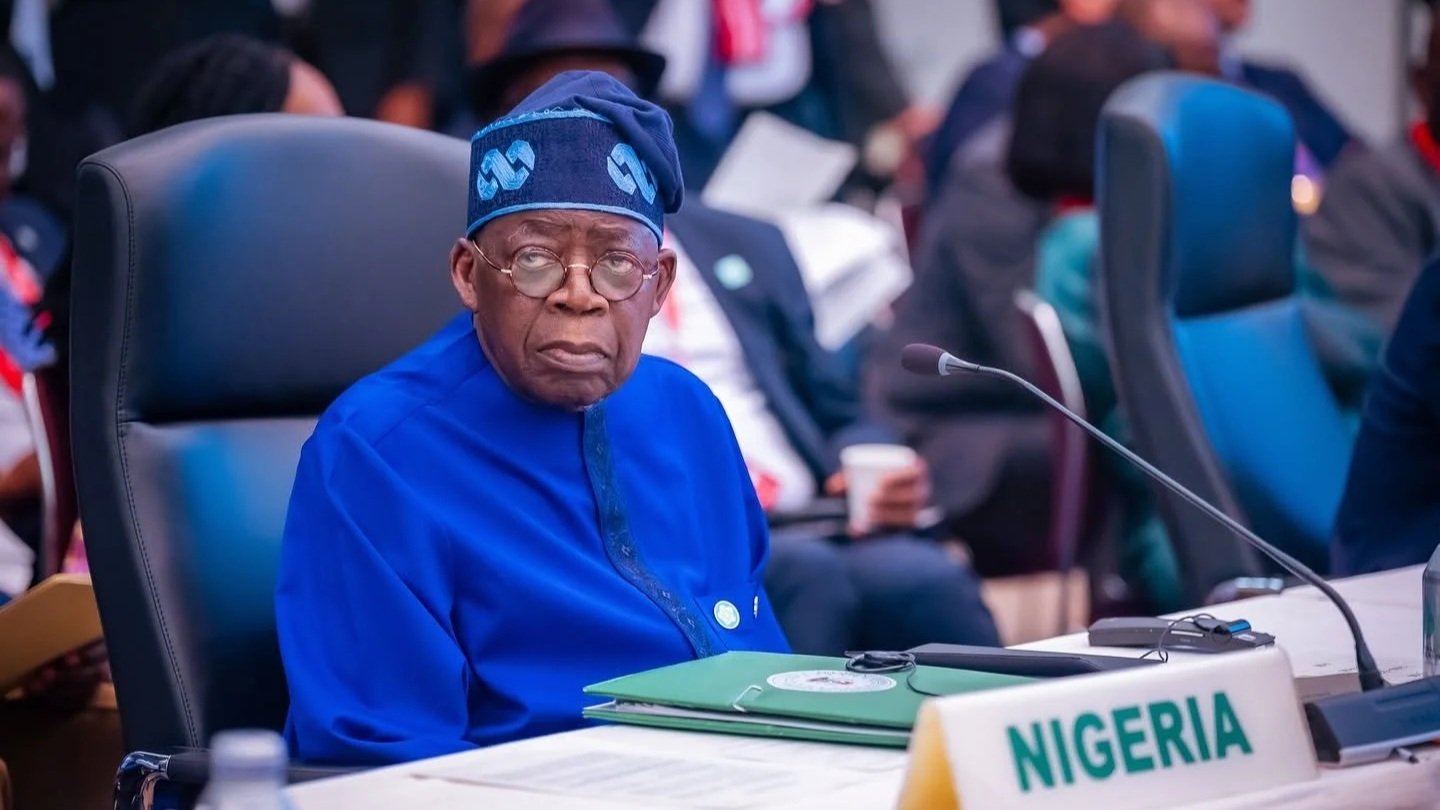
President Bola Tinubu
Nigeria could spend 71.7% of its Federal Government revenue on debt servicing by 2030, exceeding the Debt Management Office’s (DMO) recommended threshold of 50% and intensifying pressure on public finances.
The projection appears in the DMO’s 2024 Debt Sustainability Analysis (DSA), which assesses the country’s ability to meet its debt obligations under different economic conditions.
/ You Might Also Like /



The report projects that the debt service-to-revenue ratio will decline from 60.6% in 2024 to 44.9% in 2025 before rising above the recommended threshold in 2026.
Under the baseline scenario, the ratio is expected to reach 51% in 2026, 57.1% in 2027, 57.4% in 2028 and 67.3% in 2029. By 2030, debt servicing could consume 71.7% of Federal Government revenue.
The projection means that less than 30% of federal revenue would remain for other expenditure priorities if the government follows this debt-servicing trajectory without a corresponding improvement in revenue.
DMO Warns of Higher Debt Risks Under Adverse Conditions
The DMO's assessment also considers a shock scenario in which economic conditions deteriorate.
Under this scenario, the debt service-to-revenue ratio could rise from 44.9% in 2025 to 57.4% in 2026 and 70.9% in 2027. It is projected to reach 75.3% in 2028, 89.6% in 2029 and 97.3% by 2030.
The shock scenario assumes a 30% exchange-rate depreciation, a 2% decline in real GDP and a 2.5% reduction in government revenue.
By comparison, the baseline scenario assumes an exchange rate of ₦1,500 to the dollar, real GDP growth of 4.8% and a primary fiscal balance of 3.8%.
The DMO attributes the projected increase in debt-servicing pressure to debt obligations growing faster than government revenue. It describes Nigeria's public debt sustainability as moderate but highly vulnerable to weak revenue mobilisation, exchange-rate depreciation and global economic uncertainties.
The agency also identified elevated financing, refinancing and foreign-exchange risks in the country's debt portfolio.
Nigeria's average Eurobond spread stood at 975.58 basis points between October 2 and December 31, 2024, exceeding the DMO's 600-basis-point threshold. The share of public debt held by non-residents also reached 49%, above the 45% threshold, exposing the country to greater foreign-exchange risks.
Lower Debt-to-GDP Ratio Does Not Eliminate Repayment Pressure
Despite the projected increase in debt-servicing costs, the DMO expects Nigeria's public debt-to-GDP ratio to decline from 53.7% in 2024 to 27.3% by 2030 under the baseline scenario.
Under the shock scenario, the ratio is projected to reach 34.6% by 2030.
The contrasting projections highlight why the size of public debt relative to the economy does not, on its own, determine a government's ability to meet repayment obligations.
A country may record a lower debt-to-GDP ratio while still facing significant fiscal pressure if government revenue remains insufficient relative to the cost of servicing its debt.
For Nigeria, the central concern is whether revenue growth can keep pace with debt obligations without forcing the government to reduce spending on infrastructure and essential public services.
The DMO's projections also come amid wider debate over Nigeria's debt-servicing burden. In October 2026, the World Bank raised concerns about Federal Government interest payments reaching ₦7.7 trillion in the first half of the year.
The Federal Ministry of Finance disputed the interpretation of the figures, arguing that the calculation used incomplete revenue data and included debt obligations serviced on behalf of other tiers of government. The disagreement highlights the importance of distinguishing between interest payments and total debt servicing, as well as comparing debt obligations with the appropriate revenue base.
DMO Recommends Stronger Revenue Mobilisation and Spending Efficiency
To address the risks, the DMO recommended sustained revenue reforms, improved tax compliance and more efficient public expenditure.
The agency called for continued implementation of the petrol subsidy removal and a unified, flexible foreign-exchange regime, which it said had supported government revenue.
It also recommended expanding the tax base, adopting technology to improve revenue collection and directing public spending towards investments capable of increasing economic output and government income.
Other proposed measures include considering the privatisation or sale of public assets and relying more on concessional financing where available.
The recommendations point to the need for a stronger fiscal framework in which borrowing supports productive investments rather than creating repayment obligations that further restrict government spending.
What Rising Debt Servicing Means for Housing and Infrastructure
The projected debt burden has implications for Nigeria's housing and real estate sectors because government infrastructure spending plays an important role in supporting property development and investment.
If debt servicing absorbs an increasing share of federal revenue, the government could face greater difficulty funding roads, power infrastructure, water supply, urban renewal and other public projects that support housing delivery and improve property values.
Reduced fiscal space could also limit the government's capacity to provide housing-related interventions, support mortgage institutions and finance infrastructure around new residential developments.
For private developers and investors, slower public infrastructure delivery could increase the cost of providing essential services within housing projects. It could also affect the commercial viability of developments that depend on government-funded roads, utilities and transport links.
However, the DMO's figures are projections rather than confirmed future outcomes. Their implications will depend on revenue performance, borrowing decisions, exchange-rate movements and the government's ability to implement the recommended reforms.
The central challenge is whether Nigeria can expand its revenue base quickly enough to meet rising debt obligations while preserving the public investment needed to support economic growth and housing development.
READ MORE