FG Targets Abandoned Housing Projects to Cut Nigeria’s Housing Deficit by Year-End
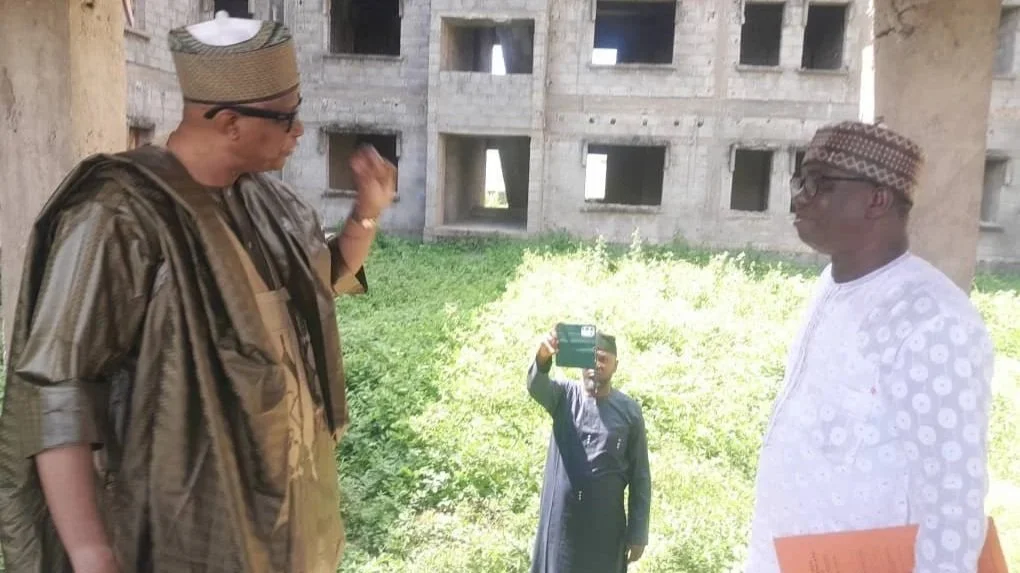
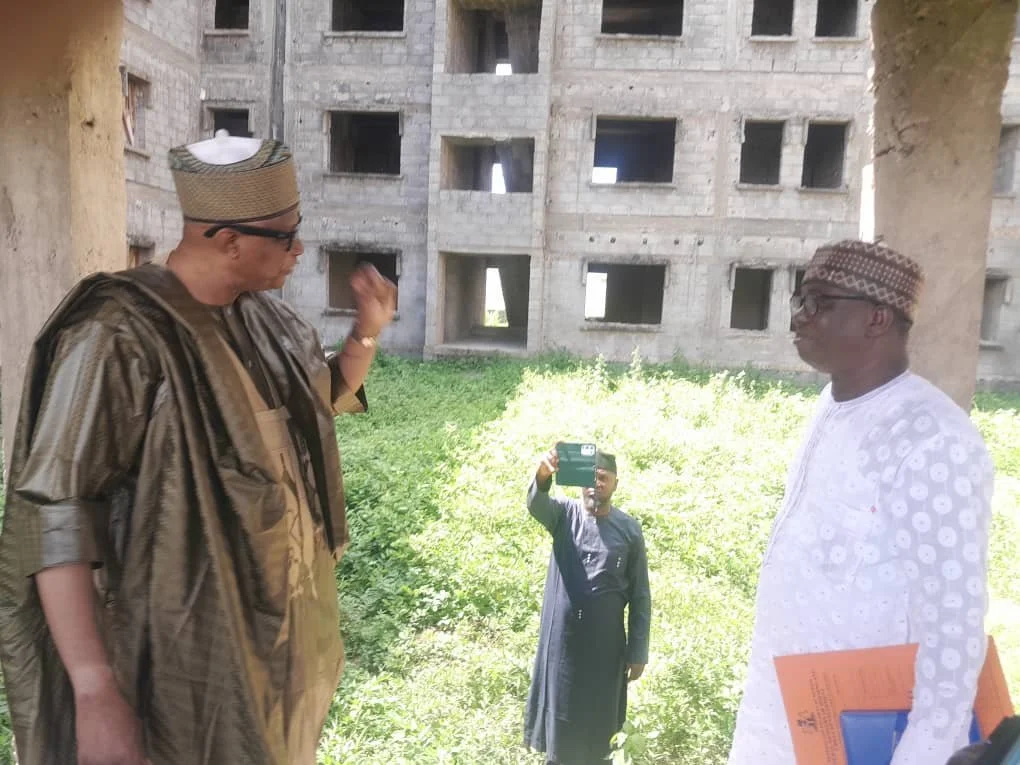
Darma inspects an abandoned housing project
The Federal Government plans to rehabilitate, complete and put viable abandoned housing projects into productive use as part of efforts to increase housing supply and reduce Nigeria’s housing deficit before the end of 2026.
The Minister of Housing and Urban Development, Muttaqha Rabe Darma, disclosed this during an inspection of an abandoned National Housing Programme estate in the Kubwa-Karsana District of the Federal Capital Territory.
/ You Might Also Like /




Darma said the government was reviewing abandoned housing projects nationwide to determine their condition, level of completion and the interventions required to bring them back into use.
FG Turns to Existing Housing Assets
The decision to revive abandoned developments represents an attempt to increase housing supply by making use of projects where public funds have already been committed.
Darma said the government would upgrade and complete viable projects and make them available to Nigerians under the Renewed Hope Housing Agenda.
The minister also criticised the continued abandonment of housing projects developed with public funds, arguing that such properties should be completed and occupied rather than allowed to deteriorate.
The Federal Ministry of Information and National Orientation said the ministry’s wider assessment is intended to determine the status of abandoned projects and develop appropriate strategies for their completion, rehabilitation and eventual allocation.
Housing Delivery Faces a Supply Challenge
Nigeria’s housing challenge extends beyond the construction of new estates. Projects that remain incomplete or unoccupied represent housing capacity that has not translated into effective supply.
Reviving such developments could allow government to bring additional units to the market faster than starting entirely new projects, depending on the condition of each estate, outstanding contractual issues, infrastructure requirements and funding needs.
The approach could also reduce the risk of further deterioration of public housing assets while creating an avenue to recover value from previous government investments.
Rehabilitation Could Complement New Construction
Darma said the recovery of abandoned projects would complement new housing developments being undertaken through government housing programmes.
This creates two parallel routes for increasing supply: completing viable existing projects while continuing to develop new housing schemes.
The strategy is significant because the cost of delivering new homes has increased substantially, with developers facing pressure from land, building materials, infrastructure, labour and financing costs.
Where existing projects can be completed at a lower marginal cost, rehabilitation could provide government with an additional mechanism for increasing housing stock.
Mortgage Finance Remains Critical
Increasing the number of completed homes will not, by itself, resolve Nigeria’s housing affordability challenge.
The Guardian report also highlighted a proposal by the Housing Development Advocacy Network for a national mortgage guarantee and inclusion framework involving institutions including the Federal Mortgage Bank of Nigeria, Nigerian Mortgage Refinance Company, Ministry of Finance Incorporated Real Estate Investment Fund and Family Homes Fund, alongside commercial and primary mortgage banks.
HDAN argued that existing housing-finance institutions need greater coordination around long-term funding, risk sharing, affordable housing supply and financial inclusion.
The proposal also recognises that mortgage access needs to extend beyond conventional salaried workers to Nigerians with irregular but legitimate incomes, including traders, artisans, farmers and entrepreneurs.
Converting Projects Into Effective Housing Supply
For the property market, the key measure of the government's rehabilitation programme will be the number of units that ultimately become habitable and accessible to households.
An abandoned housing estate does not contribute to housing supply until construction is completed, infrastructure is functional and the homes are allocated or sold to eligible buyers.
The government therefore faces a series of implementation issues, including determining which projects remain economically viable, resolving ownership and contractual questions, funding rehabilitation works and ensuring transparent allocation.
Existing Investments Could Support Faster Delivery
The Federal Government has previously indicated that completing existing investments can improve the efficiency of housing delivery.
Earlier in September, the government handed over 129 FMBN-funded homes to beneficiaries at Nasarawa Technology Village and pledged to complete another 122 units before the end of 2026. FMBN also indicated that another 190 units at the location were being funded by the bank.
The development illustrates how resolving stalled projects and delivery challenges can return housing units to beneficiaries without abandoning the investments already made.
Implications for Developers and Investors
The rehabilitation strategy could also create opportunities for private-sector participation in construction, infrastructure upgrades, estate management and housing finance.
For developers, however, the viability of individual projects will depend on factors such as location, construction status, infrastructure availability, title and ownership arrangements, and the purchasing power of prospective occupants.
A coordinated approach between government and private developers could help convert partially completed assets into marketable housing while reducing some of the upfront costs associated with developing entirely new estates.
Outlook
The Federal Government's year-end target places renewed attention on the country's stock of abandoned housing projects and the potential to convert dormant public assets into usable homes.
The immediate challenge will be moving from assessment to execution identifying viable projects, securing funding, completing construction and ensuring that finished units reach households.
If effectively implemented, the rehabilitation of abandoned estates could add to housing supply while preserving the value of previous public investment. However, the scale of Nigeria's housing requirement means that project rehabilitation will need to operate alongside new construction, housing finance reform and greater private-sector participation to produce sustained increases in affordable housing delivery.
READ MORE