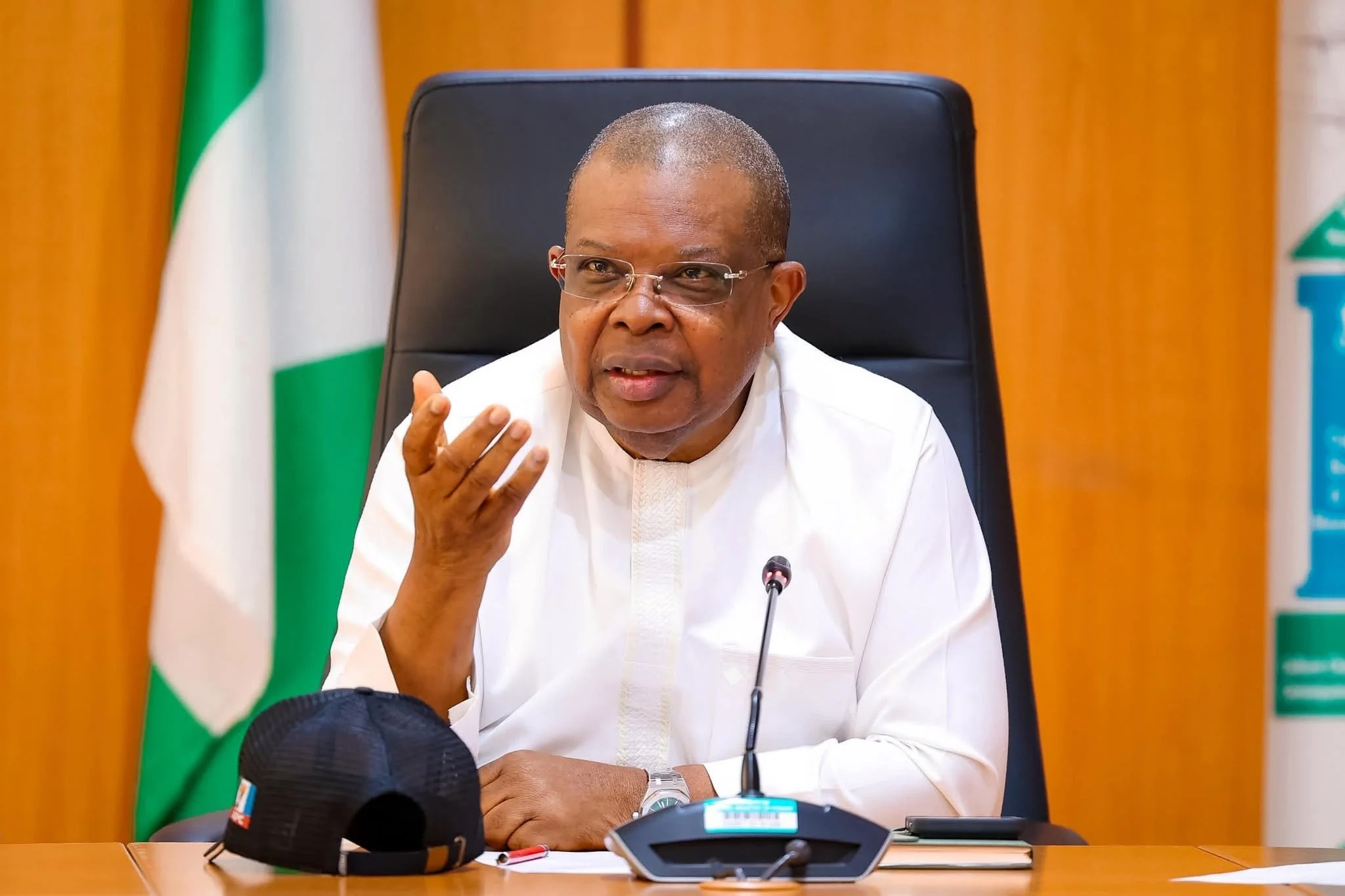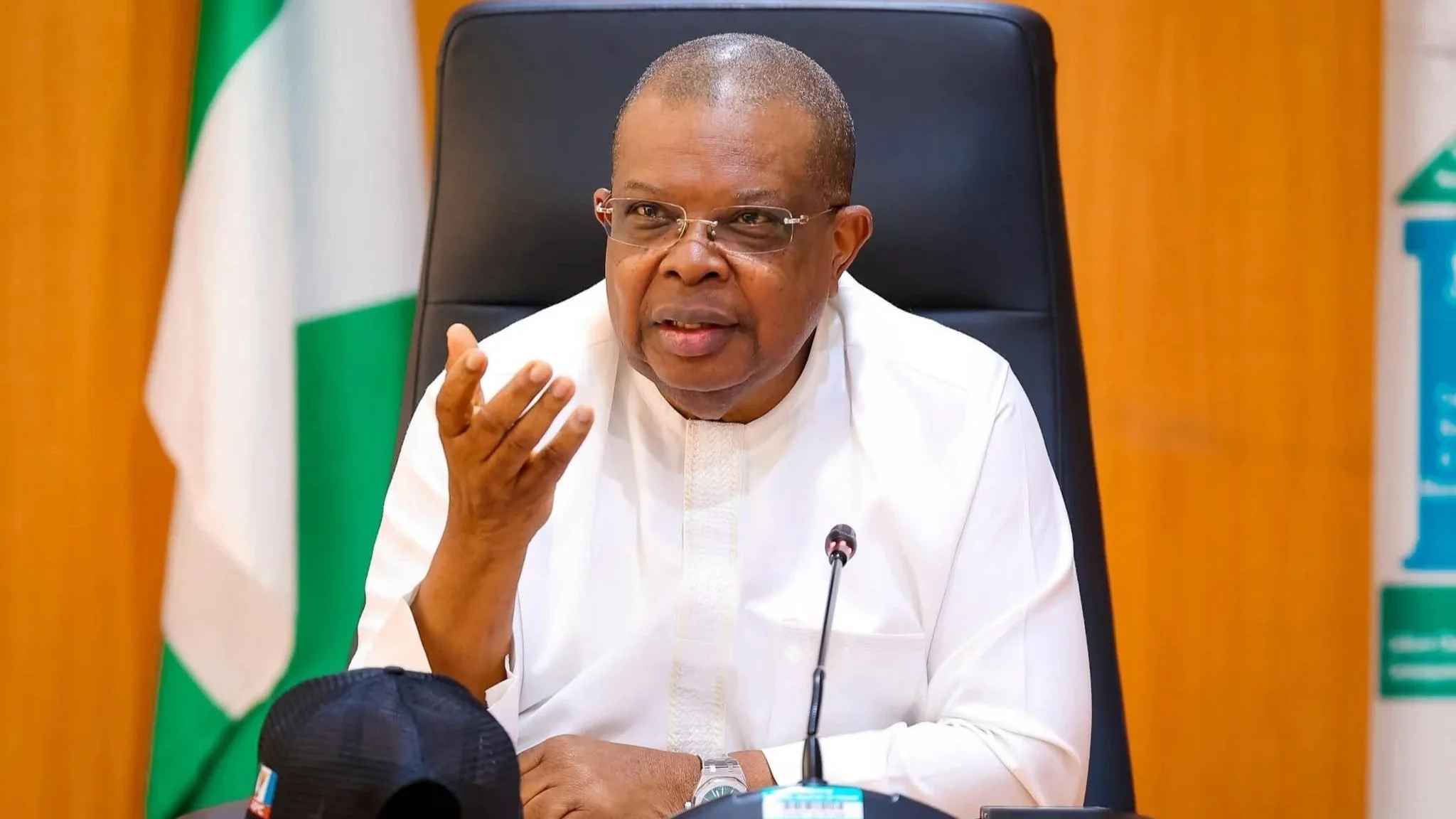
Minister of Power Joseph Tegbe
The Minister of Power, Joseph Tegbe, says the recent electricity supply disruptions affecting parts of Nigeria have been resolved, following the restoration of generating capacity and repairs to damaged transmission infrastructure.
Tegbe gave the assurance on Monday, November 9, 2026, saying the Federal Government had addressed the immediate challenges responsible for the outages and was working with electricity sector operators to sustain improved supply.
/ You Might Also Like /




The disruptions had affected consumers in Lagos, Ogun, Oyo, Kwara and the Federal Capital Territory, with households and businesses reporting prolonged blackouts.
The minister had previously attributed the supply shortfall to scheduled maintenance at Egbin Power Station, inadequate gas supply to some thermal power plants and sabotage of critical transmission lines.
Speaking on a television programme, Tegbe said the maintenance work had been completed and electricity had returned to several affected locations. He specifically mentioned Ajah, Lekki, Ikoyi, Magodo and Ikeja in Lagos as areas where supply had been restored.
He acknowledged the difficulties caused by the outages but said the government's immediate priority was to maintain grid stability and prevent a recurrence.
Transmission Line Repairs Restore Electricity to Lagos Corridor
The restoration followed repairs to the vandalised Benin-Egbin 330kV transmission line, which had restricted the availability of alternative routes for transmitting electricity to parts of Lagos.
According to the minister, the repaired line had been returned to service, helping to increase electricity supply to the Lagos transmission complex to more than 1,000 megawatts.
The Federal Government also worked with generation companies, the Nigerian Independent System Operator (NISO), the Transmission Company of Nigeria (TCN) and distribution companies to address operational constraints across the electricity value chain.
The initial supply disruption had been compounded by reduced gas availability to thermal power stations and lower output from hydroelectric plants.
Tegbe had earlier said the government expected electricity supply to begin improving within 48 to 72 hours as affected generating units returned to operation and repairs progressed.
FG Targets Stable Electricity Supply Within Five Years
While saying the immediate challenges had been resolved, Tegbe acknowledged that achieving consistent electricity supply across Nigeria would require further investment in generation and transmission infrastructure.
He projected that the country could achieve more stable electricity supply within the next three to five years, arguing that existing infrastructure must be strengthened to accommodate rising demand.
The minister also disclosed plans for a proposed $2 billion east-west super grid designed to expand transmission capacity and improve the resilience of the national electricity network.
The proposed infrastructure would connect several locations, including Funtua, Gwagwalada, Ikot Ekpene, Benin, Epe and Ilorin. The government is targeting an increase in grid transmission capacity from approximately 4,000 megawatts to 19,000 megawatts.
Tegbe said the project would complement existing transmission infrastructure, with procurement activities already underway. He indicated that construction could take about two years.
The government also expects greater private-sector participation in electricity transmission over the next two to three years.
Power Stability Remains Critical to Housing and Real Estate Investment
The recent outages have again exposed the cost of unreliable electricity supply for households, property developers and businesses.
For residential property owners, inconsistent electricity increases reliance on generators, inverters and solar installations, adding to household energy expenditure and the cost of maintaining properties.
Developers also face higher operating expenses when construction activities, water pumping, security systems and other building services depend on alternative power sources.
For commercial and industrial property investors, reliable electricity remains an important consideration when assessing locations, operating costs and the long-term viability of developments.
The proposed transmission expansion could improve the investment environment if it translates into more dependable electricity delivery. However, increasing transmission capacity alone will not resolve every constraint. Gas supply, generation availability, distribution infrastructure and the financial sustainability of electricity operators will also determine the quality of supply reaching consumers.
Tegbe's assurance that the immediate disruptions have been resolved offers some relief to affected households and businesses. The more significant test, however, will be whether the government can sustain the improvement and deliver the infrastructure required to address Nigeria's persistent electricity challenges.
READ MORE