African Airlines Lead Global Air Cargo Growth with 21% Surge in February 2026 - IATA
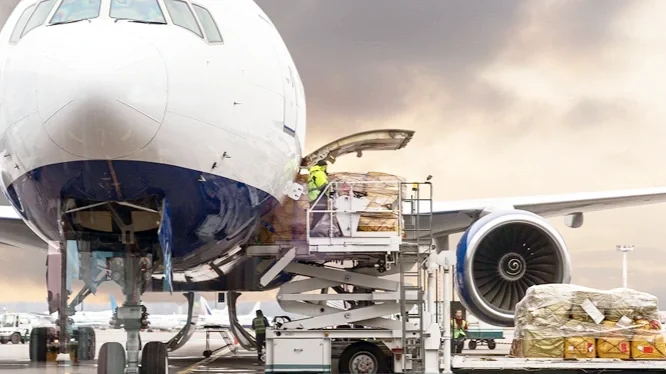
Africa Records Strongest Air Cargo Growth Despite Global Economic Headwinds
African airlines recorded a 21.0% year-on-year increase in air cargo demand in February 2026, marking the strongest growth rate among all global regions. This was disclosed in the latest monthly report by the International Air Transport Association (IATA), which tracks global air freight performance and market dynamics.
The double-digit surge in Africa significantly outperformed the global average growth of 11.2%. This performance underscores the continent's growing role in international logistics, particularly within emerging trade corridors
/ You Might Also Like /




Regional Performance and Capacity Trends
According to the IATA data, the demand for air cargo in Africa, measured in cargo tonne-kilometres (CTK), rose by 21.0% compared to February 2025. To meet this rising demand, African carriers expanded their capacity measured in available cargo tonne-kilometres (ACTK) by 17.3% year-on-year.
The report noted that African carriers led the global rankings, followed by Middle Eastern airlines, which saw a 16.5% rise in demand. Other regions reported more moderate growth:
Asia-Pacific: 13.6% increase in demand.
North America: 9.4% increase in demand.
Europe: 6.9% increase in demand.
Latin America & Caribbean: 0.7% increase in demand (the slowest globally).
Drivers of Growth: The Africa-Asia Connection
A primary catalyst for Africa’s outsized performance is the rapid expansion of the Africa–Asia trade lane. Data shows this specific route surged by 61.9% year-on-year in February 2026, following a robust 41.6% growth in January.
While this corridor currently represents only 1.3% of total global air cargo, its exponential growth highlights a significant shift in trade patterns and the increasing reliance on air freight to move high-value goods between the two regions.
Global Context and Economic Outlook
On a global scale, total air cargo demand rose 11.2% in February, with international operations increasing by 11.6%. IATA Director General, Willie Walsh, noted that while the February figures were bolstered by pre-Lunar New Year shipments, the overall outlook remains subject to external pressures.
"The month showed strong growth, but the outbreak of conflict in the Middle East toward the end of February introduces uncertainty for the full-year performance," Walsh stated.
The report also highlighted several macroeconomic factors influencing the sector:
Trade Volume: Global goods trade grew 5.2% year-on-year in January.
Manufacturing Activity: The Purchasing Managers’ Index (PMI) for manufacturing rose to 53.1, indicating expansion.
Operating Costs: Jet fuel prices rose 1.2% year-on-year in February, with refining margins remaining volatile.
The 21% growth recorded by African airlines in February 2026 cements the region's position as a high-growth frontier for global air freight. As carriers continue to align capacity with the booming Africa-Asia trade route, the focus for policymakers and investors will likely shift toward addressing structural challenges, such as fuel scarcity and infrastructure bottlenecks, to sustain this momentum amidst shifting global geopolitical realities.
READ MORE