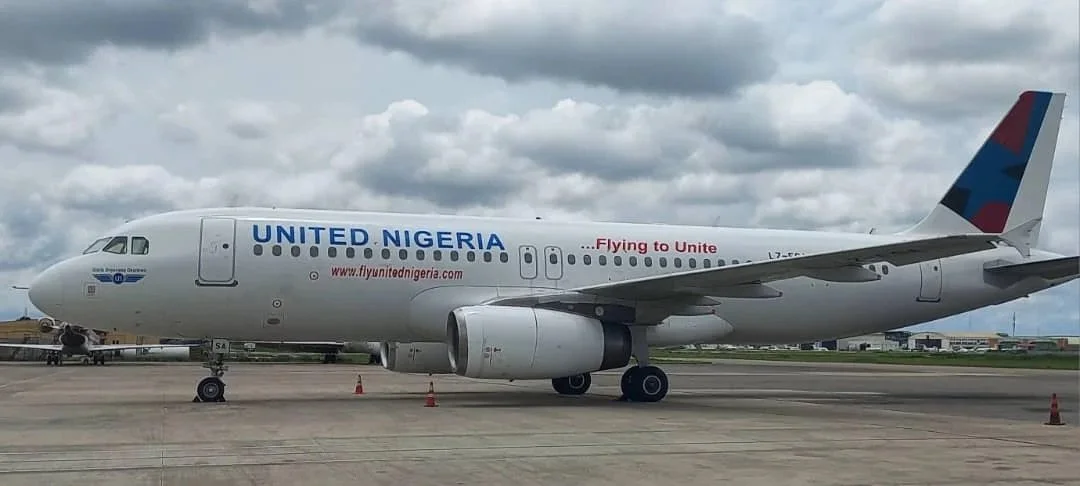
United Nigeria Airlines Targets ₦20bn in First Commercial Paper Issuance
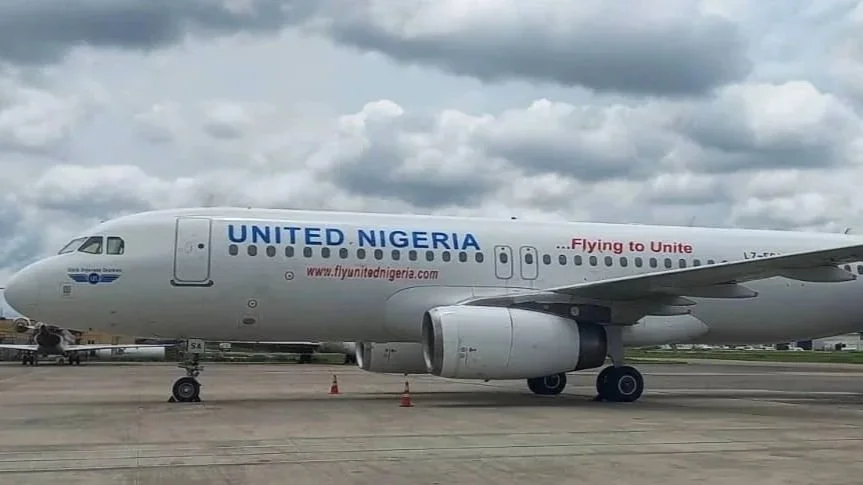
Nigerian Airline Turns to Capital Market to Raise ₦20bn
United Nigeria Airlines Company Limited is targeting ₦20 billion through its debut commercial paper issuance, becoming the first domestic Nigerian airline to access the short-term debt market through this funding route.
/ You Might Also Like /




The offer comprises Series 1 and Series 2 commercial papers with tenors of 270 days and 364 days under the airline’s ₦100 billion commercial paper programme. The issuance opened on 13 October and is scheduled to close on 20 October 2026.
The fundraising comes as the airline pursues a five-year expansion strategy covering domestic, regional and international operations, supported by plans to increase its fleet and expand its route network.
Airline Seeks ₦20bn Through Commercial Paper
The proposed issuance will provide United Nigeria Airlines with access to short-term funding through the Nigerian debt market.
Meristem Capital Limited serves as lead arranger, while Cordros Advisory Services Limited, Coronation Merchant Bank Limited, FCMB Capital Markets Limited, FSL Advisory Limited and Quantum Zenith Capital & Investments Limited are participating as dealers.
Commercial paper allows companies to raise short-term funds from investors without relying exclusively on conventional bank loans. Companies commonly use the instrument to meet working capital requirements and other near-term financing needs.
The airline’s ₦100 billion programme establishes the overall framework for issuing commercial paper, while the initial ₦20 billion offer represents its first planned transaction under the programme.
The proposed issuance also marks a new funding route for Nigeria’s domestic aviation sector, where operators face significant capital requirements for aircraft, maintenance, fuel, staffing and route expansion.
Revenue Rises as Airline Pursues Expansion
United Nigeria Airlines has recorded substantial revenue growth since commencing operations.
Its revenue increased from ₦10.3 billion in 2021 to ₦90.8 billion in 2025, while profit after tax rose from ₦1.3 billion to ₦23.8 billion over the same period.
The airline reported revenue of ₦95.6 billion in the first half of 2026, exceeding its full-year 2025 revenue.
In August 2026, turnover increased to ₦19.4 billion from ₦14.1 billion in July, while the company returned to a net profit of ₦1.2 billion.
These figures provide financial context for the planned fundraising, although revenue growth alone does not establish the airline’s capacity to meet its debt obligations. Investors will also consider operating costs, cash flow, repayment requirements and the risks associated with aviation operations.
Credit Ratings Provide Additional Information for Investors
United Nigeria Airlines secured ratings from two credit-rating agencies ahead of the planned issuance.
Agusto & Co. assigned the airline a short-term rating of A3 and a long-term rating of BBB-, with a stable outlook. DataPro assigned short-term and long-term ratings of A1 and BBB, respectively.
Credit ratings provide investors with an assessment of an issuer’s creditworthiness and its ability to meet financial obligations. They do not guarantee repayment or eliminate the possibility of losses.
The ratings will form part of the information investors can consider when assessing the commercial paper offer alongside its tenor, pricing and the airline’s financial performance.
Airline Plans to Expand Fleet and International Operations
United Nigeria Airlines currently operates 10 aircraft, including Embraer ERJ-145s, Boeing 737-800s, Embraer E190s and CRJ900s.
The company plans to receive six additional aircraft before the end of 2026. If the deliveries proceed as planned, its fleet would increase to 16 aircraft.
The airline serves 14 destinations across Nigeria and Ghana and has secured approval to operate as a flag carrier to six international destinations.
It has also signed global distribution system agreements with Amadeus and Sabre, allowing travel agents worldwide to access its ticket inventory.
In 2026, the airline signed the International Air Transport Association’s Multilateral Interline Traffic Agreement and became a full member of the African Airlines Association.
These developments form part of its wider expansion strategy, although the extent to which the commercial paper proceeds will directly fund specific expansion activities has not been fully detailed in the available information.
Commercial Paper Offers an Alternative to Bank Borrowing
United Nigeria Airlines’ planned issuance comes amid growing use of commercial paper by Nigerian companies seeking short-term funding.
Data compiled by Nairametrics Research from FMDQ figures showed that Nigerian corporates raised ₦1.61 trillion through commercial paper issuances in 2025, up from ₦1.15 trillion in 2024.
The average discount rate increased to 22.38% in 2025 from 21.69% in 2024, while the average tenor rose to 233 days from 225 days.
The figures indicate continued demand for short-term corporate funding despite elevated borrowing costs.
For issuers, commercial paper can diversify funding sources and provide access to investors beyond the traditional banking system. However, the cost of raising funds depends on market conditions, the issuer’s credit profile and the terms of the transaction.
Companies must also manage repayment deadlines carefully because commercial paper typically has a shorter maturity than long-term financing used for major capital investments.
Investor Response Will Shape the Fundraising Outcome
United Nigeria Airlines’ ₦20 billion offer provides an opportunity to assess investor appetite for short-term debt issued by a domestic airline.
The transaction’s outcome will depend on investor demand, pricing, the airline’s financial position and confidence in its ability to meet repayment obligations.
The planned issuance also establishes a potential route for the company to return to the debt market under its ₦100 billion programme, subject to market conditions and the requirements governing subsequent offers.
For investors, the central considerations will be the return offered, the maturity period and the credit risks associated with the airline. For the company, successful fundraising could broaden its financing options as it pursues fleet growth and wider operations.
The offer is scheduled to close on 20 October 2026, after which the level of investor participation will provide a clearer indication of demand for the airline’s commercial paper.
READ MORE