The Federal Capital Territory Administration has defended the reduction of the University of Abuja’s land allocation
The Federal Capital Territory Administration (FCTA) has defended its decision to reduce the University of Abuja’s land allocation from 11,824.04 hectares to approximately 4,685 hectares, saying FCT Minister Nyesom Wike implemented recommendations approved by the previous administration.
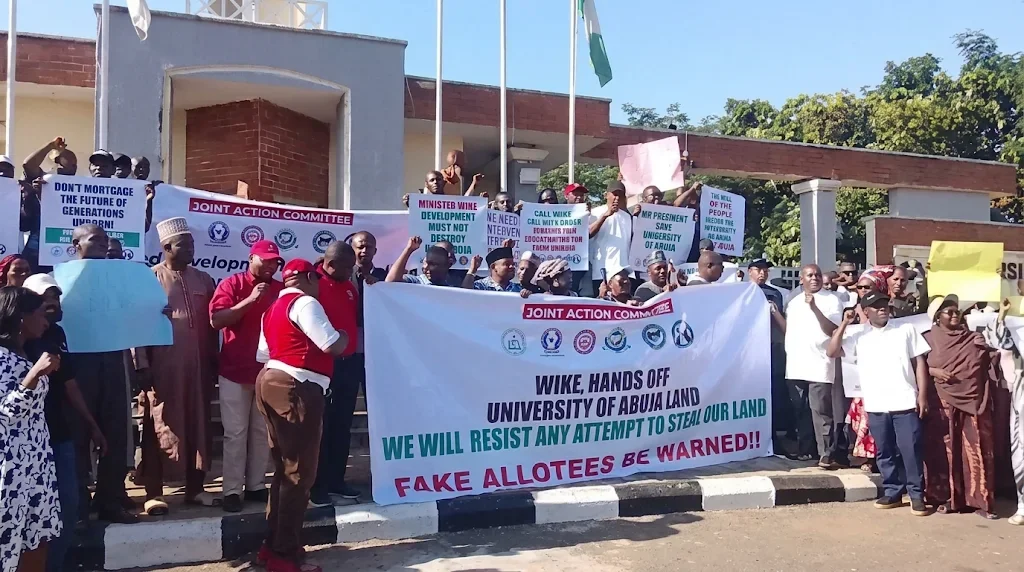
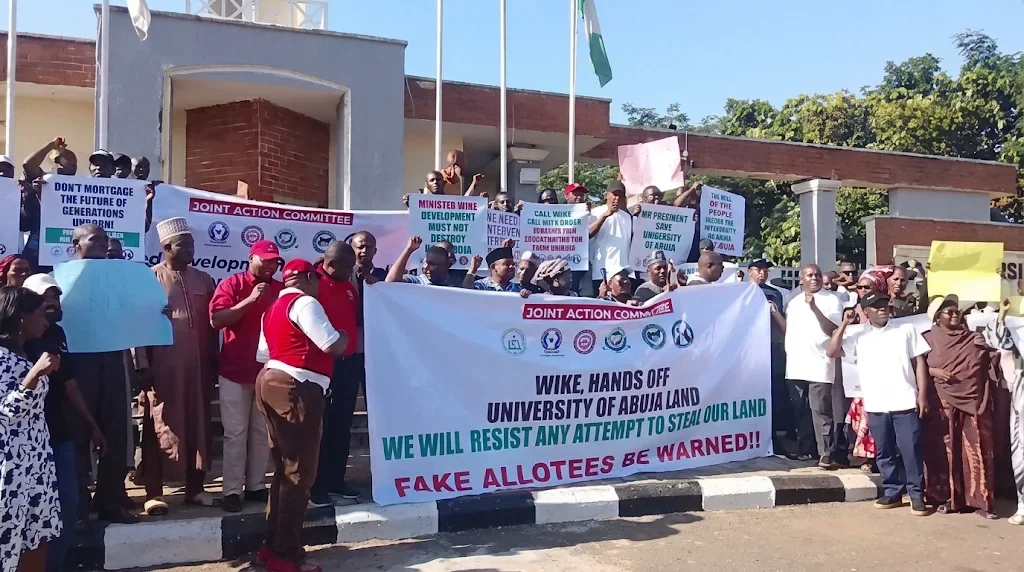
The administration's position followed a protest on Monday, 16 November 2026, by staff unions, students and alumni of the university, who opposed the reduction and called for the government to reverse the decision.
/ You Might Also Like /




The protesters argued that the loss of land could undermine the institution’s future expansion, academic master plan and research activities. However, the FCTA maintained that the decision originated from a review conducted by a joint committee established in 2016 under former FCT Minister Mohammed Musa Bello.
The dispute raises important questions about institutional land ownership, urban land administration and the competing demands for land in Abuja, where government agencies continue to pursue new infrastructure and development projects.
FCTA traces land decision to 2016 committee
Speaking through the FCT Minister’s Senior Special Assistant on Public Communications and Social Media, Lere Olayinka, the administration said a 12-member joint committee comprising representatives of the FCTA and the university examined the institution’s landholding and related land administration issues.
The committee was inaugurated on 10 November 2016 to review the size of the university’s land, encroachment by indigenous settlers, illegal developments around its Gwagwalada mini-campus and the issuance of title documents for its campuses.
According to Olayinka, five of the committee’s 12 members represented the university. They included Professors Otaki Alanana and A. Mallam, as well as Mohamed Kassim, A.E. Ripite and Sadiq Shuaibu.
The FCTA said the committee concluded that the university's main campus, which covered more than 11,000 hectares, exceeded the 100 hectares it attributed to the National Universities Commission (NUC) as the recommended land size for universities.
Olayinka said the committee recommended that the university retain 100 hectares and that the then FCT Minister, Mohammed Bello, approved the recommendation.
He maintained that Wike did not independently initiate the reduction but acted on the earlier approval. The FCTA also said the current administration approved 4,519.80 hectares for the university, substantially more than the 100 hectares recommended by the committee.
University community opposes reduction
The protest involved members of the Academic Staff Union of Universities (ASUU), Senior Staff Association of Nigerian Universities (SSANU), Non-Academic Staff Union of Educational and Associated Institutions (NASU), the Students' Union Government and the university's alumni association.
The protesters described the reduction as an unjustified withdrawal of land originally allocated to the institution and called on President Bola Tinubu to intervene.
They argued that the university required sufficient land to accommodate future academic expansion, research facilities and specialised programmes.
ASUU's University of Abuja branch chairman, Sylvanus Ugoh, said the land was allocated to the institution when it was established in 1988 and should remain available for public educational purposes.
SSANU's branch chairman, Nurudeen Yusuf, also argued that specialised programmes, including nuclear engineering and aeronautical engineering, required adequate space for research, practical training and supporting facilities.
The university's Pro-Chancellor, Olanrewaju Tejuoso, had previously questioned the suitability of some of the land retained by the institution, arguing that portions consisted of rocky hills.
The university community has maintained that its original allocation supports long-term institutional development and should not be reduced without adequately considering its academic and infrastructure requirements.
FCTA alleges unauthorised land allocations by university
The administration also accused the university management of allocating portions of its land to individuals and corporate organisations without consulting the FCTA.
Olayinka specifically cited an alleged allocation of 100 hectares to the Economic and Financial Crimes Commission (EFCC), questioning whether the university had the authority to distribute portions of its government-allocated land without the administration's approval.
He argued that the university had not demonstrated a need to retain more than 11,000 hectares after 38 years of operation.
The FCTA further claimed that the 4,519.80 hectares approved for the institution could accommodate more than 80,000 buildings if developed using plots measuring 500 square metres each.
It also suggested that the original landholding could accommodate more than 220,000 residential buildings on plots of the same size.
These figures represent the administration's hypothetical land-use calculations, not approved housing development plans or evidence that the disputed land has been designated for residential construction.
The administration urged the protesting unions to explain how the reduction would affect the university's academic programmes, staff welfare and operations.
Land dispute has entered the courts
The disagreement has also developed into a legal dispute. The university instituted Suit No. FCT/HC/CV/3500/2026 before the High Court of the Federal Capital Territory in Maitama.
According to reports, Justice F.E. Messiri ordered the parties on 18 August 2026 to maintain the status quo ante bellum concerning Plot No. 1, Giri District, pending the determination of the substantive case.
ASUU subsequently accused the FCTA of violating the order through alleged allocations of portions of the disputed land to private individuals and companies on 26 September 2026.
These allegations have not been established as findings of the court. The substantive dispute remains subject to judicial determination, making the legal status of the contested land an important consideration for any proposed development or allocation.
Implications for Abuja's land administration and property development
The dispute highlights the competing pressures surrounding land allocation in the Federal Capital Territory, where government institutions, private developers and other organisations seek land for different uses.
For property investors and developers, the case underscores the importance of verifying land titles, allocation records, government approvals and any existing legal restrictions before committing capital to property transactions.
The FCTA's argument that large portions of the university's land could accommodate residential development also illustrates the potential tension between institutional land requirements and the demand for land for housing and other urban uses.
However, the administration's hypothetical building estimates should not be interpreted as a confirmed plan to convert the reclaimed land into housing estates. Any such development would require appropriate planning approvals, infrastructure provision and resolution of outstanding legal questions.
The outcome could also influence how government agencies approach institutional land allocations and the review of undeveloped public land in Abuja.
For now, the disagreement remains unresolved, with the FCTA defending its decision on the basis of the 2016 committee report while the university community maintains that the reduction threatens its long-term development needs.
READ MORE