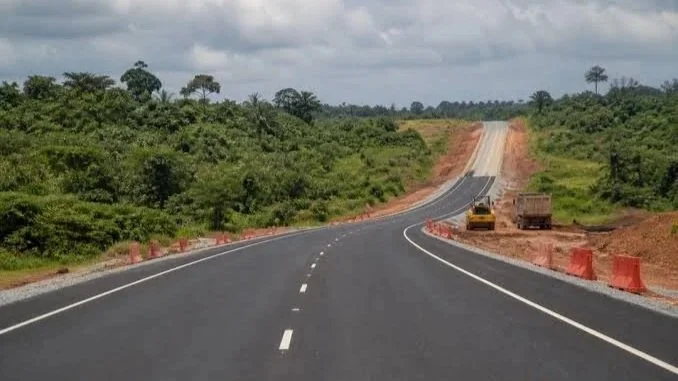
Aliko Dangote says businesses under the Dangote Group are spending ₦3.3 trillion on road infrastructure to improve the movement of goods across Nigeria
Businesses under the Dangote Group are spending ₦3.3 trillion ($2.2 billion) on road infrastructure in Nigeria to improve the movement of goods and reduce transportation challenges across the country, according to the conglomerate’s founder, Aliko Dangote.
/ You Might Also Like /




Dangote disclosed the investment in Accra, Ghana, where he was attending a summit with President John Mahama. He said the road upgrades would support the group's manufacturing and distribution operations, which depend heavily on road transportation to move products from factories to markets.
The investment comes as poor road conditions continue to increase logistics costs for Nigerian businesses. Dangote said his companies operate approximately 14,000 trucks in the country, making road quality a significant factor in the efficiency of their supply chains.
Dangote links road investment to manufacturing and distribution
The Dangote Group operates across several sectors, including cement manufacturing, petroleum refining, sugar processing, food production, automobile manufacturing, shipping and power.
Its extensive distribution network relies on road transport to move cement, petroleum products, fertiliser, sugar and other goods across Nigeria. The condition of major highways therefore affects the cost and speed of moving products between production facilities, ports, warehouses and consumer markets.
Dangote's ₦3.3 trillion disclosure reflects the importance of transport infrastructure to the group's operations. Better roads could reduce vehicle operating costs, improve delivery times and limit disruptions caused by deteriorating road surfaces.
The investment also highlights the role of large private-sector operators in addressing infrastructure constraints that affect their businesses and the wider economy.
Poor road conditions continue to constrain logistics
Nigeria's dependence on road transportation makes the condition of its highway network particularly important to economic activity.
More than 90 per cent of passenger and freight movements in the country rely on roads, while approximately 80 per cent of the road network is in poor condition, according to World Bank data cited in the report.
For manufacturers and distributors, deteriorating roads increase vehicle maintenance expenses, fuel consumption and delivery times. These costs can ultimately affect the prices businesses charge for goods and services.
The impact extends beyond large manufacturers. Small businesses, agricultural producers, wholesalers and retailers also depend on reliable roads to move goods between rural production areas, markets and urban centres.
For the property and construction sectors, road conditions influence access to development sites, the movement of building materials and the commercial viability of industrial and residential locations.
Dangote Group has undertaken major federal road projects
The latest disclosure follows the group's participation in several federal road construction and rehabilitation projects.
In July 2026, the Federal Ministry of Works reported that Dangote Group was executing 12 road projects valued at approximately ₦3 trillion under the Federal Government's Infrastructure Tax Credit Scheme.
The projects include sections of the Apapa-Oworonshoki Expressway in Lagos, the Abuja-Kaduna-Kano Road, the Dikwa-Gamboru-Ngala Road and the Bama-Banki Road in Borno State.
The group is also involved in the Lekki Deep Sea Port access road project, which supports connectivity between the port, the Dangote Refinery and other industrial facilities along the Lekki-Epe corridor.
In June 2025, President Bola Tinubu commissioned a 37-kilometre section of the Lekki Deep Sea Port access road. The Federal Executive Council had approved ₦158 billion in tax credits for the project in September 2024.
The tax credit arrangement allowed private companies to finance approved public road projects and recover qualifying expenditure through tax credits. The Federal Ministry of Works identified the scheme as a mechanism for attracting private-sector participation in infrastructure development
Dangote proposes 1,000-kilometre West African road
Beyond Nigeria's domestic road network, Dangote has proposed a 1,000-kilometre road connecting Nigeria, Ghana and Côte d'Ivoire to improve regional transportation and cross-border trade.
He said inadequate transport infrastructure remains an obstacle to commercial activity among West African economies and called for greater cooperation among regional leaders to advance the proposed corridor.
Dangote indicated that he intended to engage President Mahama and other regional leaders to secure attention for the project.
If implemented, the proposed road could improve the movement of goods between the three countries, strengthen trade connections and provide businesses with better access to regional markets.
However, the proposal remains at the advocacy stage. No construction timetable, financing structure or confirmed government agreement was disclosed in the report.
Road infrastructure remains central to Nigeria's investment environment
The scale of Dangote's disclosed road spending highlights the importance of transport infrastructure to industrial development and the movement of goods across Nigeria.
For property developers and investors, reliable road connections can improve access to industrial estates, logistics parks, warehouses, commercial centres and new residential developments. Better connectivity can also strengthen the commercial viability of locations outside established urban centres.
However, the benefits depend on the completion, maintenance and effective integration of road projects with other infrastructure, including ports, railways and logistics facilities.
Dangote's disclosure also raises broader questions about the role of private capital in financing public infrastructure and how government policy can encourage investment while maintaining transparency and accountability.
As the group continues its road projects, the extent to which the investment improves logistics efficiency will depend on the quality of completed roads, their geographical coverage and their connection to major production and distribution corridors.
READ MORE