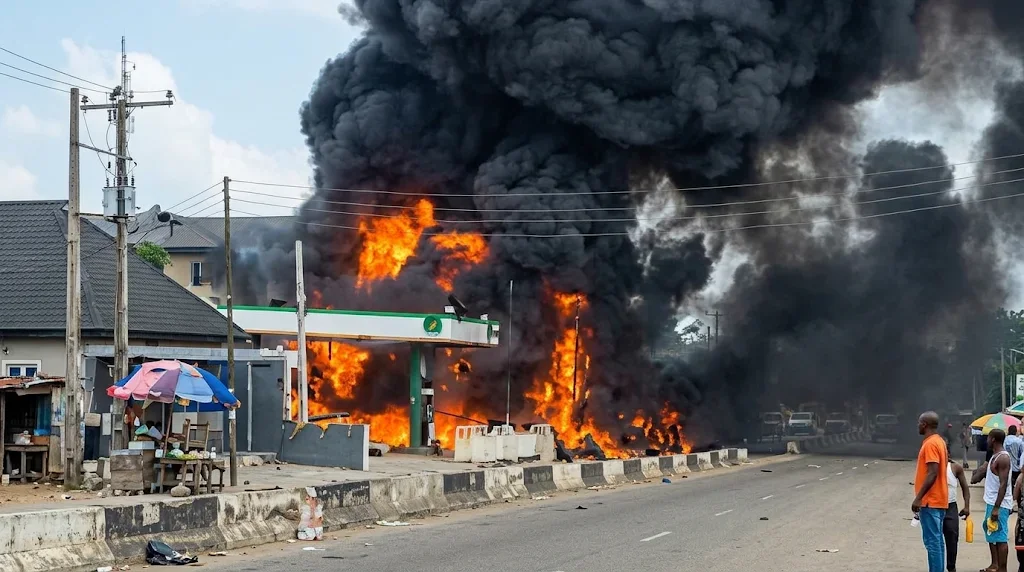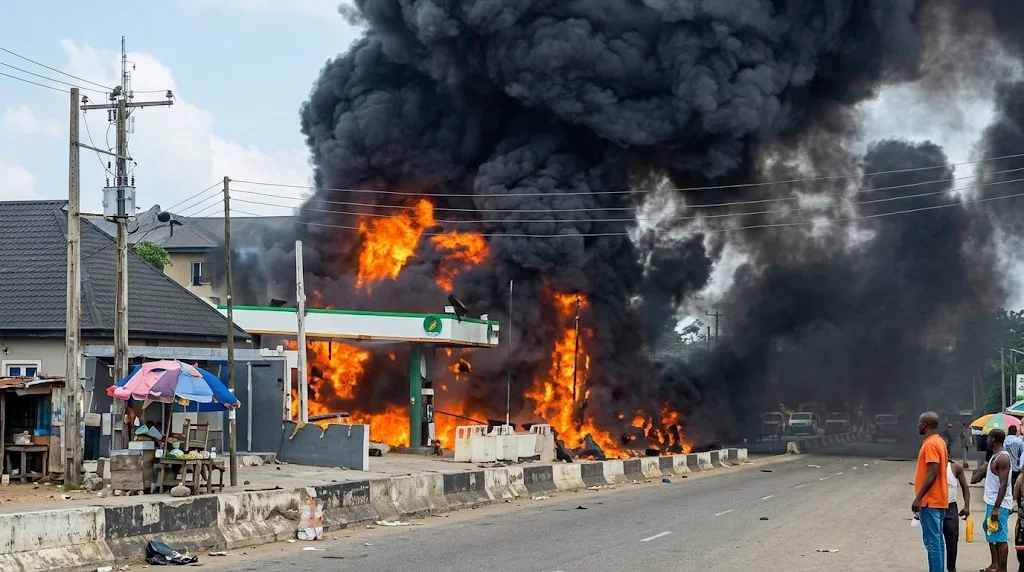
Emergency responders contain a fire at an NNPC-affiliated filling station in Alimosho, Lagos, after the blaze spread to a neighbouring school
The Nigerian National Petroleum Company Limited (NNPC) has launched an investigation into a fire at an affiliated filling station along Ekoro-Ajasa Road in Alimosho Local Government Area of Lagos State, after the blaze spread to a neighbouring school and destroyed property. The incident occurred on Monday, November 16, 2026, and emergency responders contained the fire without any reported fatalities or injuries.
/ You Might Also Like /




NNPC disclosed the investigation in a statement issued on Tuesday through its Chief Corporate Communications Officer, Andy Odeh. The company said its Retail, Health, Safety and Environment teams were working with the management of the affiliated station and relevant authorities to establish the circumstances surrounding the outbreak.
The fire affected the filling station and adjoining St Lawrence Greater Height School. Preliminary findings from the Lagos State Emergency Management Agency (LASEMA) linked the outbreak to a tanker discharging diesel at the station, although NNPC has not yet announced its own findings.
Fire spreads from filling station to neighbouring school
The incident prompted an emergency response from the Lagos State Fire and Rescue Service, LASEMA and other agencies. Firefighters from Ejigbo, Ikeja and Bolade stations helped contain the blaze and prevent it from spreading to other parts of the school and nearby properties.
Reports on the incident said the fire destroyed seven classrooms and damaged electrical appliances within the affected school premises. Three fuel dispensing machines, a DAF truck and a Toyota Camry were also reportedly destroyed.
LASEMA's preliminary account indicated that the fire started during the discharge of diesel from a tanker before spreading to the station's dispensing area and the adjoining school building.
Although the fire caused substantial property damage, emergency responders prevented further destruction. Authorities reported no casualties.
NNPC begins safety review
NNPC said its internal teams and the station's management were reviewing the circumstances surrounding the fire. The company also pledged to support the relevant authorities in the investigation and provide further information as verified findings become available.
Odeh acknowledged the concern and disruption the incident caused residents, customers and neighbouring businesses, particularly those whose property or livelihoods may have suffered losses.
The company commended LASEMA, the Lagos State Fire and Rescue Service and other emergency responders for containing the fire and limiting further damage. It reiterated that the safety of customers, employees and neighbouring communities remained a priority.
The investigation will need to establish the precise sequence of events, determine whether the station and tanker operators complied with applicable safety procedures, and identify any operational failures that may have contributed to the outbreak. The preliminary account linking the fire to diesel offloading does not, by itself, establish the final cause or responsibility.
Fire raises concerns over safety around petroleum retail outlets
The incident has renewed attention on the risks associated with petroleum product handling at filling stations located close to schools, homes and commercial premises.
The transfer of petroleum products from tankers into storage facilities requires strict safety procedures, appropriate fire-prevention equipment and effective emergency arrangements. A fire at a retail outlet can quickly threaten neighbouring properties, particularly where facilities operate close to buildings with high numbers of occupants.
For property owners, developers and urban planners, the incident also highlights the importance of land-use planning and safety controls around fuel retail facilities. The location of filling stations near schools and residential developments makes compliance with siting requirements, fire-safety standards and emergency-access provisions particularly important.
Lagos authorities have urged filling station operators and tanker drivers to observe safety procedures, especially during the discharge of petroleum products. The investigation's findings should help clarify the circumstances of the Alimosho incident and whether additional enforcement or safety measures are necessary.
NNPC's review, alongside investigations by the relevant state authorities, will determine the next steps. Until those findings become available, the cause should be treated as preliminary rather than conclusive.
READ MORE