Sokoto Approves ₦10.96bn for Roads, ₦7.84bn for 200 Solar-Powered Boreholes
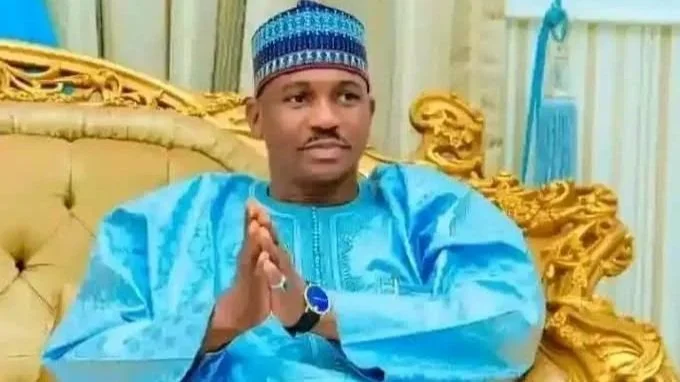
Sokoto approves new road, drainage and solar-powered water infrastructure projects
The Sokoto State Government has approved ₦10.96 billion for road construction and drainage works in Sokoto metropolis, alongside ₦7.84 billion for 200 solar-powered boreholes across the state’s 23 local government areas.
/ You Might Also Like /




The approvals form part of a broader infrastructure programme covering road expansion, water supply, healthcare, education and other public facilities. The State Executive Council reached the decisions at its ninth regular meeting of 2026, chaired by Governor Ahmed Aliyu at the Government House in Sokoto.
The government also approved ₦8.54 billion for a dual carriageway linking Tsehen Masu through New City Kwasai to the old airport runway, as well as ₦1.79 billion for additional road construction and rehabilitation works.
The projects are intended to improve urban mobility, strengthen drainage infrastructure, expand access to potable water and support economic activity across the state.
Road Projects Target Urban Connectivity and Drainage
The ₦10.96 billion allocation will fund 11 clusters of roads with reinforced-concrete construction and outfall drainage systems in the Arkilla Federal and State Low-Cost areas of Sokoto metropolis.
The drainage component is significant for urban infrastructure because effective stormwater management can reduce water accumulation on roads, limit disruption during heavy rainfall and help protect nearby properties. The extent of these benefits will depend on the quality of construction, the capacity of the drainage network and its maintenance after completion.
The government also approved ₦8.54 billion for a dual carriageway running from Tsehen Masu through New City Kwasai to the old airport runway. The route is expected to improve connections between communities and ease traffic movement around the expanding state capital.
A further ₦1.79 billion was approved for road construction along the Kaduna Road and Tsafe Road corridors, development of roads in the Guiwa area and rehabilitation of Bunza Road.
Together, the approvals cover new road construction, rehabilitation and drainage improvements intended to strengthen access within Sokoto and its surrounding communities.
Government Allocates ₦7.84bn for 200 Solar-Powered Boreholes
The State Executive Council approved ₦7.84 billion for 200 fully equipped, solar-powered semi-urban boreholes distributed across Sokoto’s 23 local government areas.
The initiative is designed to improve access to potable water, particularly in communities where existing water infrastructure does not adequately meet residents’ needs.
Using solar power could reduce dependence on conventional electricity and lower the energy requirements associated with operating borehole pumps. However, the long-term effectiveness of the intervention will depend on water availability, equipment quality, maintenance arrangements and the capacity of local authorities to keep the facilities operational.
The council also approved ₦249.4 million for borehole-drilling materials, submersible pumps and accessories to maintain existing rural water schemes.
The separate maintenance allocation highlights the importance of sustaining existing infrastructure alongside new construction. Reliable water supply requires not only new facilities but also regular servicing, repairs and effective management.
Infrastructure Investment Could Support Housing Development
Road access and dependable water supply are important factors in the development of residential neighbourhoods. Improved roads can reduce travel difficulties, connect communities to employment centres and make it easier to transport construction materials and deliver essential services.
For property developers, better access can make previously less-connected locations more practical for residential construction. Improved drainage can also help reduce exposure to water-related disruption where projects are properly designed and maintained.
Water infrastructure is equally important for housing delivery. Residential developments require reliable supplies for domestic use, sanitation and, during construction, building activities. In areas where households rely heavily on private boreholes or water vendors, public investment in water supply could help ease some of these pressures.
However, the approvals do not by themselves establish how much new housing the projects may support or whether property costs will fall. Those outcomes will depend on the location of the infrastructure, the condition of surrounding neighbourhoods, land-use planning and the level of private development that follows.
Healthcare and Education Projects Also Receive Funding
Beyond roads and water supply, the council approved funding for healthcare and education facilities across the state.
The government approved ₦377.93 million to renovate General Hospital in Tureta and ₦302.81 million for General Hospital in Rabah. It also approved ₦383.33 million for the re-award and completion of the General Hospital project in Dange town.
Additional healthcare allocations include ₦61.95 million for the renovation of Badon Barade Primary Health Centre and ₦62.71 million for the renovation of the Primary Health Centre in Alu Quarters, Mana area, including construction of a perimeter fence.
In education, the council approved ₦492.41 million to renovate the collapsed and dilapidated hall at Umaru Ali Shinkafi Polytechnic. It also approved ₦99.93 million for teaching and learning equipment at Shehu Shagari University of Education and ₦911.59 million for the renovation of Government Girls Commercial Secondary School in Tambuwal.
The approvals extend the programme beyond transport and water infrastructure to facilities that support public services and community development.
Project Delivery Will Determine the Impact
The latest approvals outline Sokoto State’s plans to expand infrastructure and improve essential services. The road projects could strengthen urban connectivity, while the borehole programme is intended to increase access to water across all 23 local government areas.
For residents and property owners, the practical benefits will depend on whether the projects are implemented to specification, completed on schedule and maintained over time.
The government’s next challenge is to translate budget approvals into functioning infrastructure. Transparent procurement, effective project supervision and maintenance funding will be important in ensuring that the investments deliver lasting improvements to mobility, water access and neighbourhood conditions.
For Sokoto’s built environment, the combination of road construction, drainage works and water infrastructure provides a foundation for more accessible and better-serviced communities. The scale of the eventual benefits, however, will become clearer as implementation progresses.
READ MORE