Sahara Group Foundation Expands Recycling Network with New Hubs in Jigawa and Kaduna
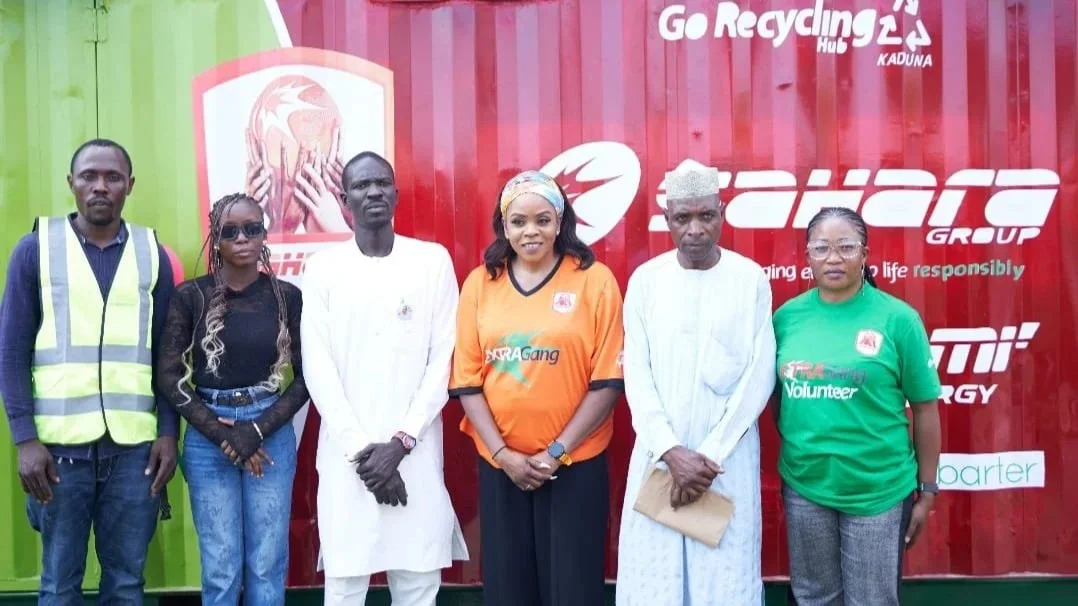
Sahara Group Foundation Scales Recycling Initiative Across Northern Nigeria
Sahara Group Foundation has expanded its recycling programme with the launch of two new Sahara Go Recycling Hubs in Jigawa and Kaduna States, extending its efforts to improve waste management, promote environmental sustainability and create economic opportunities through recycling. The new facilities form part of the foundation's broader initiative to strengthen the circular economy and encourage responsible waste disposal across communities.
/ You Might Also Like /




The expansion increases the programme's footprint in Northern Nigeria and provides additional collection points where residents can exchange recyclable materials for economic value.
New recycling hubs launched in Jigawa and Kaduna
The newly commissioned facilities are located in Gidan Hakimi, Shuwarin Local Government Area of Jigawa State, and Badiko, Kaduna South Local Government Area of Kaduna State.
According to Sahara Group Foundation, the centres serve as collection and aggregation points for recyclable materials, helping to divert waste from landfills and the wider environment. The hubs also provide structured channels for households and small-scale waste collectors to participate in recycling activities.
The two facilities represent the latest additions to the Sahara Go Recycling network, which continues to expand across various parts of the country.
Recycling programme supports livelihoods
Beyond environmental benefits, the initiative is designed to create economic opportunities for participating communities.
Residents can exchange recyclable materials, including plastic waste and other recyclable items, through the programme. This model enables households and informal waste collectors to generate income while contributing to cleaner communities.
According to Sahara Group Foundation, the programme has supported thousands of participants since its inception, demonstrating the growing role of recycling as both an environmental and economic activity.
Circular economy gains momentum
The expansion aligns with broader efforts to promote a circular economy in Nigeria, where materials are reused, recycled and reintegrated into production processes rather than discarded as waste.
Advocates of circular economy initiatives argue that improving recycling infrastructure can reduce environmental pollution, conserve resources and create new economic opportunities. Increased recycling activity can also support industries that rely on recycled materials as production inputs.
As urban populations continue to grow, investments in recycling infrastructure are increasingly viewed as an important component of sustainable environmental management.
Environmental implications for communities
Waste management remains a significant challenge in many Nigerian cities and communities, where inadequate disposal systems can contribute to environmental degradation, blocked drainage channels and public health concerns.
Recycling programmes help address these challenges by promoting proper waste segregation and reducing the volume of waste entering landfills and waterways. Improved waste collection systems can also contribute to cleaner neighbourhoods and more sustainable urban environments.
For rapidly growing communities, investments in recycling and environmental infrastructure are becoming increasingly important in supporting long-term sustainability objectives.
Expansion plans continue
Sahara Group Foundation indicated that the latest facilities form part of a broader expansion strategy aimed at increasing access to recycling infrastructure across Nigeria.
The organisation noted that additional recycling hubs are planned as it seeks to strengthen waste recovery networks and increase participation in recycling activities nationwide.
The expansion reflects growing interest from both public and private sector stakeholders in developing practical solutions to environmental challenges while creating economic value through resource recovery.
Relevance to sustainable development
The development highlights the increasing role of private sector-led sustainability initiatives in addressing environmental and community challenges.
While the project is primarily focused on waste management and environmental sustainability, it also contributes to broader development objectives by encouraging responsible resource use, supporting livelihoods and promoting cleaner communities.
For policymakers and urban development stakeholders, the initiative demonstrates how recycling infrastructure can complement wider efforts to improve environmental performance and strengthen community resilience.
Outlook
The launch of new recycling hubs in Jigawa and Kaduna marks another step in the expansion of Nigeria's recycling infrastructure. As participation grows, initiatives such as Sahara Go Recycling could play a larger role in improving waste management, supporting economic opportunities and advancing the transition towards a more circular and sustainable economy.
READ MORE