Lagos Begins Demolition of Fire-Ravaged 25-Storey GNI House
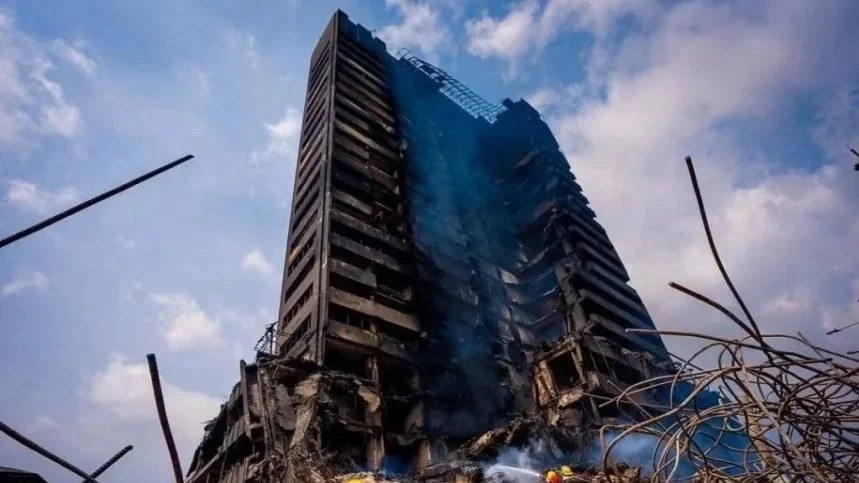
The fire damaged Great Nigeria Insurance House on Lagos Island
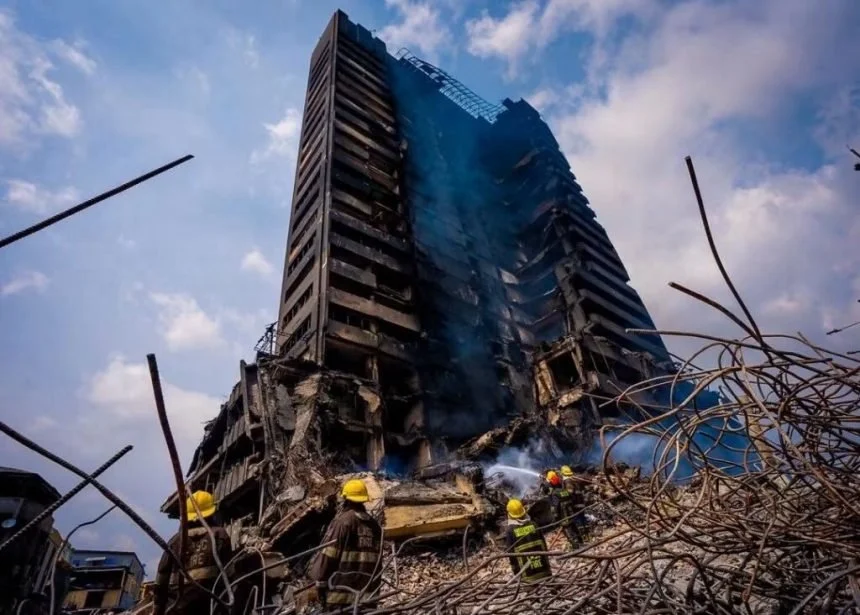
The Lagos State Government has commenced the controlled demolition of the fire-damaged 25-storey Great Nigeria Insurance (GNI) House on Lagos Island, with emergency officials monitoring the operation to protect workers, traders and neighbouring properties.
The Lagos State Emergency Management Agency (LASEMA) began the exercise on 15 October 2026 after structural assessments identified the building as a significant public safety risk.
/ You Might Also Like /




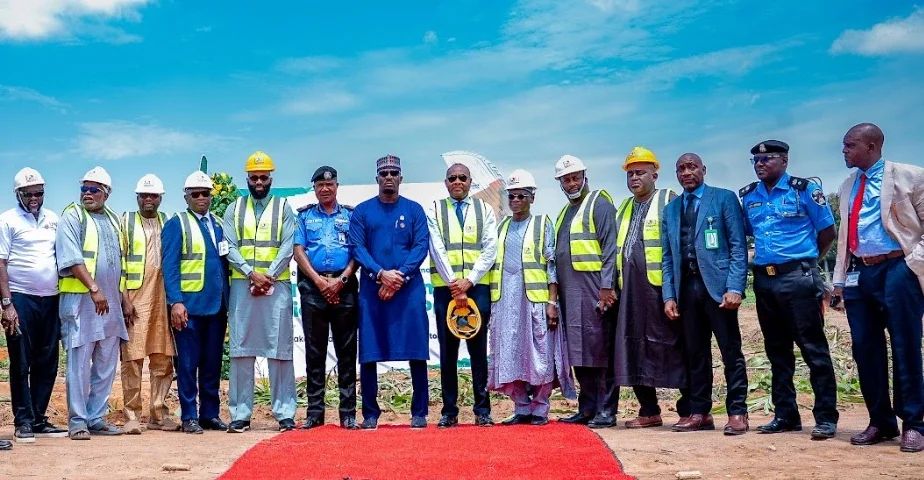
During an inspection on 16 October, LASEMA Permanent Secretary Olufemi Oke-Osanyintolu assessed workers’ safety, compliance with protective equipment requirements and the performance of heavy-duty demolition machinery. He also inspected the cordoned-off perimeter around the building.
The agency said the demolition would continue gradually under controlled conditions to minimise risks to adjoining properties. Its latest reported update confirmed that work was ongoing, rather than completed.
H2: Structural Damage Prompts Demolition
The demolition follows a major fire that engulfed GNI House on Martins Street on 24 December 2025. The blaze caused extensive damage to the commercial building and nearby shops, while part of the structure collapsed.
The incident disrupted trading in the surrounding Balogun Market area and raised concerns about the safety of the remaining structure.
Governor Babajide Sanwo-Olu ordered the building’s demolition after the fire, citing the risks associated with its damaged condition. Subsequent structural assessments reinforced the need to remove the unsafe structure.
The controlled operation is intended to eliminate the danger posed by the weakened building and reduce the possibility of further collapse. Authorities must also protect adjoining buildings and people who work or trade in the busy commercial district.
H2: LASEMA Monitors Workers and Demolition Equipment
LASEMA is overseeing safety arrangements around the site in coordination with other relevant government agencies.
During his inspection, Oke-Osanyintolu accessed the building’s 22nd floor using a demolition crane to assess workers’ safety and compliance with protective equipment requirements. He also evaluated the heavy-duty machinery being used for the operation.
The agency said the work would proceed in a slow, steady and professionally controlled manner to safeguard lives and nearby properties.
Access to the immediate surroundings remains restricted during the exercise. Authorities have also warned of possible traffic diversions, noise and dust, urging traders, residents, business owners and motorists to avoid the affected area where possible.
The safety arrangements are particularly important because the building sits within a densely populated commercial district with heavy pedestrian and vehicle movement.
H2: Fire Highlights Risks in Commercial Buildings
The GNI House disaster has renewed attention on fire prevention, structural integrity and the management of commercial buildings in crowded urban areas.
The building housed traders selling and storing clothing materials, shoes, bags and other goods. The fire spread through the structure and affected nearby shops and buildings, creating risks beyond the property where it began.
Such incidents can cause extensive losses for traders and property owners, disrupt commercial activity and threaten the safety of people working or moving through surrounding streets.
For commercial property owners and occupiers, the incident underlines the importance of appropriate fire-safety systems, safe storage practices, emergency access and regular assessments of building condition.
Building use also matters. A structure must remain suitable for its intended purpose, particularly where large quantities of goods, electrical equipment and other potential fire hazards are present.
H2: Implications for Commercial Property and Building Regulation
The demolition has implications for property owners, investors, traders and regulators responsible for building safety across Lagos.
In established commercial districts, unsafe structures can put workers, customers and neighbouring properties at risk. A serious fire can also disrupt nearby businesses, damage inventory and restrict access to surrounding streets.
Effective building regulation therefore requires more than approval at the construction stage. Authorities must monitor building conditions, enforce fire-safety standards and respond promptly when a structure becomes unsafe.
Property owners and operators also have a responsibility to maintain their buildings and ensure that changes in use or storage practices do not compromise safety.
For investors, the GNI House incident illustrates why structural condition, regulatory compliance and risk management should form part of commercial property assessments alongside location, rental income and expected returns.
The demolition may remove an immediate hazard, but preventing similar incidents will require consistent inspections, effective enforcement and compliance with established safety standards.
H2: Outlook for Lagos’ Built Environment
The controlled demolition of GNI House marks the removal of a building that authorities consider unsafe following extensive fire damage. The immediate priority remains completing the operation without harm to workers, traders, motorists or neighbouring properties.
The longer-term challenge is to strengthen fire prevention and building-safety enforcement in Lagos’ densely developed commercial districts.
For the property sector, the incident reinforces the need to treat structural integrity and fire safety as essential parts of property ownership and management, rather than as requirements addressed only after a disaster.
The final outcome of the demolition will depend on the safe completion of the operation. No confirmed completion date or final redevelopment plan for the site was established in the latest reports reviewed.
READ MORE