Nigeria Targets 7% Growth as Stable Naira and Lower Inflation Take Centre Stage

Finance Minister Taiwo Oyedele outlines the government’s economic growth ambitions
The Federal Government is targeting 7% annual economic growth, banking on a more stable naira, lower inflation and reduced business costs to accelerate investment and economic activity.
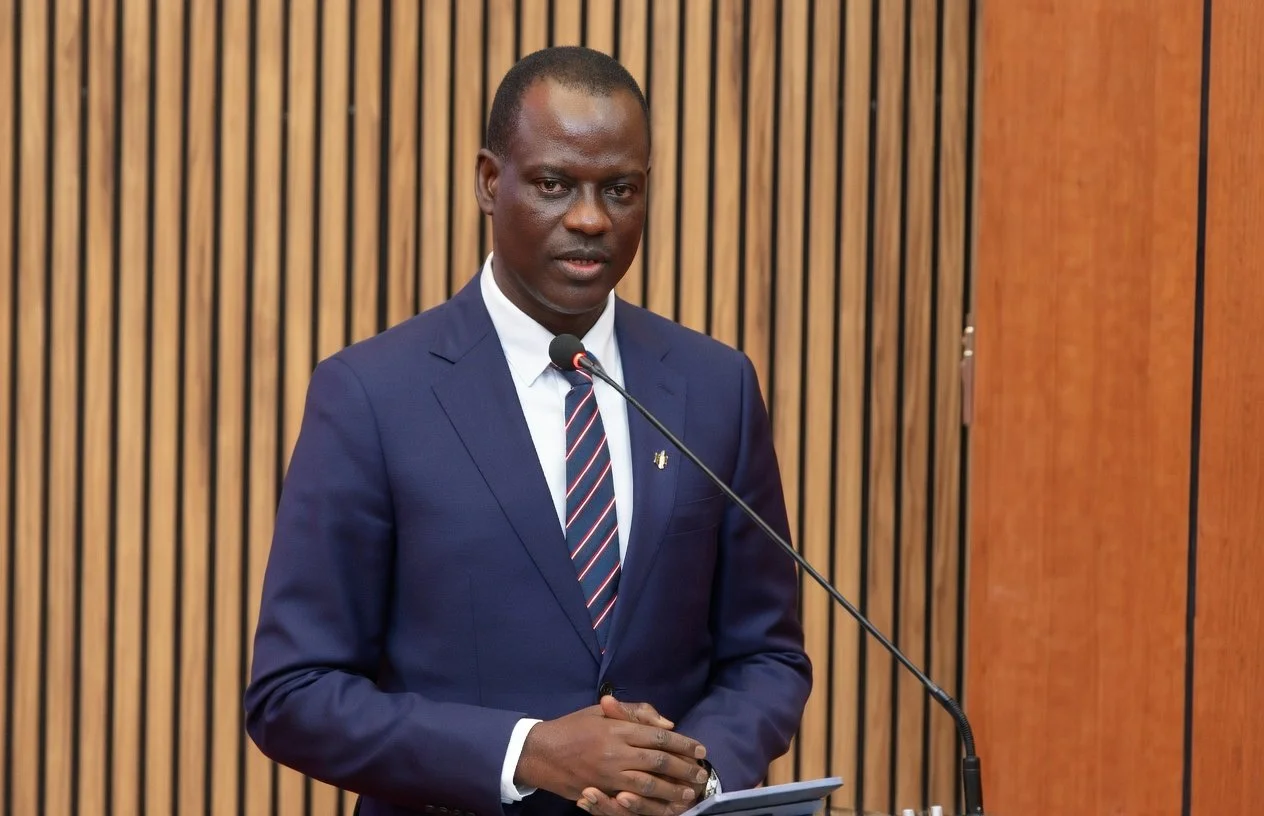
Finance Minister and Coordinating Minister of the Economy Taiwo Oyedele outlined the ambition at the closing press briefing of the 2026 IMF-World Bank Meetings in Bangkok, Thailand. The target exceeds the International Monetary Fund’s projections of 4.3% growth for Nigeria in 2026 and 4.4% in 2027.
/ You Might Also Like /




Oyedele said the government was working to address structural constraints, including food, energy and logistics costs, which continue to put pressure on prices and limit business expansion.
Achieving the higher growth target will require sustained investment, stronger productivity and improvements in the business environment. For the property and construction sectors, progress on inflation, currency stability and borrowing costs will also influence development expenses and access to finance.
Government Bets on Naira Stability and Lower Inflation
Oyedele identified developments in the foreign exchange market as one factor supporting the government’s economic outlook, arguing that the naira’s performance had helped ease some inflationary pressures.
A more stable exchange rate can reduce the local-currency cost of imported machinery, materials and other production inputs. This could help businesses manage expenses and limit the pressure to increase prices.
For Nigeria’s construction and real estate sectors, exchange-rate stability matters because imported building materials, equipment and components can expose developers to currency fluctuations. A more predictable exchange rate could improve budgeting and project planning, although the benefits would depend on actual market conditions and the extent to which businesses pass lower costs through to customers.
However, currency stability alone will not resolve the country’s inflation challenges. Food, energy and logistics costs remain important pressures on household purchasing power and business operations.
High Borrowing Costs Remain a Constraint
The finance minister identified expensive credit as a major obstacle to private-sector expansion, noting that high lending rates can absorb funds businesses might otherwise use to invest, expand operations and create jobs.
Oyedele argued that reducing inflation to low single digits could help create conditions for single-digit interest rates. He highlighted the difference between the growth of individual businesses and the wider economy, suggesting that cheaper borrowing could unlock more productive investment.
However, lower inflation would not automatically guarantee single-digit lending rates. Monetary policy, banks’ funding costs, credit risks and broader economic conditions would also influence the cost of loans.
For property developers, contractors and prospective homeowners, borrowing costs have direct implications. High interest rates can make development finance more expensive, raise the cost of mortgage repayments and limit the number of households that qualify for housing loans.
More affordable credit could support property investment and expand access to housing finance. The extent of any improvement would depend on whether lower rates translate into accessible, longer-term financing for developers and homebuyers.
Food, Energy and Logistics Costs Put Pressure on Businesses
The government has identified food, energy and logistics costs as structural challenges that continue to affect inflation and business expansion.
These costs influence more than household spending. They also affect the movement of construction materials, the operation of factories, the delivery of building supplies and the cost of running commercial properties.
Persistent increases in transport and energy expenses can raise project budgets and place pressure on developers already facing expensive finance and infrastructure constraints. Businesses may respond by delaying projects, reducing investment or passing additional expenses on to customers.
Reducing these pressures could improve the operating environment for real estate investors and construction firms. However, lower input costs would need to be sustained before developers and households could plan confidently around more stable prices.
Tax Reforms Form Part of the Growth Strategy
Oyedele also pointed to the government’s tax reforms as another part of its economic programme, saying the administration had rewritten Nigeria’s tax framework within two years.
The government expects its reforms to strengthen economic management and create a foundation for sustainable growth and shared prosperity.
For investors, the practical effect will depend on how the tax framework is implemented, how it affects compliance costs and whether it provides a more predictable environment for business decisions.
In the property market, clarity around tax obligations and consistent implementation can influence investment planning, development costs and the returns investors expect from real estate projects.
What the 7% Growth Target Means for Housing and Real Estate
The government’s growth ambition has implications for housing and real estate because the sector depends on financing conditions, construction costs, household incomes and investor confidence.
A more stable naira could improve cost predictability for developers that rely on imported materials and equipment. Lower inflation could help households preserve purchasing power, while cheaper borrowing could make development loans and mortgages more affordable if the benefits reach the property market.
Stronger economic growth could also support employment and demand for residential and commercial property. However, economic expansion alone will not resolve Nigeria’s housing affordability challenges.
The impact on housing delivery will depend on the availability of long-term finance, land and infrastructure provision, construction capacity and the ability of households to afford completed homes. Developers will also need confidence that lower costs and improved financing conditions can be sustained over the life of their projects.
Outlook: Turning Economic Ambition into Measurable Gains
Nigeria’s 7% growth target sets a more ambitious benchmark than the IMF’s current projections. The government is counting on currency stability, lower inflation, reduced business costs and economic reforms to support faster expansion.
Yet the gap between the target and the IMF’s forecasts highlights the scale of the challenge. Sustained investment, higher productivity and lower borrowing costs will be essential if the economy is to accelerate at the pace the government envisages.
For the housing and real estate sectors, the key indicators will include the cost of development finance, mortgage affordability, exchange-rate stability and movements in construction expenses.
The ultimate test will be whether improved macroeconomic conditions translate into more investment, stronger household purchasing power and greater capacity to deliver affordable housing.
READ MORE