Nigeria’s Largest External Creditors in US Dollars Revealed

World Bank Leads List of Nigeria’s Biggest Dollar Creditors
Nigeria’s external debt profile continues to reflect strong dependence on multilateral and bilateral financing institutions, with the World Bank remaining the country’s largest creditor in US dollar terms, according to the latest debt data reviewed by Nairametrics.
The figures, sourced from the Debt Management Office (DMO), show that Nigeria’s total external debt stock stood at approximately $44.9 billion as of the end of 2025. Multilateral institutions accounted for the largest share of obligations, followed by commercial Eurobond investors and bilateral lenders such as China and France.
/ You Might Also Like /




The debt structure highlights Nigeria’s increasing reliance on international lenders to finance infrastructure projects, fiscal deficits, budget support programmes, and economic reforms amid ongoing revenue pressures and foreign exchange constraints.
World Bank Emerges as Nigeria’s Largest Creditor
According to the DMO data, the World Bank Group remained Nigeria’s largest external creditor, accounting for more than $17 billion of outstanding debt obligations.
The bulk of the exposure came through the International Development Association (IDA), the World Bank’s concessional lending arm for lower-income economies, which has financed numerous projects involving infrastructure, healthcare, education, agriculture, and social protection programmes
The International Bank for Reconstruction and Development (IBRD), another World Bank institution, also contributed to Nigeria’s debt portfolio through non-concessional project financing and development support facilities.
Analysts note that Nigeria’s growing dependence on World Bank financing reflects the country’s increasing need for low-cost external funding amid rising domestic borrowing costs and persistent fiscal pressures.
African Development Bank Maintains Significant Exposure
The African Development Bank (AfDB) ranked among Nigeria’s largest creditors, with several billion dollars in outstanding obligations tied to infrastructure development, transport projects, energy investments, and economic support programmes. (afdb.org)
The AfDB has remained one of Nigeria’s most active development finance partners, supporting initiatives focused on power infrastructure, agriculture, industrialisation, and climate resilience.
Recent financing agreements between Nigeria and the AfDB have also targeted food security programmes and renewable energy expansion as part of broader economic diversification efforts.
Eurobond Investors Hold Major Share of External Debt
Commercial borrowing through Eurobonds continues to represent a major component of Nigeria’s external debt profile. International investors collectively hold billions of dollars in Nigerian sovereign Eurobond issuances across multiple maturities. (dmo.gov.ng)
Eurobond financing became increasingly important over the past decade as Nigeria sought alternative funding sources beyond multilateral lenders. However, higher global interest rates and tighter international financial conditions have increased refinancing costs for emerging market borrowers.
Analysts warn that commercial debt obligations carry greater repayment risks compared with concessional multilateral financing because of shorter maturities and higher interest rates.
Nigeria returned to the international capital market in late 2025 with a $2.2 billion Eurobond issuance aimed at supporting budget financing and debt management operations.
China Remains Key Bilateral Creditor
China continues to rank among Nigeria’s largest bilateral creditors through loans tied primarily to transport, railway, aviation, and power infrastructure projects.
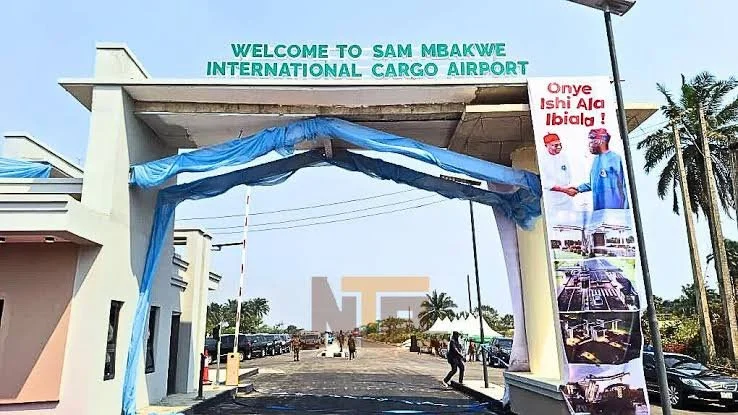
Chinese financing, largely provided through the Export-Import Bank of China (China Exim Bank), has supported major projects including rail modernisation, airport expansion, and energy infrastructure upgrades.
Although China’s share of Nigeria’s total external debt remains lower than multilateral institutions, Chinese loans have attracted significant public attention because of concerns around debt sustainability, collateral arrangements, and geopolitical influence.
Nigerian authorities have repeatedly stated that Chinese borrowing remains within sustainable thresholds and is tied to commercially viable infrastructure projects.
IMF Exposure Declines After Pandemic Support
Nigeria’s debt exposure to the International Monetary Fund (IMF) has reduced significantly since the peak of pandemic-related emergency financing.
In 2020, Nigeria received a $3.4 billion Rapid Financing Instrument (RFI) facility from the IMF to support fiscal stability during the COVID-19 crisis.
However, Nigeria has since repaid a substantial portion of the facility, reducing the IMF’s relative share within the country’s external debt composition.
The reduction aligns with broader efforts by the federal government to manage external obligations while improving debt sustainability metrics.
Debt Servicing Pressures Persist
Despite ongoing economic reforms, Nigeria continues to face significant debt servicing pressures due to weak revenue generation, exchange-rate volatility, and elevated borrowing costs.
According to the DMO, debt servicing obligations remain one of the largest expenditure items within the federal budget, consuming substantial portions of government revenues.
The naira’s depreciation over the past two years has further increased the local currency cost of servicing dollar-denominated debt obligations, intensifying fiscal pressure on public finances.
Economists have repeatedly stressed the importance of expanding non-oil revenues, improving tax collection efficiency, and accelerating export diversification to strengthen Nigeria’s debt sustainability position.
Multilateral Financing Seen as Lower Risk
Financial analysts generally view multilateral debt as less risky than commercial borrowing because concessional loans often carry lower interest rates, longer repayment periods, and more flexible financing structures.
Nigeria’s external debt composition therefore reflects a relatively moderate risk profile compared with countries heavily dependent on short-term commercial financing.
However, concerns remain about the pace of debt accumulation relative to government revenue performance and broader macroeconomic stability.
The World Bank recently projected that Nigeria’s fiscal reforms could gradually improve debt sustainability if supported by stronger oil revenues, subsidy reforms, and increased non-oil tax collection.
Implications for Nigeria’s Economic Outlook
Nigeria’s creditor structure underscores the country’s continuing dependence on international financing to support infrastructure expansion, fiscal management, and economic development programmes.
While multilateral institutions remain dominant lenders, the balance between concessional financing and commercial borrowing will likely remain central to future debt sustainability discussions.
Analysts note that maintaining investor confidence and preserving access to global capital markets will depend heavily on fiscal discipline, exchange-rate stability, and sustained economic reforms.
As Nigeria navigates rising development needs alongside debt servicing obligations, policymakers face increasing pressure to strengthen domestic revenue generation and reduce long-term reliance on external borrowing.
READ MORE