Floods Submerge Homes, Disrupt Traffic Along Awka-Onitsha Highway
Ogidi Community Calls for Urgent Intervention After Severe Flooding
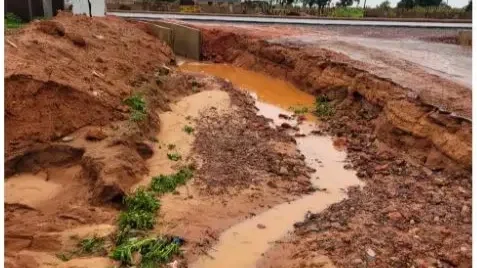
Severe flooding triggered by heavy rainfall has submerged several homes and disrupted transportation along sections of the old Awka-Onitsha highway in Anambra State, worsening concerns about urban flooding and infrastructure vulnerability in southeastern Nigeria.
The flooding, which affected parts of Ogidi in Idemili North Local Government Area, intensified following heavy rainfall early Monday morning, leaving roads impassable, vehicles stranded, and residents relocating from submerged buildings.
/ You Might Also Like /




Residents and youth groups in the affected community have appealed to both the federal and Anambra State governments for urgent intervention to prevent further destruction as the rainy season intensifies.
Major Road Corridor Cut Off by Floodwaters
Floodwaters overtook significant portions of the old Awka-Onitsha highway, one of the region’s busiest transport corridors linking commercial and residential communities within Anambra State.
According to reports, approximately two kilometres of the road became submerged, severely affecting movement between Awka and Onitsha while forcing motorists to seek alternative village routes.
Some drivers reportedly encountered informal toll points mounted by local youths along diversion routes, adding to transportation difficulties already caused by the flooding.
The Awka-Onitsha corridor remains strategically important to commercial activity in southeastern Nigeria because of its connection to major trading hubs and urban centres.
Residents Relocate as Homes Go Underwater
Several residential buildings located near the flooded areas were submerged, forcing many families to evacuate their homes and move belongings to safer locations.
Community members described the flooding as part of a recurring seasonal problem that has worsened over the years due to inadequate drainage systems, blocked waterways, and increasing rainfall intensity.
Residents also reported damage to businesses, farms, and local infrastructure as water levels continued to rise across affected neighbourhoods.
According to protesting youths in Ogidi, schools, farms, and residential areas have repeatedly suffered destruction during rainy seasons, disrupting livelihoods and educational activities.
Ogidi Youths Demand Immediate Government Action
In response to the worsening situation, hundreds of youths from Ogidi staged protests along the flooded highway, carrying placards and demanding immediate intervention from authorities.
The protesters appealed directly to President Bola Tinubu and Anambra State Governor Chukwuma Soludo, urging both governments to address the longstanding flooding crisis affecting the community.
President of Ogidi youths, Chris Obi-Okafor, described the flood situation as a growing humanitarian crisis that has paralysed economic activities and endangered residents.
He stated that businesses, schools, and transportation systems have become increasingly difficult to operate during heavy rainfall periods because of the deteriorating condition of local drainage and road infrastructure.
Traditional ruler of Ogidi, Igwe Alex Onyido, reportedly appealed for calm and assured residents that the concerns would be communicated to the state government.
Flooding Risks Intensify Across Nigeria
The incident adds to growing concerns about flood vulnerability across multiple Nigerian states as the peak rainy season approaches.
The National Emergency Management Agency (NEMA) recently intensified flood preparedness campaigns and warned communities in flood-prone areas to adopt precautionary measures ahead of expected heavy rainfall patterns in 2026.
Flooding has become a recurring challenge across several parts of Nigeria due to climate change, rapid urbanisation, poor drainage systems, and uncontrolled development around waterways.
Historical flood events in Anambra and other states have previously displaced thousands of residents, submerged farmlands, damaged roads, and disrupted economic activities.
Urban planners and environmental experts have repeatedly warned that inadequate infrastructure maintenance and weak flood-control systems continue to increase the vulnerability of rapidly expanding urban communities.
Infrastructure and Urban Planning Concerns
The latest flooding incident has renewed attention on the condition of road infrastructure and drainage systems within southeastern Nigeria.
Analysts note that many urban roads across the region were not originally designed to accommodate current population density, rising traffic volumes, and changing rainfall patterns linked to climate variability.
Flood-related disruptions along the Awka-Onitsha axis also carry economic implications because the route serves as a key commercial and logistics corridor supporting trade activities in Onitsha and surrounding communities.
The Anambra State Government has recently initiated sections of road rehabilitation and flood-control projects within vulnerable areas, including portions of the old Awka-Onitsha road affected by erosion and water overflow.
However, residents argue that more comprehensive drainage expansion and long-term flood mitigation measures are required to prevent recurring destruction.
Implications for Communities and Transport Networks
The flooding underscores broader environmental and infrastructure challenges facing rapidly urbanising Nigerian cities during increasingly volatile weather conditions.
Transportation disruption, property damage, displacement risks, and economic losses linked to flooding continue to affect households and businesses across flood-prone communities nationwide.
Experts warn that without sustained investment in urban drainage systems, climate adaptation infrastructure, and land-use regulation, seasonal flooding could become more severe in many Nigerian urban centres.
As heavy rainfall continues across parts of the country, emergency management agencies and local authorities are expected to intensify monitoring and preparedness efforts aimed at reducing further humanitarian and economic impacts.
READ MORE