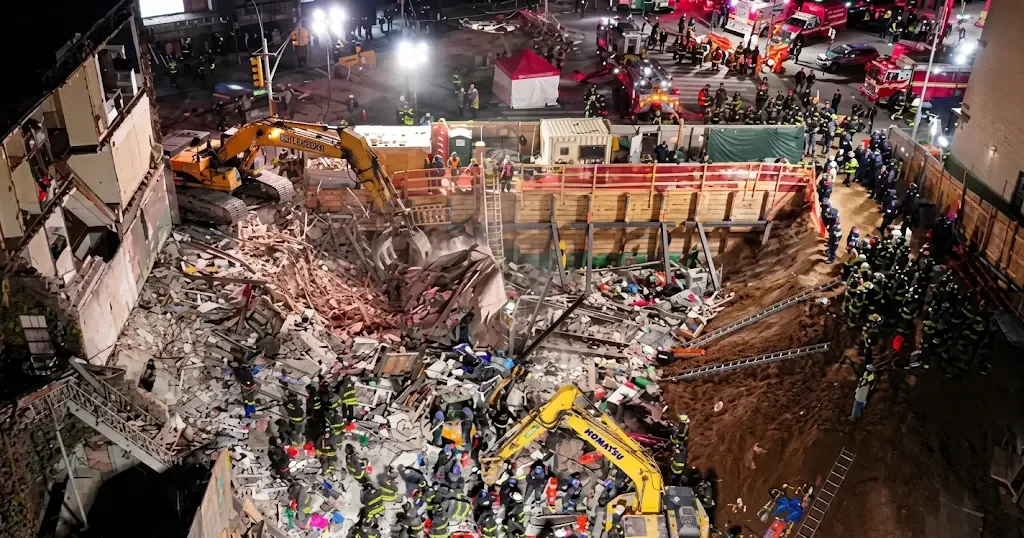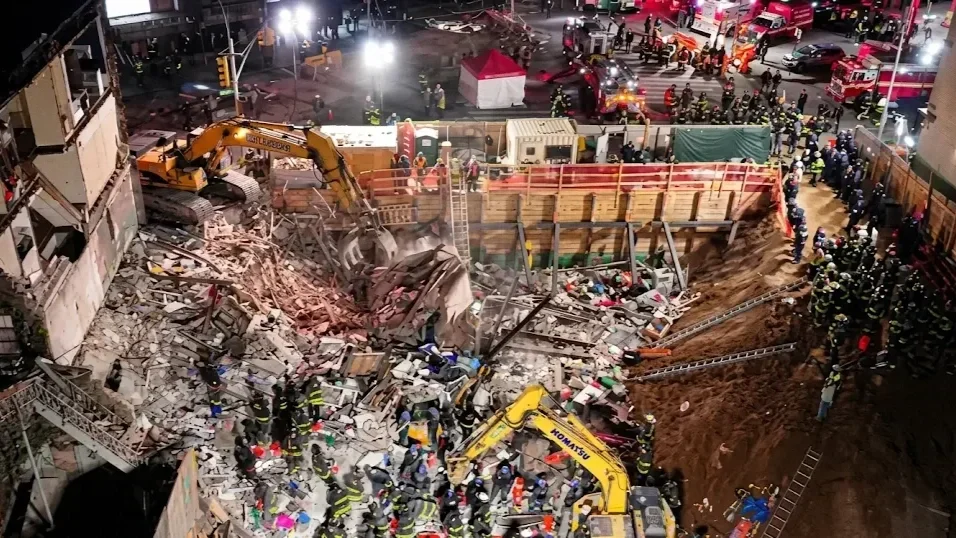
The three-storey residential building at 1321 Flatbush Avenue in Brooklyn, New York
The Nigerian-born landlord linked to a residential building collapse in Brooklyn, New York City, that killed eight people had previously served jail time for failing to address more than 1,800 housing violations across properties he owned.
Olufemi Falade, owner of the three-storey building at 1321 Flatbush Avenue, was sentenced to 12 days in jail and fined $50,000 for civil contempt in 2006 after failing to carry out repairs on properties in Brooklyn.
/ You Might Also Like /




The building collapsed on November 11, 2026, while construction work was taking place on an adjoining site. The incident killed eight people and injured others, prompting renewed scrutiny of the property's maintenance history and the landlord's previous record with housing authorities.
Authorities have not established the cause of the collapse or determined whether the building's condition, work at the neighbouring construction site or other factors contributed to the disaster.
Collapsed Building Had 98 Outstanding Housing Violations
Records from New York City's Department of Housing Preservation and Development showed that the collapsed property had 98 outstanding housing violations before the incident.
The reported violations included a leaking roof, defective doors, bedbug infestations and exposed electrical wiring. These records have intensified questions about whether the property's maintenance and safety concerns received adequate attention before the collapse.
Falade purchased the building in 1999 through Femi Realty Corp. In November 2024, ownership was transferred to Isolag Realty Corp., another company he controlled. Property records reportedly showed that he signed the transfer documents on behalf of both companies, with no money changing hands.
The transfer of ownership does not, on its own, establish wrongdoing or explain the circumstances surrounding the collapse.
Landlord Previously Appeared on New York's Worst Landlords Watchlist
Falade had also appeared six times on the New York City Public Advocate's annual Worst Landlords Watchlist over the past decade, most recently in 2024.
His first appearance was in 2017, when he ranked 93rd. He subsequently appeared on the list in 2019, 2020, 2021, 2022 and 2024.
The 2006 jail sentence followed his failure to address more than 1,800 violations across 12 Brooklyn buildings he owned at the time. The reported problems included vermin infestations, exposed electrical wiring and leaking pipes.
The record has renewed attention on the enforcement of housing standards and the responsibility of property owners to maintain safe living conditions for tenants.
Outstanding Fines and Property Debts Exceed $450,000
An examination of public records also identified more than $450,000 in outstanding fines, taxes and utility bills linked to Falade.
The reported liabilities include approximately $170,000 in fines imposed by New York City's Department of Buildings in 2019 over improperly displayed signs, $114,945 in unpaid water bills and $113,526 in property taxes dating back to 2021.
He also reportedly owed $49,269 in personal federal income taxes and another $4,316 in New York State income taxes.
The outstanding liabilities have added to scrutiny of his property ownership and compliance history following the collapse.
Authorities Face Pressure to Investigate Building Safety and Construction Activities
The collapse has prompted calls for a comprehensive investigation into the building's structural condition, outstanding violations, inspection records and the construction activities at the neighbouring property.
New York City Councilwoman Farah Louis called for authorities to examine the circumstances surrounding the incident and establish whether negligence or ignored safety complaints contributed to the deaths.
Construction work was ongoing at an adjoining site when the building collapsed. However, investigators have yet to determine whether excavation or other construction activities played a role.
The investigation is expected to examine the responsibilities of the property owner, construction contractors and other parties involved in the neighbouring development.
Housing Safety Raises Questions About Property Regulation
The incident highlights the consequences that can arise when housing maintenance and safety requirements go unenforced.
For property owners and developers, compliance with building regulations involves more than securing construction approvals. It also requires routine maintenance, timely correction of structural and safety defects, and attention to complaints from occupants.
The case also demonstrates the importance of effective housing inspection systems and enforcement mechanisms that compel landlords to address violations before they threaten residents' safety.
Although the cause of the Brooklyn collapse remains under investigation, the building's outstanding violations and the landlord's previous enforcement history have brought renewed attention to the relationship between property management, regulatory oversight and residential safety.
READ MORE