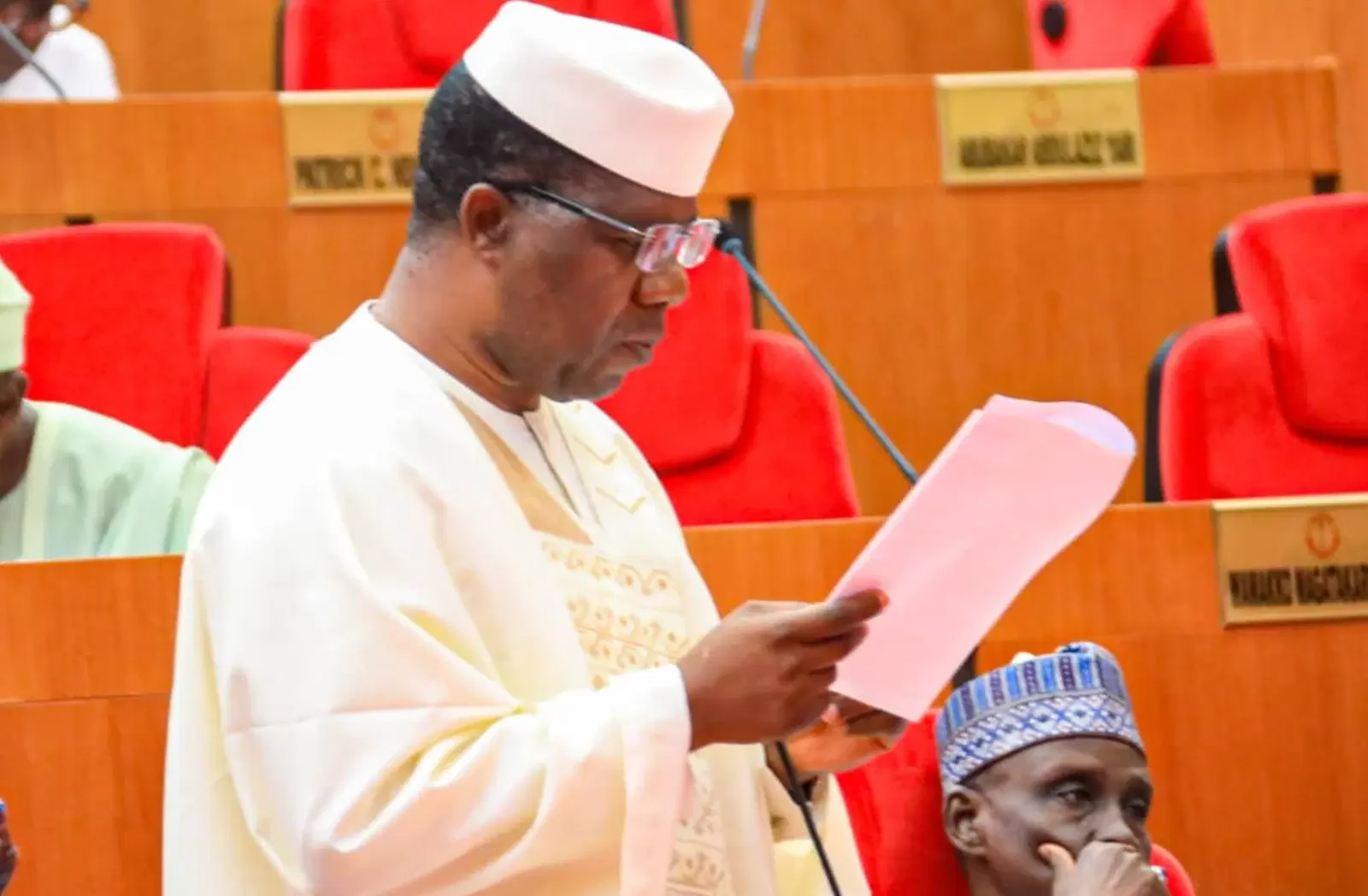
Senate Leader Opeyemi Bamidele
Nigeria’s National Assembly is expected to transmit the State Police (Constitution Alteration) Bill, 2026, to President Bola Tinubu for assent this week after 32 State Houses of Assembly approved the proposed constitutional amendment.
Senate Leader Opeyemi Bamidele disclosed this in a statement issued by his Directorate of Media and Public Affairs in Abuja. He said the approvals had met the constitutional requirement under Section 9(2) of the 1999 Constitution for altering the country’s supreme law.
/ You Might Also Like /




Four other State Houses of Assembly are expected to submit their reports before the National Assembly resumes on November 17.
The proposed amendment seeks to establish separate Federal Police Service and State Police Services, creating a constitutional framework for policing at both levels of government.
32 State Assemblies Meet Constitutional Approval Threshold
Section 9(2) of the 1999 Constitution requires a proposed constitutional alteration to receive approval from at least two-thirds of all State Houses of Assembly. With 36 states in Nigeria, the required threshold is 24 approvals.
The 32 approvals reported by Bamidele therefore exceed the constitutional minimum by eight states.
The remaining four state assemblies are expected to submit their positions, although their reports are not necessary to meet the minimum approval threshold already achieved.
Bamidele described the development as significant progress after more than 15 years of attempts to reform Nigeria’s policing structure.
Proposed Framework Establishes Federal and State Police Services
The constitutional amendment provides for the establishment of a Federal Police Service alongside State Police Services.
The proposal is intended to allow states to develop policing structures that respond more directly to local security conditions, while retaining a federal policing institution.
Bamidele said the proposed arrangement would promote community-based policing within constitutional safeguards. He also rejected concerns that state police could become ethnic or state-controlled armed groups, arguing that the proposed framework would operate under constitutional provisions.
The bill's transmission to the President would mark another stage in the constitutional amendment process. Presidential assent is still required before the proposed changes become law.
Security Reform Could Influence Investment and Property Confidence
The proposed reform has implications beyond policing and public administration. Security conditions influence decisions by businesses, investors, property developers and households about where to operate, build or acquire property.
More locally responsive policing could improve the ability of authorities to address community-level security challenges, including threats affecting residential estates, construction sites, commercial districts and transport corridors.
However, the proposed structure's effectiveness will depend on its eventual legal provisions, funding arrangements, oversight mechanisms, operational independence and safeguards against political interference.
For the property market, improved security could support confidence in locations where insecurity has discouraged investment or increased the cost of protecting assets. These benefits are not automatic and will depend on how effectively state police services operate after implementation.
National Assembly Awaits Resumption
Bamidele said the four outstanding state reports were expected before the National Assembly resumed on November 17.
He also highlighted other legislative measures passed by the National Assembly, including the Student Loan (Access to Higher Education) Act, 2024, the Minimum Wage Amendment Act, 2024, and the Tax Reform Acts, 2025.
The Senate Leader said the legislature's performance should be assessed by the impact of its laws on citizens, while reaffirming the National Assembly's commitment to press freedom and engagement with the media.
The immediate next step for the State Police Bill is its formal transmission to President Tinubu. The proposed constitutional framework will not take effect merely because the required state approvals have been secured; it must complete the remaining constitutional process.
READ MORE