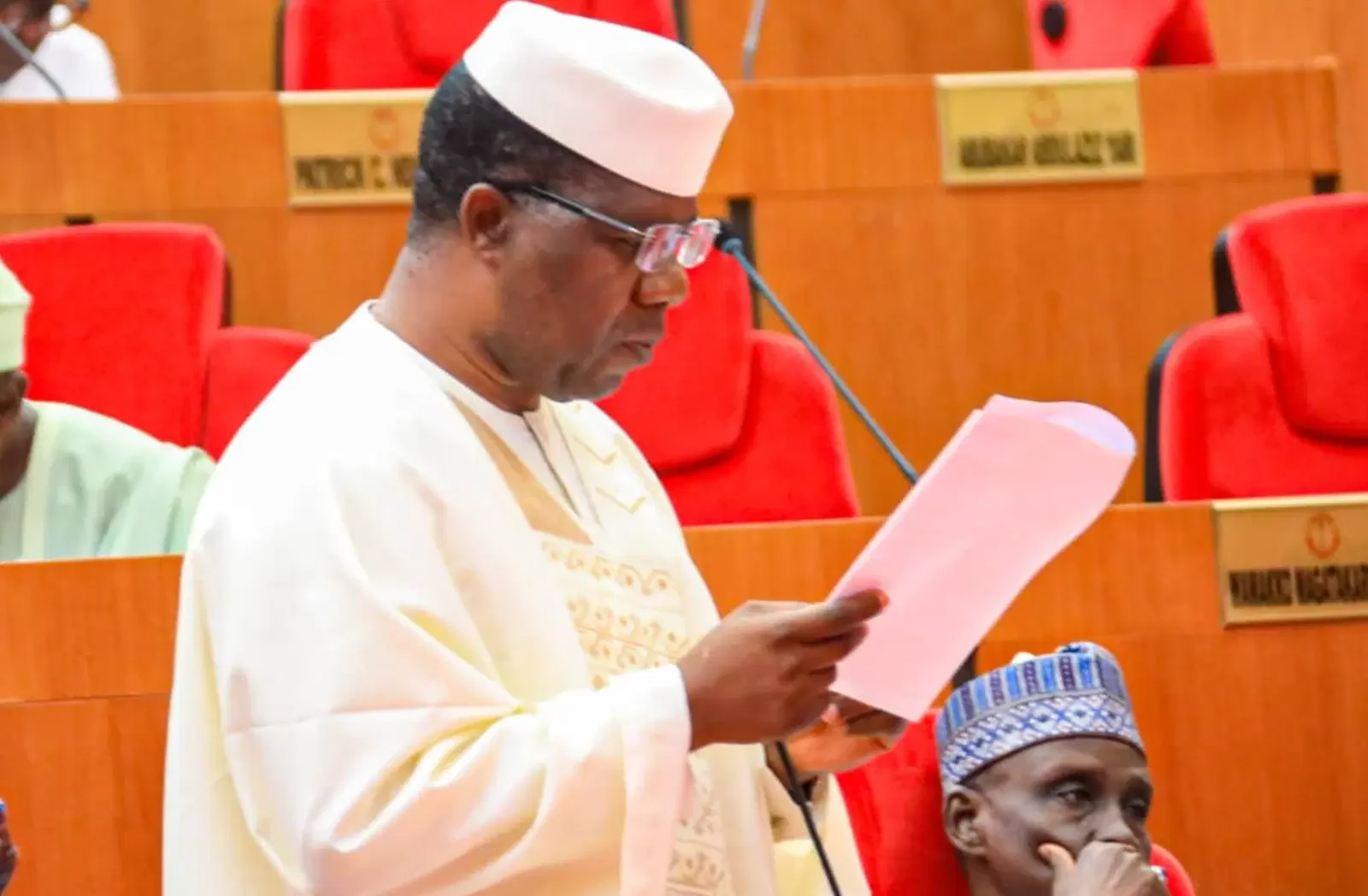
Gateway Mortgage Bank Chairman Samuel Durojaiye speaks at the bank’s ninth Annual General Meeting in Abeokuta, Ogun State.
Nigeria needs to deliver at least 700,000 housing units annually over the next decade to make significant progress in addressing its estimated 28 million-unit housing deficit, according to Samuel Durojaiye, Chairman of Gateway Mortgage Bank Limited.
/ You Might Also Like /




Durojaiye made the projection at the bank’s ninth Annual General Meeting in Abeokuta, Ogun State, where he called for sustained investment in housing development and more accessible mortgage financing to expand the supply of homes.
He said the scale of the country’s housing shortage required coordinated action from federal and state governments, mortgage institutions, private investors and other participants across the housing value chain.
The chairman identified access to affordable, long-term finance as a critical factor in turning housing policies and development plans into completed homes that Nigerians could afford.
Mortgage financing remains critical to housing supply
Durojaiye pointed to Federal Government interventions, including the Ministry of Finance Incorporated Real Estate Investment Fund (MREIF) and the Federal Mortgage Bank of Nigeria’s National Housing Fund mortgage scheme, as potential channels for expanding housing finance.
The MREIF is a ₦1 trillion programme designed to support mortgage lending and housing development. Durojaiye disclosed that Gateway Mortgage Bank had secured an approved facility of ₦2.2 billion under the scheme.
He also said the bank disbursed ₦809.9 million to customers during the 2025 financial year, although the figure represents the institution’s lending activity rather than the total number or value of homes delivered through the facility.
The chairman said the National Housing Fund mortgage scheme offered loans at an interest rate of six per cent per annum, while the government’s intervention initiatives generally aimed to make mortgage financing available at single-digit rates.
Such financing could help reduce the upfront burden on eligible homebuyers and provide developers with access to funds needed to deliver housing projects. However, the scale of their impact will depend on how much funding reaches borrowers and developers, the terms of the facilities and the number of homes ultimately completed.
High borrowing costs continue to constrain mortgage lending
Despite the intervention schemes, Durojaiye identified high interest rates as a major obstacle to mortgage lending and the creation of new mortgage assets.
He said the operating environment had remained difficult for mortgage institutions, even as declining inflation and relative exchange-rate stability offered some relief to businesses.
High funding costs make it more expensive for mortgage banks to raise the long-term capital required to finance home purchases. They can also increase monthly repayments, limiting the number of households that qualify for mortgages.
The funding challenge extends beyond the cost of borrowing. Mortgage institutions typically provide loans that run for several years, while much of their funding may come from deposits and other liabilities with shorter repayment periods. This mismatch can expose lenders to refinancing and liquidity pressures.
Expanding mortgage access therefore requires not only lower interest rates but also reliable long-term funding sources that match the duration of housing loans.
Proposed recapitalisation raises pressure on mortgage banks
Durojaiye also raised concerns about the potential recapitalisation of primary mortgage banks, projecting that new minimum capital requirements could range from ₦10 billion to ₦20 billion for state mortgage banks and ₦20 billion to ₦50 billion for national mortgage banks.
He said Gateway Mortgage Bank’s paid-up capital stood at ₦2.5 billion, a level that could leave the institution undercapitalised if requirements within the projected ranges were introduced.
The chairman disclosed that the bank had increasingly relied on commercial borrowings over the preceding three years to support its lending operations. It paid ₦202.6 million in interest to funding partners during the 2025 financial year.
Higher capital requirements could strengthen the capacity of mortgage institutions to absorb risks and support larger lending portfolios. However, they could also create pressure on smaller lenders that lack the capital or investor backing to meet the new thresholds.
The final requirements and implementation timetable will be important in determining how the exercise affects competition, lending capacity and the availability of mortgage finance.
Housing delivery must keep pace with the scale of the deficit
The proposed annual target highlights the scale of the challenge facing Nigeria’s housing sector. Delivering 700,000 homes every year would require sustained construction activity, access to serviced land, reliable infrastructure, affordable building materials and financing for both developers and homebuyers.
The target also needs to be considered against the scale of the deficit cited by the mortgage bank chairman. At 700,000 units annually, 10 years of construction would produce seven million homes before accounting for population growth, household formation, replacement of deteriorating buildings or other changes in housing demand. The proposed pace would therefore represent progress towards the stated 28 million-unit gap, rather than eliminate it within the decade.
For policymakers and investors, the challenge is not simply to increase the number of housing projects announced, but to expand the delivery of completed, adequately serviced homes at price points that match household incomes.
A stronger mortgage market could support this effort, but it will need to operate alongside reforms that address land access, construction costs, infrastructure provision and the availability of long-term development finance.
The scale of the annual housing target makes the connection between housing supply and housing finance particularly important. Without more affordable and sustainable funding, the country’s ability to translate construction targets into homes that ordinary Nigerians can purchase or rent will remain constrained.
READ MORE