Nigeria Seeks More Funding to Complete Border Demarcation and Unlock Borderland Development
Border demarcation supports security and borderland development
Nigeria is seeking increased funding to complete the demarcation of its international borders, as the National Boundary Commission (NBC) links clearer territorial boundaries to national security, peaceful coexistence and development across border communities.
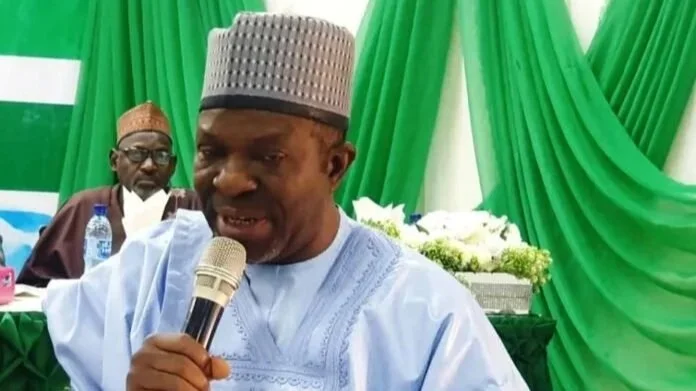
The Director-General of the NBC, Adamu Adaji, said additional resources were required to properly demarcate existing international boundaries and install more boundary pillars, noting that the exercise is capital-intensive.
/ You Might Also Like /




Funding Needed to Complete Boundary Demarcation
Adaji said Nigeria had established many of its international boundaries but still needed to improve their physical identification by reducing the distance between boundary pillars.
According to him, more visible boundary markers would help communities clearly identify the territories belonging to Nigeria and neighbouring countries while reducing uncertainty around boundary locations.
The NBC director-general also called for greater stakeholder cooperation, stressing that effective boundary management requires collaboration between government institutions, neighbouring countries and communities located along international corridors.
Nigeria shares international land and river boundaries with Niger Republic, Chad, Cameroon and Benin Republic, according to the NBC. Its international-boundary mandate covers boundary disputes, pillar densification and identification, cross-border relations and border-region development.
Border Management Has Development Implications
Beyond territorial administration, the completion of boundary demarcation has implications for the planning and development of communities located along Nigeria's border corridors.
Clearly defined boundaries can provide a stronger basis for public authorities to plan infrastructure, administer land and coordinate services in areas where communities and economic activities extend across national frontiers.
The NBC's mandate specifically includes promoting trans-border cooperation and border-region development, while also facilitating the equitable use of shared border resources.
For the built environment, improved territorial clarity can support more structured planning of roads, markets, public facilities, housing and other infrastructure in border settlements.
Infrastructure Remains Critical to Border Communities
The funding request also comes as Nigeria and neighbouring countries continue to explore ways of improving cooperation along border corridors.
The Federal Ministry of Information and National Orientation previously reported that Nigeria and Niger had identified weak infrastructure, security gaps and unregulated spaces as persistent challenges in their borderlands. Proposed responses included improving infrastructure in border areas, strengthening local-government cooperation and encouraging joint use of infrastructure along border corridors.
This places border demarcation within a broader development framework in which physical infrastructure, security and economic activity need to advance together.
For property and construction markets, better-connected border communities can create opportunities for commercial facilities, logistics infrastructure, markets and residential development where population and economic activity increase.
Trade and Cross-Border Cooperation
Adaji also said Nigeria had established collaborative arrangements with Benin, Niger, Cameroon and other neighbouring countries to promote trade and movement across shared boundaries.
He said the NBC had recently brought Nigerian and Beninese communities together to discuss ways of strengthening cooperation along their shared border.
The commission is also promoting local bilateral platforms through which states and local governments can engage their counterparts in neighbouring countries on trade, security, information gathering and intelligence sharing.
Such cooperation is particularly relevant for border economies where markets, transport routes and commercial networks frequently depend on movement between neighbouring countries.
Security and Development Must Move Together
The NBC has also emphasised the relationship between effective border management and security.
In a related interview, Adaji said Nigeria was increasing the use of drones, satellite imagery and other technologies to monitor difficult border terrains. He noted that technology could provide information for planning and boundary management, although inter-agency and international cooperation remained necessary.
The commission has also said clearly defined boundaries can support security agencies in managing border activities while allowing legitimate trade and movement to continue under established regional arrangements.
Implications for Nigeria’s Built Environment
For Nigeria's property and infrastructure sectors, the completion of international border demarcation represents more than a territorial exercise.
Clearer boundaries can improve the administrative framework within which border communities are planned and developed. When combined with roads, utilities, markets, security infrastructure and other public services, stronger border management could support more predictable conditions for economic activity and property development.
However, physical demarcation alone will not deliver these outcomes. The NBC's own mandate includes border-region development and trans-border cooperation, pointing to the need for demarcation to be integrated with wider infrastructure and economic-development planning.
Outlook
The NBC's call for increased funding highlights the capital requirements involved in completing and maintaining Nigeria's international boundary infrastructure.
If additional resources accelerate the installation and densification of boundary pillars, the exercise could strengthen territorial administration while providing a clearer foundation for infrastructure planning, cross-border trade and development in affected communities.
The broader opportunity for Nigeria's built environment lies in connecting boundary management with investment in the roads, public facilities, markets and other infrastructure required to turn border communities into more organised and productive economic corridors.
READ MORE