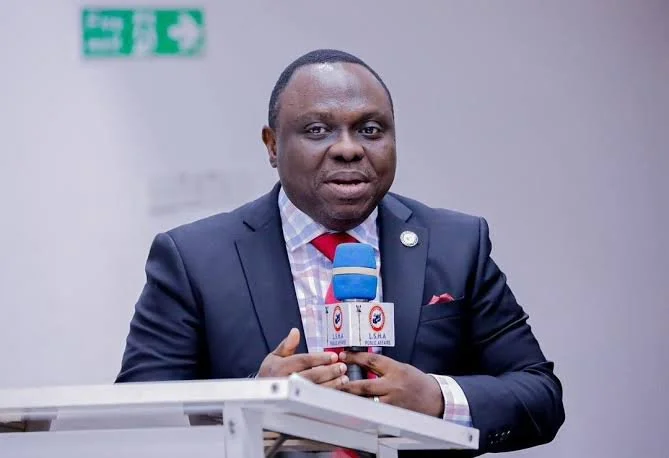
The Commissioner for Energy and Mineral Resources, Biodun Ogunleye
Lagos State estimates that it requires approximately 12,000 megawatts (MW) of electricity to meet demand and is seeking private-sector investment to expand generation and distribution infrastructure across the state.
The Commissioner for Energy and Mineral Resources, Biodun Ogunleye, disclosed this at the Lagos Energy Summit 2026, where he called on investors to support efforts to close the gap between electricity demand and supply from the national grid.
/ You Might Also Like /




He said the state was pursuing investment in embedded generation, off-grid power and distribution infrastructure to improve electricity access for households and businesses.
The government’s strategy focuses on expanding local generation capacity and strengthening electricity networks rather than disconnecting Lagos from the national grid.
Lagos Seeks Private Investment Across Power Value Chain
Ogunleye outlined a Seven-Point Energy Agenda covering cooperation between federal and state regulators, electricity market sustainability, frameworks for wheeling and off-grid generation, embedded power projects, distribution infrastructure, metering and technology deployment.
The agenda is intended to create a more attractive environment for private investment while addressing structural weaknesses in electricity delivery.
The Lagos State Electricity Regulatory Commission (LASERC), established under the Lagos State Electricity Law 2024, will oversee the state's electricity market, regulate operators and protect consumers.
The government is also looking to expand private participation beyond power generation to include electricity distribution, metering and decentralised energy systems.
Private Power Projects Target Additional Capacity
Several private-sector projects are at different stages of development across Lagos.
Fenchurch Power is rebuilding the 26MW Akute Independent Power Project under a concession arrangement with the state government. The project is designed to supply electricity to the Akute Intake, Iju Waterworks and Adiyan Waterworks, with surplus power expected to enter Ikeja Electric's network.
Supply arrangements involving Mainland Power, Fenchurch Power and Viathan are expected to raise generation from below 60MW to between 200MW and 400MW over the next two to three years.
Other projects include Elektron Energy's proposed 40MW power plant on Victoria Island and Sahara Power's 12MW independent power project in Ogba.
The projects reflect growing interest in decentralised electricity supply, particularly for commercial and industrial customers seeking more reliable power.
In May 2026, LASERC approved 14 electricity licences and permits covering off-grid and embedded generation, independent distribution, metering services and interconnected mini-grid operations.
Lagos Targets More Than 3,000MW by March 2027
The 12,000MW demand estimate comes as Lagos pursues a shorter-term target of increasing electricity supply to more than 3,000MW by March 2027, from below 1,000MW.
Governor Babajide Sanwo-Olu announced the target in October, identifying several supply channels, including the national grid, independent power producers, energy hubs, power barges, energy traders and embedded generation.
Achieving the target will also require improvements to transmission infrastructure, substations, distribution feeders, gas supply and metering.
The difference between the state's estimated demand and its March 2027 supply target highlights the scale of the investment required to improve electricity access across Lagos.
Power Deficit Creates Investment Opportunity, but Delivery Remains Key
Lagos' electricity requirements present a substantial market opportunity for independent power producers, infrastructure investors and companies developing distributed energy solutions.
However, the scale of demand alone does not guarantee commercially viable projects. Investors will need clarity on tariffs, payment arrangements, regulatory responsibilities, fuel supply and the ability to recover infrastructure costs.
For businesses, more reliable electricity could reduce dependence on diesel and petrol generators, lower operating costs and support industrial expansion. Households could also benefit from improved supply if additional generation translates into wider distribution coverage and more dependable service.
The success of Lagos' electricity strategy will therefore depend not only on attracting investment but also on delivering projects, expanding distribution capacity and ensuring that additional power reaches consumers.
READ MORE