Nigeria faces rising risks from declining oil revenues
Nigeria could face a more than 60% decline in oil revenue from 2030 as global oil demand weakens, according to a new report by climate and energy think tank E3G, raising concerns about the country’s fiscal position, public spending and ability to finance development.
/ You Might Also Like /




The report, Playing the Oil Endgame: Oil Producers and the Geopolitics of Declining Demand, published on September 8, examines how declining and increasingly uncertain oil demand could affect economies that rely heavily on petroleum revenues.
Nigeria is identified alongside Algeria and Angola as a vulnerable mid-tier oil producer because of its dependence on petroleum exports, relatively limited fiscal buffers and challenges in diversifying government revenues.
Global Oil Demand Could Reach a Turning Point
E3G said global oil demand is expected to reach its peak between 2030 and 2035, creating increasing pressure on oil-producing countries that depend on petroleum income to fund government operations, public services and development.
The report said oil and gas account for more than 40% of government revenue in 17 oil-producing countries, leaving their public finances exposed to changes in global demand and prices.
The risk is not simply that oil production will suddenly stop. Instead, declining demand could create a progressively smaller and more competitive market in which producers compete for fewer buyers.
E3G estimates that Algeria could suffer an 87% decline in oil revenue, while Nigeria could experience a fall of more than 60%.
Fiscal Pressure Could Come Before Oil Supply Problems
The report argues that the first major effects of the oil transition could appear in government finances rather than physical oil shortages.
Lower or more volatile petroleum revenues could affect sovereign debt, exchange rates, investor confidence, national oil company transfers and government spending.
For Nigeria, this creates a significant policy challenge because oil revenue remains an important source of public financing despite ongoing efforts to broaden the economy and strengthen non-oil revenues.
A sustained reduction in petroleum receipts could therefore place additional pressure on government budgets and reduce the fiscal space available for infrastructure and other capital projects.
Economic Diversification Becomes More Urgent
E3G argues that oil-producing countries cannot rely indefinitely on petroleum revenues and will need credible alternatives as the global energy system changes.
The report recommends greater investment in economic diversification and transition finance to help vulnerable producer economies reduce their exposure to declining fossil-fuel revenues.
For Nigeria, the challenge extends beyond developing alternative sources of government revenue. The country also needs productive sectors capable of generating employment, exports, investment and sustainable tax receipts at sufficient scale.
Agriculture, manufacturing, technology, renewable energy, logistics and other non-oil sectors could therefore become increasingly important to the country's long-term fiscal resilience.
What the Risk Means for Infrastructure and Housing
A prolonged decline in oil revenue could have important implications for Nigeria's infrastructure and housing markets.
Government remains a major source of funding for roads, transport systems, water infrastructure, public housing and urban development. A significant reduction in petroleum-linked revenue could constrain the government's capacity to maintain or expand such investment unless alternative revenue sources and financing mechanisms grow sufficiently.
For the property market, infrastructure spending is particularly important because roads, public transport, electricity, water supply and other basic services influence land values and the viability of new developments.
Reduced public investment could therefore increase the infrastructure burden on private developers, potentially raising development costs in areas where government provision becomes weaker.
Private Capital Could Become More Important
The projected revenue risk could also strengthen the case for greater private-sector participation in infrastructure and housing development.
Nigeria may need to rely increasingly on public-private partnerships, institutional investment, mortgage finance, infrastructure funds and capital-market instruments to finance projects that government budgets alone may struggle to support.
This could create opportunities for institutional investors and developers, particularly in housing, logistics, industrial real estate, renewable energy and infrastructure-linked developments.
However, attracting such capital will require predictable regulation, stronger project preparation, transparent procurement and investment structures capable of delivering commercially viable returns.
Oil Sector Investment Remains Relevant
The report does not mean Nigeria should immediately abandon oil investment.
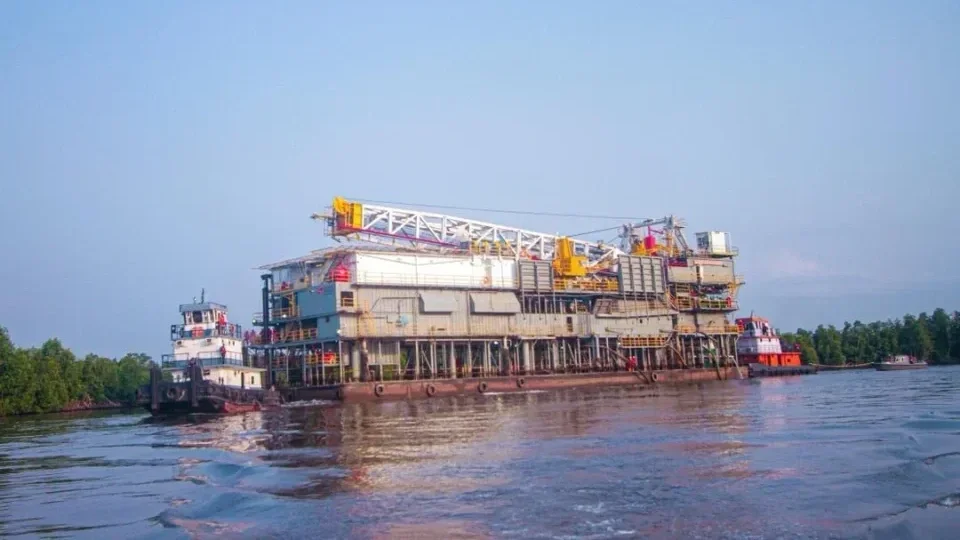
Nigeria is still pursuing higher crude production and greater investment in its energy sector. The International Energy Agency's Fatih Birol said earlier this month that Nigeria could potentially double energy investment within five years, while the country is targeting oil production of about three million barrels per day by 2030.
The more significant policy question is how Nigeria uses oil revenues and investment opportunities available today to build a more diversified economy capable of remaining resilient as global energy markets evolve.
Property Investors Face a Changing Fiscal Environment
For property investors, the implications extend beyond government housing programmes.
A weaker fiscal position could affect infrastructure delivery, public-sector employment, household purchasing power and the availability of government-backed housing finance.
At the same time, areas benefiting from private investment, industrial expansion and infrastructure-led development could remain attractive even in a more constrained public-finance environment.
Investors may therefore need to place greater emphasis on locations supported by diversified economic activity rather than markets whose growth depends heavily on government spending or a single commodity-driven economy.
Outlook
E3G's projection presents a long-term fiscal risk rather than an immediate collapse in Nigeria's oil earnings. The report's warning is that the global energy transition could gradually reduce the value of petroleum revenues just as Nigeria faces continued demands for infrastructure, housing and public services.
For Nigeria, the implication is clear: stronger oil production and investment can provide near- and medium-term revenue, but long-term economic resilience will depend on how effectively the country converts today's petroleum income into diversified sources of growth.
For the housing market, this makes private investment, institutional capital, sustainable infrastructure financing and stronger non-oil economic growth increasingly important to maintaining housing supply and property-market development beyond the oil era.
READ MORE