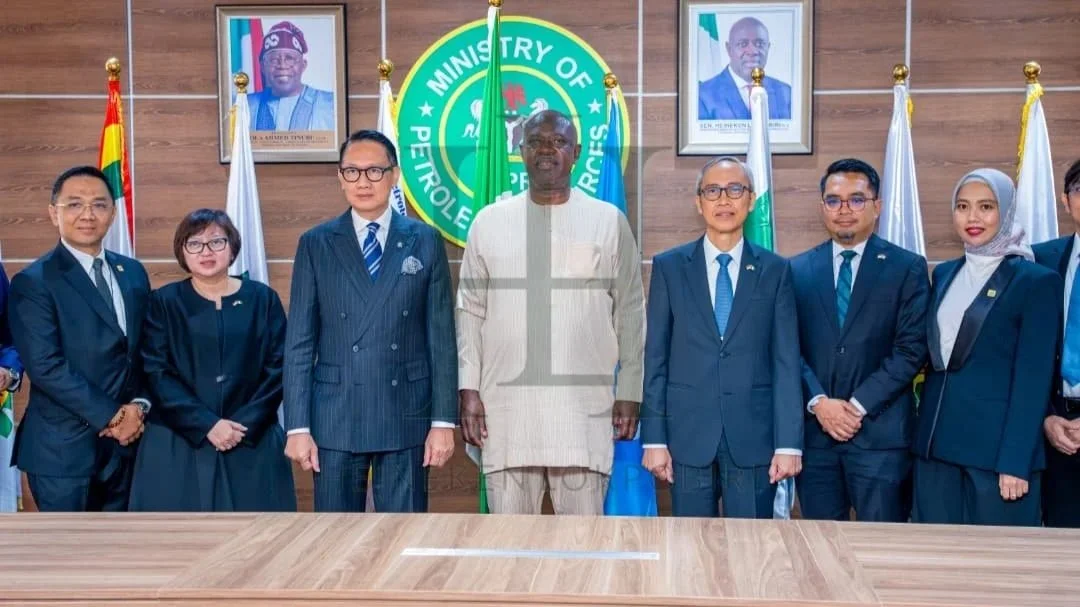
Nigeria and Indonesia strengthen oil and gas cooperation
Nigeria and Indonesia are set to strengthen cooperation in the petroleum and wider energy sectors as the Federal Government seeks increased Indonesian investment, technical expertise and capacity development for Nigeria’s oil and gas industry.
/ You Might Also Like /




The development followed a meeting between the Minister of State for Petroleum Resources (Oil), Senator Heineken Lokpobiri, and an Indonesian government delegation led by Indonesia’s Ambassador to Nigeria, Bambang Suharto.
The engagement comes as Nigeria seeks to attract more international capital into its petroleum industry, particularly the upstream segment, while improving production, developing new assets and positioning the sector for longer-term investment.
Nigeria Seeks More Foreign Investment in Petroleum
Lokpobiri said Nigeria was prepared to strengthen its strategic relationship with Indonesia through increased investment, technical cooperation and capacity development.
He described Nigeria’s petroleum sector as a competitive destination for international investors, pointing to opportunities for value creation and long-term returns despite changes in the global energy landscape.
The minister identified policy clarity, regulatory predictability and investor confidence as important factors for attracting the capital and technology required to develop the industry.
Nigeria also invited the Indonesian government and Indonesian investors to participate in forthcoming oil and gas bid rounds.
The invitation forms part of the Federal Government’s broader effort to attract new capital into the upstream sector, increase crude oil and gas production and develop additional petroleum assets.
Indonesia Targets Investment and Technical Cooperation
Suharto said Indonesia regarded Nigeria as an important strategic partner and wanted to expand cooperation beyond traditional diplomatic relations.
The proposed areas include investment, technical collaboration, training and capacity development.
The Indonesian ambassador also highlighted the potential for knowledge transfer and professional development within the energy industry as the two countries expand their relationship.
The engagement therefore extends beyond a conventional investment relationship, with both sides considering ways to build technical capacity and strengthen institutional links.
Petroleum Training and Knowledge Exchange
Lokpobiri also pointed to proposed exchange programmes being developed through the College of Petroleum and Energy Studies, Kaduna.
The initiative is expected to provide a platform for knowledge sharing, institutional cooperation and technical capacity development within Nigeria's petroleum industry.
For Nigeria, greater technical cooperation could become increasingly important as the industry seeks to improve production efficiency, develop new assets and attract investment into areas requiring specialised expertise.
Investment Could Support Wider Economic Activity
Greater investment in the oil and gas sector could have effects beyond petroleum production if new projects generate demand across construction, logistics, engineering, manufacturing and other supporting industries.
Large energy projects typically require substantial infrastructure, including industrial facilities, accommodation, transport networks, warehouses, offices and other commercial assets.
This creates potential opportunities for property developers and investors in locations where new energy investments generate employment and business activity.
However, the extent of these benefits will depend on whether proposed partnerships progress from discussions to actual investment commitments and operating projects.
Implications for Nigeria's Property Market
For the housing market, increased energy investment could strengthen demand in selected oil-producing and industrial locations by supporting employment and expanding the population of workers and businesses requiring accommodation.
Improved investment in energy infrastructure could also support industrial development and the growth of business districts around major economic corridors.
The property-market effect, however, is unlikely to be uniform across the country. Areas that secure new energy projects, supporting infrastructure and related employment are more likely to experience increased demand for residential, commercial and industrial property.
For investors, the development reinforces the importance of tracking infrastructure and industrial investment alongside traditional property indicators when assessing emerging real estate locations.
Nigeria's Broader Push for Energy Investment
The Nigeria-Indonesia engagement comes amid a wider effort to attract international capital into the country's energy industry.
The International Energy Agency has recently said Nigeria could potentially double energy investment within five years, citing the country's oil, gas and renewable-energy resources as significant opportunities for investors. Nigeria is also targeting oil production of about three million barrels per day by 2030.
The government is therefore seeking to combine regulatory reforms, investment partnerships and infrastructure development to improve the sector's attractiveness.
Outlook
The expanded Nigeria-Indonesia relationship creates an avenue for additional investment, technical cooperation and knowledge transfer in the petroleum sector.
For the housing and real estate market, the key consideration will be whether these proposed partnerships result in new energy projects and the associated infrastructure and employment that can generate sustained property demand.
The immediate development remains an investment and cooperation framework rather than a confirmed pipeline of Indonesian-funded projects. Its significance for Nigeria's broader economy and property market will ultimately depend on the conversion of bilateral discussions into measurable investment, production and infrastructure outcomes.
READ MORE