Nigeria, Ghana Deepen Maritime Partnership to Strengthen West African Trade
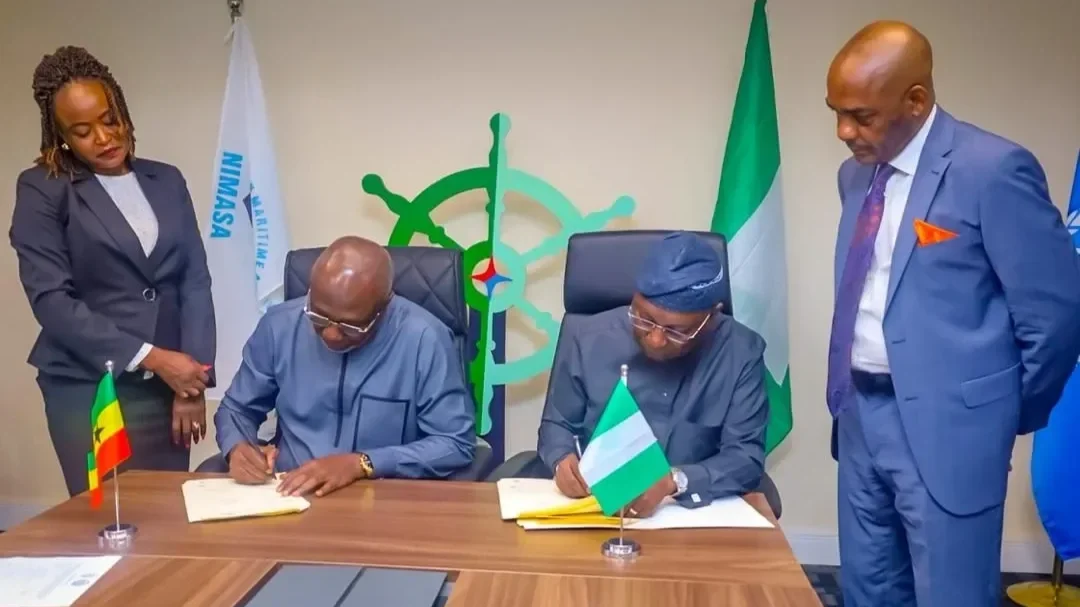
Nigeria, Ghana Sign Maritime Pact to Promote Blue Economy Development
Nigeria and Ghana have strengthened bilateral maritime relations following the signing of a Memorandum of Understanding (MoU) between the Nigerian Maritime Administration and Safety Agency (NIMASA) and the Ghana Maritime Authority (GMA). The agreement seeks to deepen cooperation in maritime safety, trade facilitation, institutional development and blue economy initiatives while enhancing regional integration across West Africa.
/ You Might Also Like /




The partnership reflects growing efforts by both countries to improve maritime governance and position the Gulf of Guinea as a more secure and competitive trade corridor. Officials say the agreement will support regional commerce while strengthening cooperation between two of West Africa's leading maritime nations.
MoU Strengthens Maritime Cooperation
Under the agreement, Nigeria and Ghana will collaborate on maritime safety and security, mutual recognition of Certificates of Competency (CoC), institutional capacity building, technical knowledge sharing, comparative research and coordinated enforcement initiatives.
The two maritime agencies also agreed to enhance cooperation at regional and international maritime organisations while sharing best practices in maritime regulation and administration.
Joint Team to Oversee Implementation
To ensure effective implementation, both countries will establish a Joint Consultative Team responsible for coordinating activities under the agreement.
The committee will prepare annual work plans, monitor implementation and meet twice each year, with meetings rotating between Nigeria and Ghana. Officials say the mechanism is intended to ensure that the partnership delivers measurable outcomes rather than remaining a policy commitment on paper.
Focus on Trade and Blue Economy
Speaking at the signing ceremony in Lagos, NIMASA Director-General Dr Dayo Mobereola said the agreement would strengthen regional maritime governance while supporting sustainable development of the blue economy.
He noted that closer cooperation between Nigeria and Ghana would improve maritime safety, encourage investment and create opportunities for greater regional trade under the African Continental Free Trade Area (AfCFTA). He also acknowledged Ghana's support for Nigeria's successful re-election to the International Maritime Organization (IMO) Category C Council.
Ghana Maritime Authority Director-General Dr Kamal-Deen Ali described the MoU as another milestone in the longstanding relationship between both maritime administrations. He said Ghana has benefited from Nigeria's experience in areas such as cabotage regulation, ship registration and maritime oversight, and reaffirmed Ghana's commitment to implementing the agreement.
Implications for Infrastructure and Investment
The strengthened partnership is expected to support regional logistics, port development and maritime transport while improving investor confidence in West Africa's shipping industry.
Improved cooperation could also facilitate smoother movement of cargo, strengthen cross-border supply chains and encourage greater investment in ports, inland waterways and other maritime infrastructure. As AfCFTA implementation gathers pace, stronger maritime connectivity will be essential to expanding intra-African trade and reducing logistics costs.
For infrastructure investors and policymakers, the agreement reinforces the importance of coordinated regional transport networks in supporting economic diversification and long-term growth.
Looking Ahead
The Nigeria-Ghana maritime partnership represents another step towards deeper regional integration and stronger maritime governance in West Africa. Successful implementation of the agreement will depend on sustained collaboration between both countries and the delivery of practical initiatives that improve trade efficiency, maritime security and blue economy development.
As Nigeria continues to position itself as a regional logistics and maritime hub, partnerships such as this could play an important role in supporting infrastructure investment, regional commerce and sustainable economic growth.
READ MORE