Why Vertical Housing Is Becoming the Future of Nigeria’s Urban Development
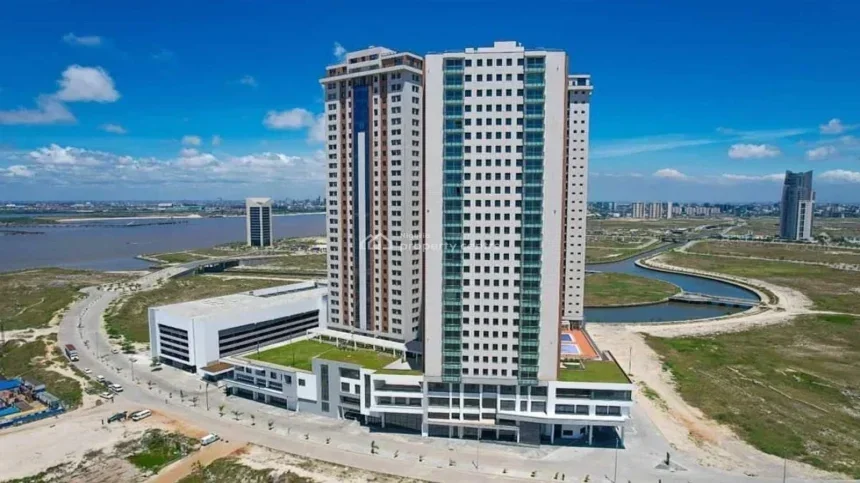
Developers Build Upward as Urban Land Becomes Scarce Across Nigeria
Nigeria’s major urban centres are increasingly witnessing a shift toward vertical development as developers, policymakers, and investors respond to mounting housing demand, land scarcity, and rapid urbanisation across the country.
Cities such as Lagos, Abuja, Port Harcourt, and Kano are experiencing growing pressure on available urban land, pushing real estate developers to adopt high-rise residential and mixed-use developments as an alternative to traditional horizontal expansion.
/ You Might Also Like /




Industry experts say the trend reflects broader structural changes within Nigeria’s urban economy, where population growth, rising property values, infrastructure limitations, and evolving investment strategies are reshaping development patterns.
Rapid Urbanisation Intensifies Housing Demand
Nigeria remains one of the fastest-urbanising countries globally, with millions of people migrating into urban centres annually in search of economic opportunities, education, and improved living conditions.
According to projections by the United Nations, Nigeria’s urban population is expected to continue expanding significantly over the coming decades, increasing pressure on housing supply and public infrastructure.
This population growth has intensified demand for residential accommodation, commercial space, transportation infrastructure, and public utilities in already congested urban areas.
Lagos, Nigeria’s commercial capital, remains at the centre of this transformation. The city’s limited developable land, particularly in high-demand districts such as Victoria Island, Ikoyi, Lekki, and Ikeja, has accelerated the adoption of vertical real estate models.
Analysts note that land values in prime urban locations have risen sharply over the past decade, making low-density developments increasingly less economically viable.
Developers Shift Toward High-Density Projects
Real estate developers are increasingly prioritising high-rise residential towers, mixed-use developments, and apartment complexes as a strategy for maximising limited land resources and improving investment returns.
Industry stakeholders argue that vertical development allows developers to accommodate more housing units within smaller land footprints, particularly in densely populated commercial corridors.
According to property market analysts, investor demand for apartment-style housing has also grown due to changing demographics, rising land prices, and increased demand for secure, serviced residential environments.
The trend has contributed to a growing pipeline of multi-storey developments across Lagos and Abuja, including luxury towers, mid-income apartment schemes, and mixed-use commercial projects.
Developers say vertical projects can also support more efficient infrastructure utilisation by concentrating housing, utilities, transportation access, and commercial services within integrated urban districts.
Land Scarcity Reshapes Urban Planning
Urban planning experts note that land scarcity is becoming one of the defining challenges facing Nigerian cities.
In Lagos particularly, geographic constraints linked to coastal boundaries, wetlands, and existing urban density have limited opportunities for outward expansion. Similar pressures are emerging in parts of Abuja and Port Harcourt where rapid urban growth continues to outpace infrastructure planning.
As a result, state governments and urban planners are increasingly revising development regulations to accommodate higher-density projects and optimise land use efficiency.
The Lagos State Government has repeatedly emphasised transit-oriented development, urban regeneration, and mixed-use planning as part of broader efforts to manage population growth and reduce urban sprawl.
Experts argue that vertical development, when properly managed, can improve urban sustainability by reducing commuting distances, preserving undeveloped land, and supporting more efficient infrastructure networks.
Rising Construction Costs Create New Challenges
Despite growing interest in high-rise projects, developers continue to face significant cost pressures linked to inflation, foreign exchange volatility, and rising construction material prices.
Recent increases in the cost of cement, steel, reinforcement materials, and imported finishing products have substantially raised the cost of developing multi-storey buildings across Nigeria.
Industry analysts note that high-rise construction typically requires more sophisticated engineering systems, foundation works, elevators, fire safety infrastructure, and energy systems, increasing overall project costs.
Access to long-term financing also remains a major challenge for developers, particularly amid elevated interest rates and limited mortgage penetration within Nigeria’s housing market.
As a result, many high-rise developments continue to target upper-middle-income and luxury market segments where developers can recover construction costs more effectively.
Concerns Over Infrastructure and Regulation
The growth of vertical development has also raised concerns regarding infrastructure capacity, building safety, and regulatory enforcement.
Urban planners warn that increased density without corresponding investment in roads, drainage systems, electricity, water supply, and transportation infrastructure could worsen congestion and environmental stress within major cities.
Building collapse incidents in parts of Lagos and other urban centres have intensified calls for stricter regulatory oversight, improved engineering standards, and stronger enforcement of building codes.
Experts argue that sustainable vertical expansion will require stronger institutional coordination between planning authorities, developers, infrastructure agencies, and environmental regulators.
There are also growing concerns about affordability, as many vertical developments remain financially inaccessible to lower-income households despite Nigeria’s significant housing deficit.
Vertical Development Linked to Investment and Urban Renewal
Analysts note that vertical real estate projects are increasingly becoming central to broader urban renewal and investment strategies across Nigerian cities.
Mixed-use developments combining residential, commercial, hospitality, and retail components are gaining popularity among investors seeking integrated urban environments.
Projects such as Eko Atlantic City, Alaro City, and several emerging mixed-use districts across Lagos reflect growing investor confidence in high-density urban development models.
Real estate consultants say vertical development also aligns with evolving global urbanisation trends where cities increasingly prioritise density, infrastructure efficiency, and sustainable land management.
The shift is expected to continue as Nigeria’s urban population expands and demand for strategically located housing increases.
Future of Nigeria’s Urban Housing Market
Industry experts believe vertical housing will play an increasingly important role in addressing long-term urban housing demand across Nigeria.
However, analysts caution that sustainable growth will depend on improved urban planning, infrastructure investment, affordable housing policies, and stronger regulatory oversight.
Policymakers are also expected to face increasing pressure to ensure that vertical expansion supports broader housing affordability objectives rather than concentrating primarily on luxury developments.
Experts argue that integrated housing policies capable of balancing density, affordability, environmental sustainability, and infrastructure capacity will be essential for the future of Nigeria’s urban development landscape.
The growing shift toward vertical development reflects the changing realities of Nigeria’s rapidly urbanising cities. As land scarcity, population growth, and housing demand intensify, developers and policymakers are increasingly embracing high-density projects as part of broader urban transformation strategies.
While vertical expansion presents opportunities for improved land efficiency, investment growth, and urban regeneration, it also introduces new challenges around affordability, infrastructure capacity, regulation, and sustainability.
For Nigeria’s real estate sector, the ability to manage this transition effectively may significantly shape the future of housing delivery and urban development in the country’s largest cities.
READ MORE