Mambilla Project: ICC Rejects $680m Sunrise Power Claim Against Nigeria

The Mambilla Hydroelectric Power Project remains one of Nigeria's major proposed power infrastructure developments.
Nigeria has secured a favourable ruling from an International Chamber of Commerce (ICC) arbitration tribunal in a dispute with Sunrise Power and Transmission Company Limited over the Mambilla Hydroelectric Power Project in Taraba State.
/ You Might Also Like /


The tribunal, sitting in Paris, rejected a $680 million claim brought by Sunrise Power against the Federal Government. The decision, issued on September 17, 2026, addresses one of the legal disputes surrounding the long-delayed project and could provide greater certainty for efforts to move the development forward.
President Bola Tinubu welcomed the ruling, describing it as a major step towards resolving the legal obstacles that have affected the Mambilla project for years. He said the decision had removed the biggest legal hurdle that had paralysed the project.
ICC rejects $680 million claim
The arbitration concerned a $680 million claim by Sunrise Power for a settlement sum and interest. The company is also involved in a separate arbitration in which it is seeking more than $2.7 billion in compensation and interest over disputes connected with the Mambilla project.
The two matters have therefore created substantial potential financial exposure for Nigeria, although the latest ICC ruling specifically relates to the $680 million claim.
TheCable reported that the tribunal also rejected Sunrise Power's claim that Nigeria had breached its contractual obligations under a settlement agreement and an addendum. It further reported that the tribunal ordered Sunrise Power and its promoter, Leno Adesanya, to reimburse 75 per cent of Nigeria's legal fees and expenses.
Nigeria's legal costs were reported at approximately $11.82 million, with the tribunal's ruling allocating 75 per cent of those costs to Sunrise Power and Adesanya.
Mambilla project has faced years of delays
The Mambilla Hydroelectric Power Project has been under development discussions for decades and has undergone several changes in its proposed capacity and structure.
According to the Presidency, the dispute dates to a 2003 contract concerning the development of a 3,050-megawatt hydroelectric plant in Taraba State under a build-operate-transfer arrangement. The Federal Government later disputed the validity of the arrangement, leading to a prolonged legal and arbitration process.
Sunrise Power commenced arbitration proceedings against Nigeria in 2017. The company subsequently pursued claims linked to alleged contractual breaches and the development of the Mambilla project.
The scale of the dispute has contributed to uncertainty surrounding one of Nigeria's largest proposed power-generation projects.
Project capacity has been revised
The Mambilla project has also undergone changes in its planned generation capacity.
The project was originally conceived as a 3,050MW facility. The Federal Government later reduced the planned capacity to about 1,525MW before subsequently rescoping it to approximately 1,500MW.
The changes were linked to efforts to reduce the project's cost and improve its financial viability and bankability for potential lenders. Punch reported that the original project was estimated at between about $5 billion and $5.8 billion, while the rescoped project was placed at roughly $4 billion.
The adjustment illustrates the financial challenges involved in delivering a project of Mambilla's scale in Nigeria's power sector.
Legal ruling could improve project certainty
The latest ICC decision does not, by itself, amount to completion of the Mambilla project or guarantee that construction will immediately resume.
However, the removal of a major legal dispute could reduce one source of uncertainty surrounding the project.
President Tinubu said the ruling had cleared the "single biggest legal hurdle" affecting the project. The statement reflects the government's position on the significance of the judgment, while the practical impact will depend on subsequent financing, contractual, technical and implementation decisions.
For a large infrastructure project, reducing legal uncertainty can be relevant to lenders, contractors and potential investors assessing the risks associated with participation.
Power infrastructure has wider property-market implications
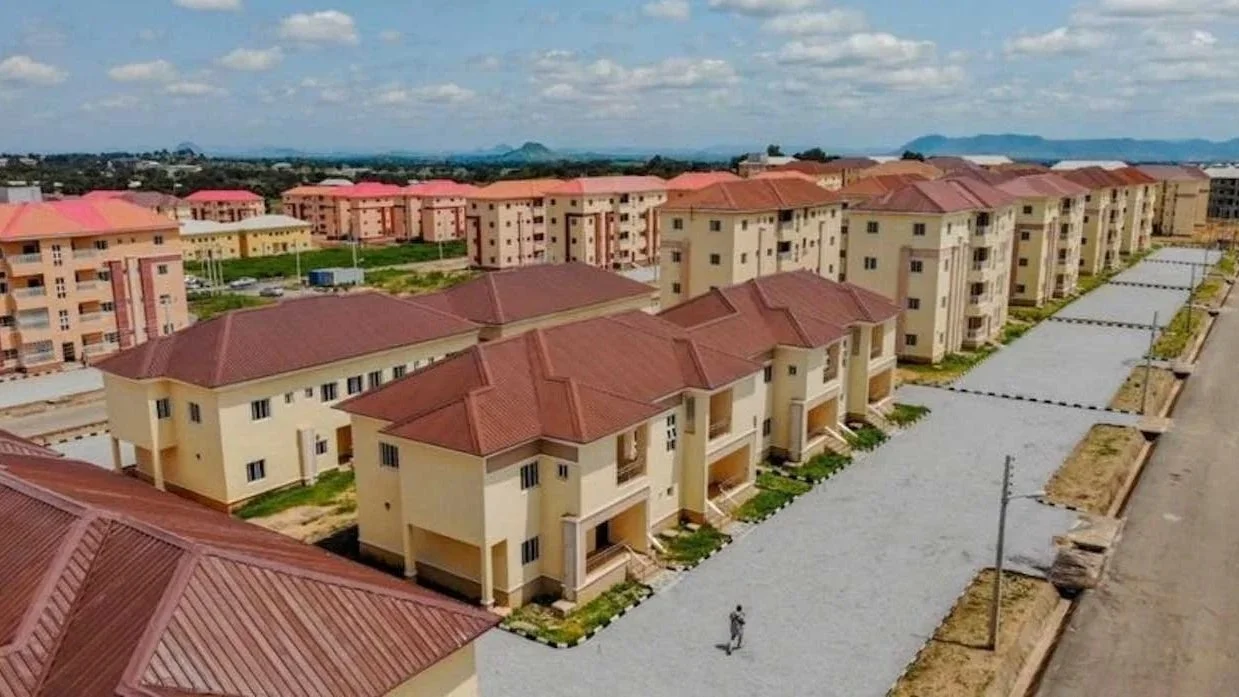
The Mambilla project is particularly relevant to Nigeria's housing and property market because major power infrastructure can influence the economic viability of emerging communities.
Large-scale electricity generation can support industrial activity, commercial development and employment. As economic activity expands around infrastructure corridors, demand can also emerge for housing, retail, logistics, hospitality and other supporting real estate.
This relationship is important for developers considering locations outside established urban centres. Electricity is one of the basic infrastructure requirements that influences whether a new community can support sustained residential and commercial activity.
NHM's coverage of infrastructure-led development has similarly highlighted how improved infrastructure can increase the development potential of underserved and emerging communities.
Infrastructure can shape emerging development corridors
The potential economic impact of a major hydropower project extends beyond electricity generation.
A large power project can create demand for construction services, logistics, accommodation, commercial facilities and other support services during development. Once operational, increased electricity availability can support businesses and industries that require more reliable power.
For property developers, the wider effect could be more important than the power plant itself. New economic activity can gradually create development corridors around previously less-developed areas.
However, infrastructure investment does not automatically translate into property-market growth. Roads, water, telecommunications, drainage, social infrastructure and access to markets also influence whether new communities can sustain long-term development.
Investment implications depend on implementation
For investors and developers, the ICC decision provides greater clarity on one aspect of the Mambilla project, but several other factors will determine its eventual impact.
The project still requires appropriate financing, contracting, construction and supporting infrastructure before its full economic benefits can materialise.
Its long history also demonstrates the risks associated with large infrastructure projects in Nigeria, particularly where contractual disputes, financing challenges and changes in project scope can delay delivery.
The latest ruling could nevertheless improve the environment for future discussions around the project's implementation by addressing a significant legal dispute.
Government stresses commitment to infrastructure delivery
Tinubu said the Federal Government remains committed to working with genuine investors while defending the country's legal and financial interests.
He also commended Attorney-General of the Federation and Minister of Justice Lateef Fagbemi, officials of the Federal Ministry of Justice and the government's external legal team for their roles in the arbitration.
The President also acknowledged the involvement of former President Olusegun Obasanjo and the late President Muhammadu Buhari, who testified in the case.
The government's position is that the ruling removes a significant obstacle to the Mambilla project's progress. The next stage will depend on whether the authorities can translate the legal outcome into a viable financing and implementation framework.
Outlook
The ICC's rejection of Sunrise Power's $680 million claim marks an important development in the long-running legal dispute surrounding the Mambilla Hydroelectric Power Project.
While the ruling does not complete the project or resolve every issue surrounding its development, it removes a major legal dispute identified by the Federal Government as a key obstacle.
For Nigeria's property market, the significance lies in what successful infrastructure delivery could mean for emerging communities in Taraba and surrounding areas. Reliable electricity, combined with roads, telecommunications and other supporting infrastructure, could strengthen the foundation for future industrial, commercial and residential development.
The focus will now shift from the legal dispute to the practical questions of financing, construction, project governance and delivery. The ability to address those issues will determine whether the Mambilla project can translate its long-standing potential into tangible economic and development benefits.
READ MORE