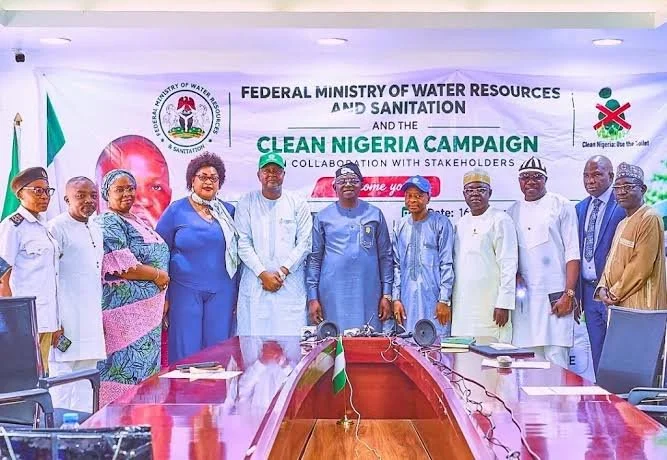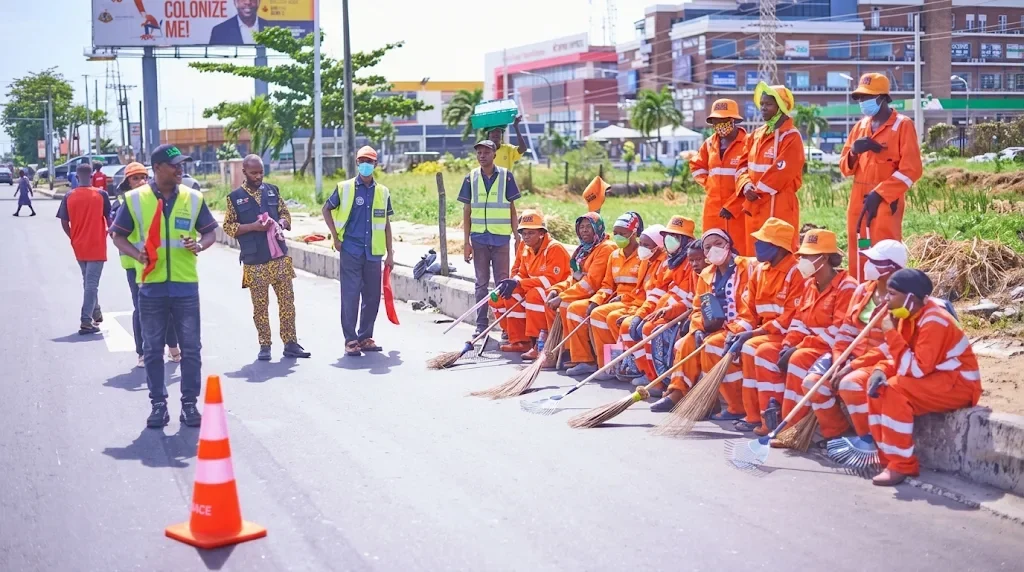
Lagos State officials and sanitation workers
The Lagos State Government has trained selected sanitation workers on occupational safety, waste handling and improved service delivery as it seeks to strengthen environmental sanitation and address persistent waste management challenges across the state.
The capacity-building workshop, held on Monday, 16 November 2026, in Alausa, Ikeja, focused on equipping sanitation workers with practical skills, safer working procedures and the appropriate use of personal protective equipment (PPE).
/ You Might Also Like /




The Permanent Secretary of the Office of Environmental Services, Omobolaji Gaji, represented by the Director of Sanitation Services, Dr Hassan Sanuth, said the programme formed part of the state government's efforts to improve the competence, welfare and productivity of sanitation personnel.
The initiative comes as Lagos continues to grapple with waste collection and disposal challenges, placing pressure on the agencies and operators responsible for maintaining clean streets, clearing drainage channels and managing refuse across the metropolis.
Lagos focuses on worker safety and sanitation standards
Gaji described sanitation workers as essential to the state's environmental management efforts, noting that their daily responsibilities include street sweeping, drainage clearing and waste collection.
He said these activities contribute to public health protection, environmental cleanliness and flood prevention, particularly in a densely populated city where blocked drainage channels and poorly managed refuse can worsen flooding risks.
According to Gaji, the selected workers were recognised for their commitment to their duties. The training was designed to improve their professional capacity while reinforcing the importance of safe working conditions.
Participants were expected to receive guidance on the proper use of protective equipment, safer waste-handling procedures and improved sanitation practices. The workshop also provided an opportunity for workers to share operational experiences and discuss challenges encountered while carrying out their assignments.
The state government said it wanted to develop a more skilled and safety-conscious sanitation workforce capable of responding to the environmental demands of a rapidly growing metropolis.
Training highlights occupational risks faced by sanitation workers
During a lecture titled Safety Culture: A Need to Prevent Occupational Accidents, guest lecturer Adeyinka Adebiyi urged sanitation workers to make workplace safety a priority.
He said their responsibilities expose them to occupational hazards that could result in injuries, illnesses and, in severe cases, loss of life.
Adebiyi emphasised the need for workers to follow safety procedures, wear appropriate personal protective equipment, assess risks before undertaking tasks and handle waste materials responsibly.
He also urged them to remain alert to potential dangers, avoid unsafe practices and report hazards promptly to prevent accidents and health complications.
The emphasis on protective equipment and risk assessment is particularly important for workers who handle mixed refuse and operate around busy roads, drainage infrastructure and waste disposal locations.
Waste management remains a challenge for Lagos
The training forms part of wider efforts to improve environmental sanitation in Lagos, where waste collection, evacuation and disposal continue to require attention from government agencies and private operators.
The state has recently taken other steps to address the refuse problem. On 11 November, the government announced the reopening of the Solus and Olusosun dumpsites following rehabilitation work, while directing private sector participation waste operators to improve collection and evacuation services.
The Commissioner for the Environment and Water Resources, Tokunbo Wahab, said the Solus facility was expected to handle at least 100 trucks daily. Waste operators also disclosed that the closure of accessible disposal facilities had previously forced some trucks to travel more than 120 kilometres to Shagamu to discharge refuse.
These measures highlight the operational pressures within Lagos's waste management system. Improving worker skills and safety can support service delivery, but the effectiveness of the wider response also depends on reliable collection services, adequate disposal capacity, functioning equipment and consistent enforcement.
Implications for urban environmental management
Effective waste management has implications beyond street cleanliness. Poor refuse collection and disposal can obstruct drainage channels, increase environmental pollution and worsen flood exposure in residential and commercial areas.
For property owners, developers and investors, the quality of environmental services can influence neighbourhood liveability, maintenance costs and the attractiveness of urban locations. Areas with persistent refuse accumulation and inadequate drainage may face additional environmental and infrastructure risks.
The sanitation workers' training therefore addresses an important part of Lagos's environmental management system. However, its long-term value will depend on whether workers receive adequate protective equipment, apply the safety procedures taught and operate within a waste collection and disposal system capable of supporting their work.
The state government's challenge is to translate training and operational interventions into consistent improvements in waste collection, worker welfare and environmental conditions across Lagos.
READ MORE