Lagos faces growing pressure to expand affordable housing supply
Lagos’ housing market has become increasingly favourable to landlords as demand continues to put pressure on available homes, according to the African Democratic Congress (ADC), which has proposed delivering 20,000 housing units annually if elected to govern the state.
/ You Might Also Like /




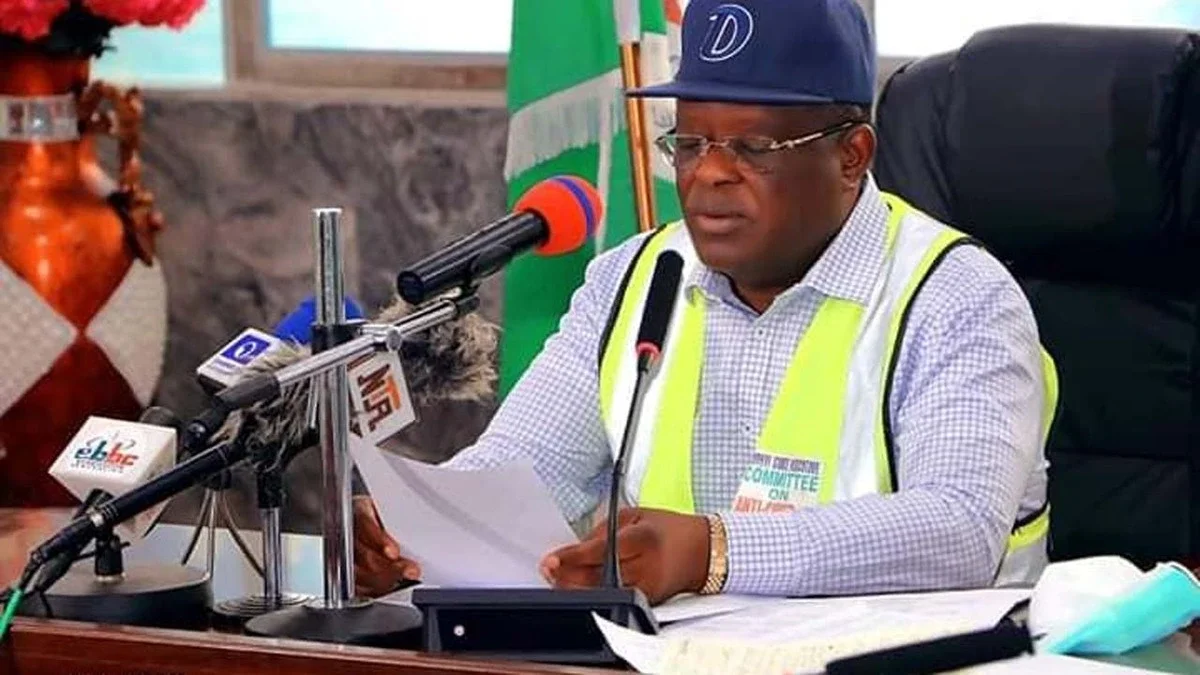
The party's deputy governorship candidate in Lagos, Gbadamosi Babatunde, made the proposal while discussing the state's housing challenges and the need to expand affordable housing supply. The comments were reported by Vanguard on September 8, 2026.
The proposal comes as high rents and limited affordable housing remain major concerns for residents, particularly young workers and lower- and middle-income households.
Lagos Housing Demand Continues to Outpace Supply
Lagos remains Nigeria's largest urban and economic centre, attracting workers, businesses and households from across the country.
That sustained population and economic concentration continues to place pressure on housing supply, particularly in locations with good access to employment, transport and other services.
The result is a rental market where landlords can command higher rents when demand exceeds the number of suitable homes available.
The ADC described the situation as a landlords’ market and linked the challenge to the shortage of affordable housing across the state.
For households, the consequences extend beyond rent itself. Higher housing costs can force residents to move farther from employment centres, share accommodation or allocate a larger proportion of their income to housing.
ADC Proposes 20,000 Homes Every Year
The party's proposed response is to deliver 20,000 housing units annually.
Gbadamosi Babatunde referenced the housing programme associated with former Lagos governor Lateef Jakande, while discussing the possibility of large-scale affordable housing delivery.
According to remarks reported by Vanguard, another ADC representative, Olalere, cited Jakande's administration as an example of how low-cost and accessible housing could be delivered at scale, noting that about 20,000 housing units were rolled out over four years.
The current proposal would therefore require a sustained programme of 20,000 units every year rather than a one-off housing scheme.
Housing Numbers Alone Will Not Solve the Crisis
While a target of 20,000 homes annually would represent a significant addition to Lagos' housing stock, the effectiveness of such a programme would depend heavily on the location, pricing and quality of the homes delivered.
Lagos does not simply need more buildings. It needs homes that households can afford and access without facing excessive transport costs.
Housing developments located far from employment centres may have lower land and construction costs but can become less affordable in practice when residents have to spend heavily on daily transportation.
Affordable housing policy therefore needs to consider land, infrastructure, transport, financing and household incomes alongside the number of units delivered.
Affordability Remains a Major Challenge
The housing crisis in Lagos has increasingly become an affordability problem as well as a supply problem.
Even when new developments enter the market, many units are targeted at households with higher incomes and may remain beyond the reach of workers in lower- and middle-income categories.
A sustainable housing programme would therefore need different forms of tenure and financing, including affordable rental housing, rent-to-own schemes, subsidised housing where appropriate and mortgage-supported homeownership.
For private developers, the viability of affordable housing also depends on access to reasonably priced land, infrastructure and long-term financing.
Infrastructure Will Determine Where New Housing Can Grow
Expanding housing supply will require corresponding investment in infrastructure.
New residential communities need roads, drainage, electricity, water, waste management and public transport connections. Without these services, large-scale housing developments can struggle to attract and retain residents.
Infrastructure availability is also important for developers because the cost of providing roads and utilities on undeveloped land can significantly increase the final price of housing.
A coordinated approach between housing and infrastructure planning could therefore help Lagos unlock new areas for residential development while reducing pressure on established neighbourhoods.
Rental Pressure Highlights Need for More Housing Supply
The landlords’ market described by the ADC reflects a fundamental housing-market principle: when demand grows faster than supply, landlords gain greater pricing power.
Increasing the supply of suitable rental homes could gradually improve competition and give tenants more choices.
However, the impact would depend on whether new units are actually targeted at the segments experiencing the greatest affordability pressure.
Delivering thousands of high-end homes would add to the overall housing stock but may have limited impact on the rental burden facing lower-income households.
Lagos Needs a Sustainable Housing Delivery Model
The proposed 20,000-unit annual target raises an important question about how large-scale housing delivery would be financed and sustained.
Government alone may not have the fiscal capacity to deliver the entire requirement directly. Public-private partnerships, institutional investment, mortgage finance, cooperative housing and long-term rental housing models could therefore play important roles.
A successful model would also need transparent land allocation, efficient planning approvals and mechanisms that prevent affordable housing from becoming unaffordable by the time it reaches the market.
Implications for Lagos Property Investors and Developers
For property investors, continued housing shortages indicate sustained underlying demand across Lagos.
However, the strongest opportunities may increasingly lie in developments that combine affordability with good transport access rather than projects focused exclusively on luxury housing.
If large-scale affordable housing programmes gain momentum, they could also create demand for construction materials, building services, estate management, infrastructure and property maintenance.
For investors, the location and target market of new developments will remain critical considerations as Lagos expands towards emerging urban corridors.
Conclusion
The ADC's proposal to deliver 20,000 homes annually highlights the scale of the housing supply challenge facing Lagos, where strong demand has strengthened landlords' pricing power.
The proposed target could contribute meaningfully to housing supply if implemented at scale, but the ultimate impact would depend on affordability, location, infrastructure and access to housing finance.
For Lagos to move away from a predominantly landlord-driven rental market, housing delivery must focus not simply on adding units but on producing homes that ordinary households can afford and access.
READ MORE