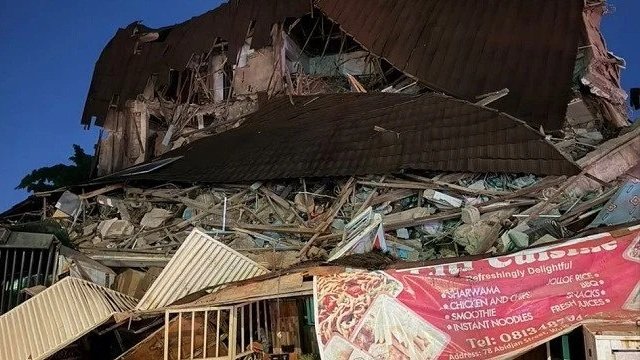
Collapsed three-storey building in Wuse, Abuja
A three-storey building collapsed in Wuse Zone 4, Abuja, at about 7 p.m. on Monday, September 7, 2026, with rescue operations launched at the scene. The Federal Capital Territory Administration (FCTA) had reportedly sealed the building earlier that day and directed occupants to leave the premises.
/ You Might Also Like /




Lere Olayinka, Senior Special Assistant to the FCT Minister, Nyesom Wike, on Public Communications and Social Media, confirmed the incident. He said FCT Fire Service personnel and ambulances were deployed to the location as emergency operations continued.
At the time of the initial report, authorities had not released confirmed information on casualties or established the cause of the collapse.
FCTA Had Sealed the Building Earlier
The collapse occurred several hours after officials from the FCTA's Development Control Department visited the property.
According to the report, the authorities sealed the building in the early hours of Monday and instructed occupants to vacate the premises. The subsequent collapse has therefore placed renewed attention on the effectiveness of building inspections, enforcement notices and emergency responses.
The sequence of events is significant because a regulatory intervention had already taken place before the structural failure. However, the available report does not establish why the building was sealed or whether the action was directly related to structural concerns.
Further official findings will be required to determine the circumstances surrounding the collapse.
Rescue Operations Underway
Emergency responders were deployed following the incident.
The FCT Fire Service was reported to have arrived at the scene alongside ambulances prepared to respond to possible emergencies. Rescue operations were ongoing when the incident was initially reported.
Authorities had not yet provided a confirmed casualty figure in the NAN report. This makes it important to distinguish between confirmed information and early reports circulating around the incident.
Building Regulation Remains Critical to Abuja's Property Market
The incident highlights the importance of effective development control in Abuja, where rapid urban growth has increased demand for residential and commercial buildings.
Building regulation covers several stages of development, including planning approvals, structural compliance, construction standards, inspections and occupancy requirements. Effective enforcement is intended to identify unsafe developments before they pose a risk to occupants and neighbouring properties.
For property owners, developers and investors, compliance is therefore not simply a regulatory requirement. It also forms part of protecting the value and safety of real estate assets.
Regulatory Warnings Must Lead to Effective Enforcement
The circumstances surrounding the Wuse incident also highlight the importance of what happens after authorities identify a potentially problematic building.
Where a property receives a sealing order or evacuation directive, effective enforcement requires authorities to ensure that occupants remain out of the building and that further access or construction does not continue until the underlying issue has been resolved.
The incident could therefore prompt further questions about whether the building remained occupied after the directive, why it was sealed and what information was available to regulators before the collapse.
These questions can only be answered through an official investigation.
Implications for Developers and Property Owners
Building collapses can have consequences extending beyond the immediate physical damage.
For developers, structural failures can result in financial losses, project delays, legal exposure and reputational damage. For property owners, inadequate maintenance, unauthorised alterations or non-compliant construction can affect the long-term value and insurability of an asset.
Investors also face risks when acquiring properties without properly verifying planning approvals, construction documentation and structural condition.
Due diligence is therefore particularly important in urban property markets where buildings may undergo changes in use, extensions or modifications after their initial construction.
Abuja Needs Stronger Focus on Building Safety
The Wuse collapse adds to the broader concern around building safety in Nigeria's rapidly growing cities.
Abuja's expanding population and increasing property development require regulators to maintain effective systems for monitoring construction activity and enforcing development standards.
The objective should not only be to identify violations after construction but also to strengthen preventive inspections and ensure that developers comply with approved designs and technical requirements throughout the construction process.
Where authorities identify safety concerns, timely intervention can help prevent the escalation of risks.
Property Market Implications
Building safety is directly linked to the long-term credibility of a property market.
Investors are more likely to commit capital to markets where development regulations are clear, approvals are enforceable and construction standards are consistently applied.
For Abuja, maintaining confidence in the quality and safety of its built environment is particularly important as the city continues to attract residential, commercial and institutional investment.
Effective enforcement can also support responsible developers by creating a more level playing field between compliant projects and developments that attempt to avoid regulatory requirements.
Investigation Will Be Important
The immediate priority following the collapse remains the safety of anyone who may have been affected and the completion of rescue operations.
Beyond the emergency response, an investigation will be necessary to establish why the building collapsed and whether any regulatory, construction or structural issues contributed to the failure.
The investigation should also clarify the circumstances surrounding the FCTA's earlier sealing of the property and whether any warnings or identified defects were connected to the eventual collapse.
Outlook
The collapse of the three-storey building in Wuse Zone 4 highlights the importance of timely building inspections, effective enforcement and compliance with approved development standards.
While authorities had sealed the property and ordered occupants to vacate before the collapse, the cause of the incident and any potential casualties had not been established in the initial report.
For Abuja's property market, the incident reinforces the need for developers, owners and investors to treat regulatory compliance and structural safety as fundamental components of responsible real estate development.
READ MORE