Lagos Orders Demolition of Illegal Structures Blocking Drainage Channels in Lekki Corridor
State Targets Illegal Developments to Protect Drainage Infrastructure
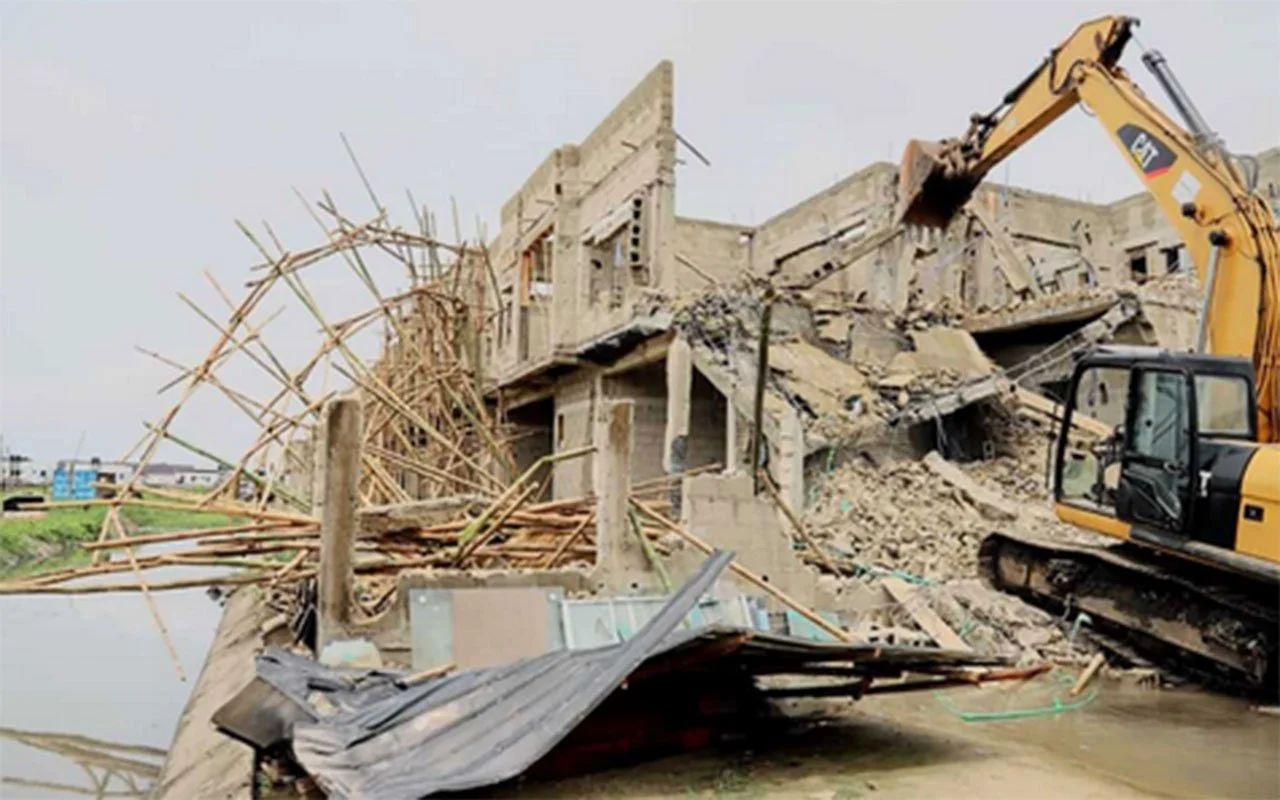
The Lagos State Government has ordered the immediate demolition of illegal structures obstructing primary drainage channels and canal rights of way in Agungi, Ajiran and Ikota, as part of a renewed effort to address persistent flooding and protect critical public infrastructure. The enforcement action follows inspections that identified widespread encroachment on drainage alignments, despite significant government investment in flood mitigation projects across the Lekki corridor.
/ You Might Also Like /




The directive was announced by the Commissioner for the Environment and Water Resources, Tokunbo Wahab, after an inspection of drainage infrastructure and flood control projects in the affected communities. According to the commissioner, the exercise uncovered illegal developments that have obstructed the natural flow of stormwater, undermining the effectiveness of existing drainage systems.
Illegal Encroachment Blamed for Persistent Flooding
During the inspection, officials identified a major obstruction at the Ajiran drainage outfall, where a land-owning family was found to have blocked the primary channel leading into the Lagos Lagoon. The blockage has prevented stormwater from flowing freely out of surrounding communities, contributing to recurring flooding despite completed drainage infrastructure.
The commissioner emphasised that while the government respects legitimate land ownership and Certificates of Occupancy, no individual or organisation has the right to obstruct public drainage infrastructure or natural waterways. He said the affected channels would be reopened immediately in the overriding public interest.
Developers Face Enforcement Action
At Megamond Estate in Ikota, the inspection revealed that parts of the Ikota River had allegedly been reclaimed for development without obtaining the required environmental and drainage approvals. Officials also reported that some developments exceeded previously approved limits and ignored enforcement notices issued by the government.
The Lagos State Government directed that all illegal structures erected on reclaimed drainage alignments without approval be demolished. Authorities said the enforcement exercise is intended to reinforce compliance with environmental regulations and send a clear message that encroachment on public infrastructure will not be tolerated.
Government Reaffirms Environmental Compliance Requirements
The state government reiterated that all developments involving wetlands, waterways or reclamation activities must obtain Environmental Impact Assessment (EIA) approval and, where necessary, Wetland Clearance from the Ministry of the Environment and Water Resources before construction begins. Officials noted that these approvals are essential for assessing environmental impacts and ensuring that proposed developments do not compromise drainage systems or increase flood risks.
According to the ministry, some developers continue to commence reclamation and construction without the required approvals in the hope of securing regularisation afterwards, a practice the government said it would no longer tolerate.
Implications for Urban Development
The latest enforcement action highlights the importance of integrating environmental compliance into urban development. As Lagos continues to experience rapid urbanisation, preserving drainage corridors and flood management infrastructure remains critical to protecting lives, property and public investment.
For developers and investors, the exercise reinforces the need to comply with planning regulations, environmental approvals and drainage setback requirements before undertaking construction projects. Stronger enforcement is also expected to improve urban resilience by reducing flood risks and safeguarding essential infrastructure.
Conclusion
Lagos State's decision to demolish illegal structures obstructing drainage channels reflects a broader strategy to strengthen development control and improve flood resilience across rapidly growing urban communities. By enforcing environmental regulations and protecting critical drainage infrastructure, the government aims to reduce flooding, preserve public assets and promote more sustainable urban development.
READ MORE